<?xml version="1.0" encoding="UTF-8"?>
<feed xml:lang="en" xmlns="http://www.w3.org/2005/Atom" xmlns:opensearch="http://a9.com/-/spec/opensearch/1.1/" xmlns:s="http://jadedpixel.com/-/spec/shopify">
  <id>https://www.eliteabar.com/blogs/tea-education.atom</id>
  <link rel="alternate" type="text/html" href="https://www.eliteabar.com/blogs/tea-education"/>
  <link rel="self" type="application/atom+xml" href="https://www.eliteabar.com/blogs/tea-education.atom"/>
  <title>ELITEA | Loose Leaf | Chai | Bubble Tea | Kombucha - Tea Education</title>
  <updated>2013-05-04T23:23:00-04:00</updated>
  <author>
    <name>ELITEA | Loose Leaf | Chai | Bubble Tea | Kombucha</name>
  </author>
  <entry>
    <id>https://www.eliteabar.com/blogs/tea-education/7814381-white-tea-101</id>
    <published>2013-05-04T23:23:00-04:00</published>
    <updated>2015-10-17T19:47:46-04:00</updated>
    <link rel="alternate" type="text/html" href="https://www.eliteabar.com/blogs/tea-education/7814381-white-tea-101"/>
    <title>White Tea 101</title>
    <author>
      <name>elias majid</name>
    </author>
    <content type="html">
      <![CDATA[<h3><strong style="font-family: 'Times New Roman'; font-size: medium; line-height: normal; font-weight: normal;"><em>99% Pure</em></strong></h3>
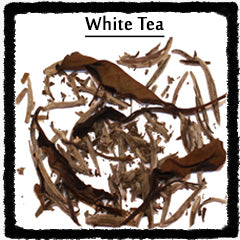
<h3><strong style="font-family: 'Times New Roman'; font-size: medium; line-height: normal; font-weight: normal;"><span style="font-size: 15px; font-family: Arial; background-color: transparent; vertical-align: baseline; white-space: pre-wrap;"><img style="float: left; margin-right: 4px;" alt="Types of White Tea leaves" src="//cdn.shopify.com/s/files/1/0171/0582/files/white_tea_240px_frame_medium.jpg?412">White tea is just one step above raw tea, and was the first type of tea created for storage.  It is incredibly delicate and strict measures are undertaken to ensure the quality of leaves to be processed.  Imperfect and low-quality leaves are easily recognizable due to the minimal amount of processing.  The younger sprouting of tea leaves - the bud and two leaves (pekoe and above) - are usually prime choice for white tea.  The younger leaves are rich in nutrients and flavonoids, creating a potent tea for multiple infusions. </span></strong></h3>
<h3><strong style="font-family: 'Times New Roman'; font-size: medium; line-height: normal; font-weight: normal;"><strong style="font-weight: normal;"><strong style="font-family: 'Times New Roman'; font-size: medium; line-height: normal; font-weight: normal;"><br><span style="font-size: 15px; font-family: Arial; background-color: transparent; vertical-align: baseline; white-space: pre-wrap;">Like green, oolong, and black teas, white tea is a product of the </span><span style="font-size: 15px; font-family: Arial; background-color: transparent; font-style: italic; vertical-align: baseline; white-space: pre-wrap;">camellia sinensis </span><span style="font-size: 15px; font-family: Arial; background-color: transparent; vertical-align: baseline; white-space: pre-wrap;">plant.  When brewed, it produces a delicate, sweet flavor with a light-colored liquor and contains a very low amount of caffeine; therefore, it’s a great balance for those sensitive to caffeine but still looking to receive all the benefits of tea. Due to harvest and processing methods, however, some rare white teas can have just as much caffeine as a rare green or black tea.  Eli Tea will be sure to alert you if that is the case with any of our teas, but again, it is safe to assume the majority of white teas are caffeine-free or low in caffeine.  </span></strong></strong></strong></h3>
<table style="height: 128px; width: 608px;">
<tbody>
<tr>
<td> </td>
<td>
<p dir="ltr" style="line-height: 1.15; margin-top: 0pt; margin-bottom: 0pt;"><span style="font-size: 15px; font-family: Arial; background-color: transparent; vertical-align: baseline; white-space: pre-wrap;">Energizing Power Hierarchy </span></p>
<p dir="ltr" style="line-height: 1.15; margin-top: 0pt; margin-bottom: 0pt;"><span style="font-size: 15px; font-family: Arial; color: #b45f06; background-color: transparent; font-weight: bold; text-decoration: underline; vertical-align: baseline; white-space: pre-wrap;">White</span><span style="font-size: 15px; font-family: Arial; background-color: transparent; text-decoration: underline; vertical-align: baseline; white-space: pre-wrap;">&lt;Green&lt;Oolong&lt;Black&lt;&lt;Coffee&lt;Mate</span></p>
<p dir="ltr" style="line-height: 1.15; margin-top: 0pt; margin-bottom: 0pt;"> </p>
<p dir="ltr" style="line-height: 1.15; margin-top: 0pt; margin-bottom: 0pt;"><span style="font-size: 15px; font-family: Arial; background-color: transparent; vertical-align: baseline; white-space: pre-wrap;">White Tea Caffeine Level: 1-5 mg per 6 oz cup</span></p>
<p dir="ltr" style="line-height: 1.15; margin-top: 0pt; margin-bottom: 0pt;"><span style="font-size: 15px; font-family: Arial; background-color: transparent; vertical-align: baseline; white-space: pre-wrap;">Coffee Caffeine Level: 100-120 mg per 6 oz cup</span></p>
<b id="internal-source-marker_0.67840795381926" style="font-family: 'Times New Roman'; font-weight: normal;"><span style="font-size: 11px; font-family: Arial; background-color: transparent; vertical-align: baseline; white-space: pre-wrap;">Note: These caffeine levels are industry standard averages</span></b><strong id="internal-source-marker_0.8248319742269814" style="font-family: 'Times New Roman'; line-height: normal; font-weight: normal;"></strong>
</td>
</tr>
</tbody>
</table>
<p> <strong id="internal-source-marker_0.8248319742269814" style="font-family: 'Times New Roman'; font-size: medium; line-height: normal; font-weight: normal;"><span style="font-size: 15px; font-family: Arial; background-color: transparent; font-weight: bold; text-decoration: underline; vertical-align: baseline; white-space: pre-wrap;">Production</span></strong></p>
<p dir="ltr" style="line-height: 1.15; margin-top: 0pt; margin-bottom: 0pt;"><strong id="internal-source-marker_0.8248319742269814" style="font-family: 'Times New Roman'; font-size: medium; line-height: normal; font-weight: normal;"><span style="font-size: 15px; font-family: Arial; background-color: transparent; vertical-align: baseline; white-space: pre-wrap;">Three important stages of white tea production are enzyme kill, withering, and drying.  White tea can undergo two distinguishable pathways of processing from these steps:</span></strong></p>
<p> </p>
<p><strong id="internal-source-marker_0.8248319742269814" style="font-family: 'Times New Roman'; font-size: medium; line-height: normal; font-weight: normal;"><span style="font-size: 15px; font-family: Arial; background-color: transparent; vertical-align: baseline; white-space: pre-wrap;">1) The freshly harvested tea leaves are rushed to micro-factories to undergo the enzyme kill stage where they will be heat-treated to stop oxidation.  The leaves are then allowed to wither for some time before undergoing a final drying stage.</span></strong></p>
<p style="padding-left: 30px;"> <strong id="internal-source-marker_0.8248319742269814" style="font-family: 'Times New Roman'; font-size: medium; line-height: normal; font-weight: normal;"><span style="font-size: 15px; font-family: Arial; color: #b45f06; background-color: transparent; font-weight: bold; vertical-align: baseline; white-space: pre-wrap;">Harvest leaves &gt; enzyme kill &gt; withering &gt; drying</span></strong></p>
<p><strong id="internal-source-marker_0.8248319742269814" style="font-family: 'Times New Roman'; font-size: medium; line-height: normal; font-weight: normal;"> </strong><strong id="internal-source-marker_0.8248319742269814" style="font-family: 'Times New Roman'; font-size: medium; line-height: normal; font-weight: normal;"><span style="font-size: 15px; font-family: Arial; background-color: transparent; vertical-align: baseline; white-space: pre-wrap;">2) The freshly harvested leaves are dried out on mats for 1-3 days in sunlight, indoors, or possibly in the dark.  They then undergo the enzyme kill stage, in which they are heat-treated to stop oxidation. The leaves then briefly rest before a final drying.</span></strong></p>
<p style="padding-left: 30px;"><strong id="internal-source-marker_0.8248319742269814" style="font-family: 'Times New Roman'; font-size: medium; line-height: normal; font-weight: normal;"><span style="font-size: 15px; font-family: Arial; color: #b45f06; background-color: transparent; font-weight: bold; vertical-align: baseline; white-space: pre-wrap;"> Harvest leaves &gt; extended withering &gt; enzyme kill &gt; drying</span></strong></p>
<p> </p>
<p><strong id="internal-source-marker_0.3448616839013994" style="font-family: 'Times New Roman'; font-size: medium; line-height: normal; font-weight: normal;"><a title="Tea processing steps " href="http://www.elitea.co/blogs/tea-education/7780719-tea-processing"><img style="display: block; margin-left: auto; margin-right: auto;" alt="" src="//cdn.shopify.com/s/files/1/0171/0582/files/click_to_learn_more.jpg?360"></a></strong></p>
<p dir="ltr" style="line-height: 1.15; margin-top: 0pt; margin-bottom: 0pt;"><strong id="internal-source-marker_0.3448616839013994" style="font-family: 'Times New Roman'; font-size: medium; line-height: normal; font-weight: normal;"><strong id="internal-source-marker_0.8248319742269814" style="font-weight: normal;"><span style="font-size: 15px; font-family: Arial; background-color: transparent; font-weight: bold; text-decoration: underline; vertical-align: baseline; white-space: pre-wrap;">Brewing</span></strong></strong></p>
<p><strong id="internal-source-marker_0.3448616839013994" style="font-family: 'Times New Roman'; font-size: medium; line-height: normal; font-weight: normal;"><strong id="internal-source-marker_0.8248319742269814" style="font-weight: normal;"><span style="font-size: 15px; font-family: Arial; background-color: transparent; vertical-align: baseline; white-space: pre-wrap;">White teas also have two unique ways of brewing:</span></strong></strong></p>
<p dir="ltr" style="line-height: 1.15; margin-top: 0pt; margin-bottom: 0pt;"><span style="font-size: 15px; font-family: Arial; background-color: transparent; vertical-align: baseline; white-space: pre-wrap;">1) High temperature, low time brew:</span></p>
<p><strong id="internal-source-marker_0.8248319742269814" style="font-family: 'Times New Roman'; font-size: medium; line-height: normal; font-weight: normal;"><span style="font-size: 15px; font-family: Arial; background-color: transparent; vertical-align: baseline; white-space: pre-wrap;">Steep tea leaves in near-boiling water (210</span><span style="font-size: 15px; font-family: Arial; color: #444444; vertical-align: baseline; white-space: pre-wrap;">°</span><span style="font-size: 15px; font-family: Arial; background-color: transparent; vertical-align: baseline; white-space: pre-wrap;">F) for 30 - 45 seconds and then remove promptly.</span></strong></p>
<p dir="ltr" style="line-height: 1.15; margin-top: 0pt; margin-bottom: 0pt;"><span style="font-size: 15px; font-family: Arial; background-color: transparent; vertical-align: baseline; white-space: pre-wrap;">2) Low temperature, slow brew:</span></p>
<p><strong id="internal-source-marker_0.8248319742269814" style="font-family: 'Times New Roman'; font-size: medium; line-height: normal; font-weight: normal;"><span style="font-size: 15px; font-family: Arial; background-color: transparent; vertical-align: baseline; white-space: pre-wrap;">Steep tea leaves at 170-180</span><span style="font-size: 15px; font-family: Arial; color: #444444; vertical-align: baseline; white-space: pre-wrap;">°</span><span style="font-size: 15px; font-family: Arial; background-color: transparent; vertical-align: baseline; white-space: pre-wrap;">F (sometimes lower) for 3 - 10 minutes.</span></strong></p>
<p><strong id="internal-source-marker_0.3448616839013994" style="font-family: 'Times New Roman'; font-size: medium; line-height: normal; font-weight: normal;"><strong id="internal-source-marker_0.8248319742269814" style="font-weight: normal;"><span style="font-size: 15px; font-family: Arial; background-color: transparent; vertical-align: baseline; white-space: pre-wrap;">In the tea world, you will also find that white teas especially have many variations in the amount of time and the temperature at which to brew.  The different methods of brewing create different flavor profiles and also release different nutrients and antioxidants.  Brewing tea at higher temperatures, however, can be potentially damaging to some antioxidants. </span><span style="font-size: 15px; font-family: Arial; background-color: transparent; font-weight: bold; vertical-align: baseline; white-space: pre-wrap;"> </span><span style="font-size: 15px; font-family: Arial; color: #b45f06; background-color: transparent; font-weight: bold; vertical-align: baseline; white-space: pre-wrap;">A reliable way to brew just about any white tea is at 180</span><span style="font-size: 15px; font-family: Arial; color: #b45f06; font-weight: bold; vertical-align: baseline; white-space: pre-wrap;">°</span><span style="font-size: 15px; font-family: Arial; color: #b45f06; background-color: transparent; font-weight: bold; vertical-align: baseline; white-space: pre-wrap;">F for 3-5 minutes.</span></strong></strong></p>
<p> </p>
<p><strong id="internal-source-marker_0.3448616839013994" style="font-family: 'Times New Roman'; font-size: medium; line-height: normal; font-weight: normal;"><strong id="internal-source-marker_0.8248319742269814" style="font-weight: normal;"></strong></strong><strong id="internal-source-marker_0.8248319742269814" style="font-family: 'Times New Roman'; font-size: medium; line-height: normal; font-weight: normal;"><span style="font-size: 15px; font-family: Arial; background-color: transparent; font-weight: bold; text-decoration: underline; vertical-align: baseline; white-space: pre-wrap;">Health Benefits</span></strong></p>
<p dir="ltr" style="line-height: 1.15; margin-top: 0pt; margin-bottom: 0pt;"><strong id="internal-source-marker_0.8248319742269814" style="font-family: 'Times New Roman'; font-size: medium; line-height: normal; font-weight: normal;"><span style="font-size: 15px; font-family: Arial; background-color: transparent; vertical-align: baseline; white-space: pre-wrap;">Skin health</span></strong></p>
<p dir="ltr" style="line-height: 1.15; margin-top: 0pt; margin-bottom: 0pt;"><strong id="internal-source-marker_0.8248319742269814" style="font-family: 'Times New Roman'; font-size: medium; line-height: normal; font-weight: normal;"><span style="font-size: 15px; font-family: Arial; background-color: transparent; vertical-align: baseline; white-space: pre-wrap;">High levels of antioxidants, especially catechins </span></strong></p>
<p dir="ltr" style="line-height: 1.15; margin-top: 0pt; margin-bottom: 0pt;"><strong id="internal-source-marker_0.8248319742269814" style="font-family: 'Times New Roman'; font-size: medium; line-height: normal; font-weight: normal;"><span style="font-size: 15px; font-family: Arial; background-color: transparent; vertical-align: baseline; white-space: pre-wrap;">Wrinkle reduction</span></strong></p>
<p><strong id="internal-source-marker_0.8248319742269814" style="font-family: 'Times New Roman'; font-size: medium; line-height: normal; font-weight: normal;"><span style="font-size: 15px; font-family: Arial; background-color: transparent; vertical-align: baseline; white-space: pre-wrap;">Antibacterial compounds</span></strong></p>
<p> </p>
<p><strong style="line-height: 1.2;">Trending Research studies</strong></p>
<h3>
<strong id="internal-source-marker_0.3448616839013994" style="font-family: 'Times New Roman'; font-size: medium; line-height: normal; font-weight: normal;"> </strong><strong id="internal-source-marker_0.3448616839013994" style="font-family: 'Times New Roman'; font-size: medium; line-height: normal; font-weight: normal;">     </strong><strong style="font-family: 'Times New Roman'; font-size: medium; line-height: normal; font-weight: normal;"><a href="http://www.biomedcentral.com/1472-6882/9/27/abstract" target="_blank">Anti-collagenase, anti-elastase and anti-oxidant activities of extracts from 21 plants</a></strong>
</h3>
<h3>
<strong style="font-family: 'Times New Roman'; font-size: medium; line-height: normal; font-weight: normal;">      </strong><strong style="font-family: 'Times New Roman'; font-size: medium; line-height: normal; font-weight: normal;"><a href="http://nccam.nih.gov/research/results/spotlight/092110.htm" target="_blank">Laboratory Study Suggests Potential Anti-Cancer Benefit of White Tea Extract</a><br><br></strong>
</h3>]]>
    </content>
  </entry>
  <entry>
    <id>https://www.eliteabar.com/blogs/tea-education/7780719-tea-processing</id>
    <published>2013-04-30T23:27:50-04:00</published>
    <updated>2014-03-24T12:45:42-04:00</updated>
    <link rel="alternate" type="text/html" href="https://www.eliteabar.com/blogs/tea-education/7780719-tea-processing"/>
    <title>Tea Processing</title>
    <author>
      <name>elias majid</name>
    </author>
    <content type="html">
      <![CDATA[<p style="text-align: left;"> <img src="//cdn.shopify.com/s/files/1/0171/0582/files/Tea_processing_chart_april_edit_with_logo_grande.jpg?587" width="680" height="440" alt="Tea Production Chart | Tea Processing Chart" /></p>
<p class="MsoNormal"><span style="line-height: 1.2; font-size: 14px;"> </span></p>
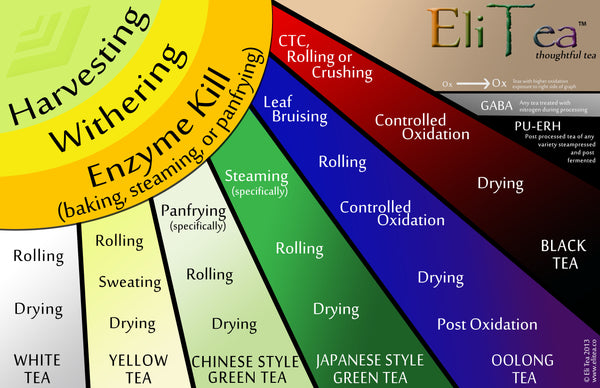
<p dir="ltr" style="line-height: 1.15; margin-top: 0pt; margin-bottom: 0pt;"><span style="font-size: 15px; font-family: Arial; background-color: transparent; vertical-align: baseline; white-space: pre-wrap;">The spectrum of teas available throughout the world is vast due to climate, cultivar, and (most importantly) the processing technique.  All teas are a product of the </span><span style="font-size: 15px; font-family: Arial; background-color: transparent; font-style: italic; vertical-align: baseline; white-space: pre-wrap;">Camellia sinensis</span><span style="font-size: 15px; font-family: Arial; background-color: transparent; vertical-align: baseline; white-space: pre-wrap;"> plant but are distinguished and categorized by their level of oxidation and production. Tea leaf processing can be summarized in four steps: withering, rolling, oxidation, and drying. The actual production of tea, however, is a complex process with multiple steps to each phase.  Also, note that production steps are also sometimes interchanged and repeated in treatments.  Tea gardens closely guard the precise methods of their processing technique, like a chef’s secret recipe. Interestingly, these nuances of production are almost entirely dependent on human skill and often stay in families for generations.</span></p>
<p><b style="font-family: 'Times New Roman'; font-size: medium; line-height: normal; font-weight: normal;"> </b></p>
<p dir="ltr" style="line-height: 1.15; margin-top: 0pt; margin-bottom: 0pt;"><span style="font-size: 15px; font-family: Arial; background-color: transparent; vertical-align: baseline; white-space: pre-wrap;">Due to all these variations and secrets, you may come across conflicting descriptions of tea processing; however, each of these methods, per se, is correct.  Okakura Kakuzo, a early 20th century Japanese author of tea culture, once wrote “Like art, tea has its periods and schools.”  Tea, as distinct varieties and as a whole, has had marked surges and declines in popularity and, as a result, its processing has changed over thousands of years.</span></p>
<p><b style="font-family: 'Times New Roman'; font-size: medium; line-height: normal; font-weight: normal;"> </b></p>
<p dir="ltr" style="line-height: 1.15; margin-top: 0pt; margin-bottom: 0pt;"><span style="font-size: 15px; font-family: Arial; background-color: transparent; vertical-align: baseline; white-space: pre-wrap;">I hope you will gain a general understanding of the methods and possibilities of tea processing from this post. The following is a brief walk through each of the different stages. </span></p>
<p> </p>
<p><b style="font-family: 'Times New Roman'; font-size: medium; line-height: normal; font-weight: normal;"><br /><span style="background-color: transparent; text-decoration: underline; font-family: Arial; font-size: 15px; font-weight: bold; white-space: pre-wrap; line-height: 1.2;">Processing Steps</span></b></p>
<p><span style="font-size: 15px; font-family: Arial; background-color: transparent; font-weight: bold; vertical-align: baseline; white-space: pre-wrap;">Harvesting</span></p>
<p dir="ltr" style="line-height: 1.15; margin-top: 0pt; margin-bottom: 0pt;"><span style="font-size: 15px; font-family: Arial; background-color: transparent; vertical-align: baseline; white-space: pre-wrap;">Tea harvesting is a delicate process that is difficult to do quickly for fear of damaging the tea leaves.  The majority of tea is still harvested by hand but mechanical picking can also be done depending on the tea variety.  Manual harvesting allows for discrimination in selection where priority is placed on the younger leaf shoots, as they are the highest in caffeine and antioxidants.  This is also the derivation of the saying “two and a bud.”</span></p>
<p dir="ltr" style="line-height: 1.15; margin-top: 0pt; margin-bottom: 0pt;"> </p>
<p dir="ltr" style="line-height: 1.15; margin-top: 0pt; margin-bottom: 0pt;"><span style="font-size: 15px; font-family: Arial; background-color: transparent; vertical-align: baseline; white-space: pre-wrap;">Manual harvesting (by hand) is the preferred method for many cultivators; however, others prefer the large scale production that comes with mechanized harvesting. It’s an issue of quantity versus quality. The scale made possible by mechanical harvesting is often used for teas with which there is much room for error, imperfection, or damaging of tea leaves and absolute quality isn’t a consideration. These include black teas which undergo the CTC (crush, tear, curl) processing as well as powdered teas like matcha. In mechanized harvesting, workers wear a portable vacuum-like harvesting machine that both cuts the leaf off the bush and collects it in a storage container: imagine a combine used for harvesting corn, but smaller. (check out the video bellow to see the harvesting machine in action)</span></p>
<p> </p>
<p dir="ltr" style="line-height: 1.15; margin-top: 0pt; margin-bottom: 0pt;"> </p>
<p dir="ltr" style="line-height: 1.15; margin-top: 0pt; margin-bottom: 0pt;"><span style="font-size: 15px; font-family: Arial; background-color: transparent; font-weight: bold; vertical-align: baseline; white-space: pre-wrap;">Withering </span><span style="font-size: 15px; font-family: Arial; background-color: transparent; vertical-align: baseline; white-space: pre-wrap;">- Reduction of water content</span></p>
<p><b style="font-family: 'Times New Roman'; font-size: medium; line-height: normal; font-weight: normal;"> </b></p>
<p dir="ltr" style="line-height: 1.15; margin-top: 0pt; margin-bottom: 0pt;"><span style="font-size: 15px; font-family: Arial; background-color: transparent; vertical-align: baseline; white-space: pre-wrap;">The goal of all tea undergoing withering is to reduce water content by 50-70%, allow for amino acid degradation, and the development of antioxidants. The leaves can be withered in a variety of ways, such as outdoors in sunlight or in dark, hot rooms. Teas withered in the sun dehydrate faster than those dried indoors because chlorophyll still active in the leaves metabolizes and exhausts the water supply.</span></p>
<p><b style="font-family: 'Times New Roman'; font-size: medium; line-height: normal; font-weight: normal;"> </b></p>
<p dir="ltr" style="line-height: 1.15; margin-top: 0pt; margin-bottom: 0pt;"><span style="font-size: 15px; font-family: Arial; background-color: transparent; vertical-align: baseline; white-space: pre-wrap;">The range of withering times for different teas is rather large due to the initial water content of the leaves and the desired flavor development. For example, the chlorophyll content falls as withering time increases. Chlorophyll is associated with the vegetal, earthy flavor in many teas and is the source of “green” in green tea.</span></p>
<p><b style="font-family: 'Times New Roman'; font-size: medium; line-height: normal; font-weight: normal;"> </b></p>
<p dir="ltr" style="line-height: 1.15; margin-top: 0pt; margin-bottom: 0pt; padding-left: 30px;"><span style="font-size: 15px; font-family: Arial; background-color: transparent; vertical-align: baseline; white-space: pre-wrap;"><span style="text-decoration: underline;">Withering times for different teas:</span> </span></p>
<p dir="ltr" style="line-height: 1.15; margin-top: 0pt; margin-bottom: 0pt; padding-left: 30px;"><span style="font-size: 15px; font-family: Arial; background-color: transparent; vertical-align: baseline; white-space: pre-wrap;">White: 12-36 hours</span></p>
<p dir="ltr" style="line-height: 1.15; margin-top: 0pt; margin-bottom: 0pt; padding-left: 30px;"><span style="font-size: 15px; font-family: Arial; background-color: transparent; vertical-align: baseline; white-space: pre-wrap;">Yellow: 2-4 hours</span></p>
<p dir="ltr" style="line-height: 1.15; margin-top: 0pt; margin-bottom: 0pt; padding-left: 30px;"><span style="font-size: 15px; font-family: Arial; background-color: transparent; vertical-align: baseline; white-space: pre-wrap;">Chinese Green: 2-4 hours</span></p>
<p dir="ltr" style="line-height: 1.15; margin-top: 0pt; margin-bottom: 0pt; padding-left: 30px;"><span style="font-size: 15px; font-family: Arial; background-color: transparent; vertical-align: baseline; white-space: pre-wrap;">Japanese Green: 30-60 min*</span></p>
<p dir="ltr" style="line-height: 1.15; margin-top: 0pt; margin-bottom: 0pt; padding-left: 30px;"><span style="font-size: 15px; font-family: Arial; background-color: transparent; vertical-align: baseline; white-space: pre-wrap;">Oolong: 30 min - 2 hours</span></p>
<p dir="ltr" style="line-height: 1.15; margin-top: 0pt; margin-bottom: 0pt; padding-left: 30px;"><span style="font-size: 15px; font-family: Arial; background-color: transparent; vertical-align: baseline; white-space: pre-wrap;">Black: 4-18 hours</span></p>
<p style="padding-left: 30px;"><b style="font-family: 'Times New Roman'; font-size: medium; line-height: normal; font-weight: normal;"> </b></p>
<p dir="ltr" style="line-height: 1.15; margin-top: 0pt; margin-bottom: 0pt;"><b id="docs-internal-guid-4a691d52-5402-d96f-0845-075034f79ff4" style="font-family: 'Times New Roman'; font-size: medium; line-height: normal; font-weight: normal;"><span style="font-size: 11px; font-family: Arial; background-color: transparent; vertical-align: baseline; white-space: pre-wrap;">*Japanese green teas usually skip the withering stage in order  to preserve chlorophyll content but will undergo multiple drying treatments after the enzyme kill stage to reduce water content.</span><span style="font-size: 11px; font-family: Arial; background-color: transparent; font-style: italic; vertical-align: baseline; white-space: pre-wrap;"> If </span><span style="font-size: 11px; font-family: Arial; background-color: transparent; vertical-align: baseline; white-space: pre-wrap;">withered, Japanese green teas will only be withered for about 30-60 min.</span></b></p>
<p><b id="docs-internal-guid-4a691d52-5402-d96f-0845-075034f79ff4" style="font-family: 'Times New Roman'; font-size: medium; line-height: normal; font-weight: normal;"> </b></p>
<p><b style="font-family: 'Times New Roman'; font-size: medium; line-height: normal; font-weight: normal;"><span style="font-size: 15px; font-family: Arial; background-color: transparent; font-weight: bold; vertical-align: baseline; white-space: pre-wrap;">Enzyme Kill</span><span style="font-size: 15px; font-family: Arial; background-color: transparent; vertical-align: baseline; white-space: pre-wrap;"> - Reduction of enzyme activity</span></b></p>
<p><span style="font-size: 15px; font-family: Arial; background-color: transparent; vertical-align: baseline; white-space: pre-wrap;">The goal of the enzyme kill stage is to halt oxidative enzyme activity from the previous stages of tea processing.  This is performed by exposing the leaves to high levels of heat for a very short amount of time (60 seconds or less), similar to blanching vegetables.  This step is especially important in preserving the desired aromatic and antioxidant compounds of tea.  There are four popular methods of enzyme kill: baking, steaming, pan-frying, and GABA.</span></p>
<div dir="ltr" style="line-height: 1.15; margin-top: 0pt; margin-bottom: 0pt; margin-left: 40.5pt; padding-left: 30px;"><span style="font-size: 15px; font-family: Arial; background-color: transparent; text-decoration: underline; vertical-align: baseline; white-space: pre-wrap;">Baking</span><span style="font-size: 15px; font-family: Arial; background-color: transparent; vertical-align: baseline; white-space: pre-wrap;">: Tea leaves are arranged in a thin layer on a conveyer belt where they are baked as they pass through an oven (similar to a pizza oven).</span></div>
<div style="padding-left: 30px;"><b style="font-family: 'Times New Roman'; font-size: medium; line-height: normal; font-weight: normal;"> </b></div>
<div dir="ltr" style="line-height: 1.15; margin-top: 0pt; margin-bottom: 0pt; margin-left: 40.5pt; padding-left: 30px;"><span style="font-size: 15px; font-family: Arial; background-color: transparent; text-decoration: underline; vertical-align: baseline; white-space: pre-wrap;">Steaming</span><span style="font-size: 15px; font-family: Arial; background-color: transparent; vertical-align: baseline; white-space: pre-wrap;">: Tea leaves will be rotated through a metal cylinder where they will be flushed with steam. This process is the most effective in preserving the green color and vitamin content in the leaves.</span></div>
<div style="padding-left: 30px;"><b style="font-family: 'Times New Roman'; font-size: medium; line-height: normal; font-weight: normal;"> </b></div>
<div dir="ltr" style="line-height: 1.15; margin-top: 0pt; margin-bottom: 0pt; margin-left: 40.5pt; padding-left: 30px;"><span style="font-size: 15px; font-family: Arial; background-color: transparent; text-decoration: underline; vertical-align: baseline; white-space: pre-wrap;">Pan-frying</span><span style="font-size: 15px; font-family: Arial; background-color: transparent; vertical-align: baseline; white-space: pre-wrap;">: Tea leaves are tossed around in a dry, hot wok by hand, where the tea processor must fry them until they give back just the right amount of “bounce.” The skill of tea gurus really shines through in pan-frying, as they must not allow the leaves to burn. </span></div>
<div dir="ltr" style="line-height: 1.15; margin-top: 0pt; margin-bottom: 0pt; margin-left: 40.5pt; padding-left: 30px;"><span style="font-size: 15px; font-family: Arial; background-color: transparent; vertical-align: baseline; white-space: pre-wrap;"></span></div>
<p><b style="font-family: 'Times New Roman'; font-size: medium; line-height: normal; font-weight: normal;"> </b><img src="https://cdn.shopify.com/s/files/1/0171/0582/files/oolong_green_vs_oolong_purple_small_medium.jpg?396" style="font-size: 14px; line-height: 1.5; margin-right: 4px; float: left;" /><span style="text-decoration: underline;">GABA</span>: Enzyme fixation by nitrogen</p>
<p>In 1987, Japanese researchers developed a new technique for the enzyme kill stage where, instead of the traditional heat treatment, the tea was given a nitrogen treatment.  In doing so, they increased gamma-Aminobutyric acid (GABA); therefore, some teas have gained the acronymed prefix “GABA” (i.e. GABA oolong, GABA green, etc.).  GABA is naturally found in the brain and functions as neurotransmitter, stimulating mental activity as well as regulating muscle tone. GABA also creates an interesting purple hue on oolong leaves.</p>
<p><b style="font-family: 'Times New Roman'; font-size: medium; line-height: normal; font-weight: normal;"> </b></p>
<p dir="ltr" style="line-height: 1.15; margin-top: 0pt; margin-bottom: 0pt;"><span style="font-size: 15px; font-family: Arial; background-color: transparent; vertical-align: baseline; white-space: pre-wrap;">The enzyme kill stage is also referred to as “firing”, “fixation”, and “kill green” (杀青 [mandarin] </span><span style="font-size: 15px; font-family: Arial; background-color: transparent; font-style: italic; vertical-align: baseline; white-space: pre-wrap;">sha-qing).  I refer to this step as “enzyme kill” as I find it to be more all-encompassing and in-line with terminology used in American scientific laboratories.</span></p>
<p><b style="font-family: 'Times New Roman'; font-size: medium; line-height: normal; font-weight: normal;"> </b></p>
<p dir="ltr" style="line-height: 1.15; margin-top: 0pt; margin-bottom: 0pt;"><span style="font-size: 15px; font-family: Arial; background-color: transparent; font-weight: bold; vertical-align: baseline; white-space: pre-wrap;">Leaf Maceration - </span><em><span style="font-size: 15px; font-family: Arial; background-color: transparent; vertical-align: baseline; white-space: pre-wrap;">Physical breakage of leaves</span></em></p>
<p dir="ltr" style="line-height: 1.15; margin-top: 0pt; margin-bottom: 0pt;"><span style="font-size: 15px; font-family: Arial; background-color: transparent; vertical-align: baseline; white-space: pre-wrap;">The following four stages are different methods of leaf maceration. They differ in their intensity of maceration, but all of them similarly induce the release of oxidative enzymes by physical means.  This results in biochemical changes within the leaves and the creation of new flavors.</span></p>
<p dir="ltr" style="line-height: 1.15; margin-top: 0pt; margin-bottom: 0pt; margin-left: 40.5pt;"> </p>
<p dir="ltr" style="line-height: 1.15; margin-top: 0pt; margin-bottom: 0pt; margin-left: 40.5pt;"><span style="font-size: 15px; font-family: Arial; background-color: transparent; text-decoration: underline; vertical-align: baseline; white-space: pre-wrap;">Leaf Bruising</span><span style="font-size: 15px; font-family: Arial; background-color: transparent; vertical-align: baseline; white-space: pre-wrap;"> (oolong and sometimes black teas) - Leaf maceration</span></p>
<p dir="ltr" style="line-height: 1.15; margin-top: 0pt; margin-bottom: 0pt; margin-left: 40.5pt;"><span style="font-size: 15px; font-family: Arial; background-color: transparent; vertical-align: baseline; white-space: pre-wrap;">The goal of leaf bruising is to create tears in the leaf epidermis, re-instigating oxidation enzymes.  Leaf bruising is done by shaking the leaves in a bamboo basket or by machinery, which kneads and tears the leaves (just a little).  The bruising can be likened to bruising a fruit, causing the leaves to brown.</span></p>
<p dir="ltr" style="line-height: 1.15; margin-top: 0pt; margin-bottom: 0pt; margin-left: 40.5pt;"> </p>
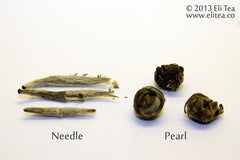
<div style="padding-left: 30px;"><img alt="Tea needle leaves vs Tea Pearls" src="https://cdn.shopify.com/s/files/1/0171/0582/files/needle_vs_pearl_small_medium.jpg?394" style="font-size: 14px; line-height: 1.5; float: left; margin-right: 4px;" /><span style="text-decoration: underline;">Rolling-Shaping</span> - <em>A gentle form of leaf maceration</em></div>
<div style="padding-left: 30px;">In this stage, the leaves are shaped into fashionable tea leaf shapes, such as the needle and pearl.  Rolling-shaping also brings about a light breakage in cell structure and instigates enzymes, re-starting and promoting the oxidation process. Traditionally speaking, all tea leaves were manually rolled-shaped; however, machines are now most oftenly used to economically create more tea shape varieties.</div>
<p><b style="font-family: 'Times New Roman'; font-size: medium; line-height: normal; font-weight: normal;"> </b></p>
<br />
<div dir="ltr" style="padding-left: 30px;"><span style="text-decoration: underline;">Crushing</span><span> - A strong form of leaf maceration</span></div>
<div style="padding-left: 30px;"><span id="docs-internal-guid-4a691d52-5405-c453-fe11-48976721af23"><span>Crushing is another leaf maceration technique in which the leaves are bluntly cut into smaller pieces, usually by machine, triggering a greater release of oxidative enzymes. Crushing, unfortunately, also results in the exposure of a leaf’s essential oils, which hold many of the antioxidants, vitamins, and other nutraceuticals found in tea. Exposure of these oils to oxygen may potentially lead to oxidative damage subsequently neutralizing these health compounds. </span></span></div>
<p> </p>
<div dir="ltr" style="padding-left: 30px;"><span style="text-decoration: underline;">Crush, Tear, and Curl (CTC)</span><span> - An intense form of leaf maceration</span></div>
<div style="padding-left: 30px;"><span id="docs-internal-guid-4a691d52-5406-fbc6-bff2-62166df279d5"><span>CTC was a developed in the 1930’s as a means to reduce the amount of tea leaves required for a cup of tea; however, it could easily be argued that this sacrificed quality for quantity. The leaves are literally crushed, torn, and curled by a machine.  This intense maceration technique increases the exposed surface area of the leaves, thus reducing the amount of tea required for brewing.</span></span></div>
<div style="padding-left: 30px;"><b style="font-family: 'Times New Roman'; font-size: medium; line-height: normal; font-weight: normal;"> </b></div>
<p dir="ltr"><span><strong>Sweating and Heaping</strong> - </span><span>A rise in thermal enzymatic activity</span></p>
<p dir="ltr"><span>In various stages and styles of processing, tea leaves are heaped into piles to increase thermal activity and, subsequently, enzymatic activity.  The heat created is a byproduct of the metabolic and enzymatic activity within the leaves and is highest in the center of the heap.  Tea processors carefully observe temperatures and turn the leaves so they sweat equally throughout.  </span></p>
<p dir="ltr" style="line-height: 1.15; margin-top: 0pt; margin-bottom: 0pt;"><span style="font-size: 15px; font-family: Arial; color: #ff0000; background-color: transparent; vertical-align: baseline; white-space: pre-wrap;"><b style="font-family: 'Times New Roman'; font-size: medium; line-height: normal; font-weight: normal;"> </b></span></p>
<div><img alt="Oxidation and Tea" src="https://cdn.shopify.com/s/files/1/0171/0582/files/oxidation_banana_small_medium.jpg?396" width="177" height="126" style="font-family: Arial; font-size: 15.199999809265137px; line-height: 13.800000190734863px; white-space: pre-wrap; float: left; margin-right: 4px;" /></div>
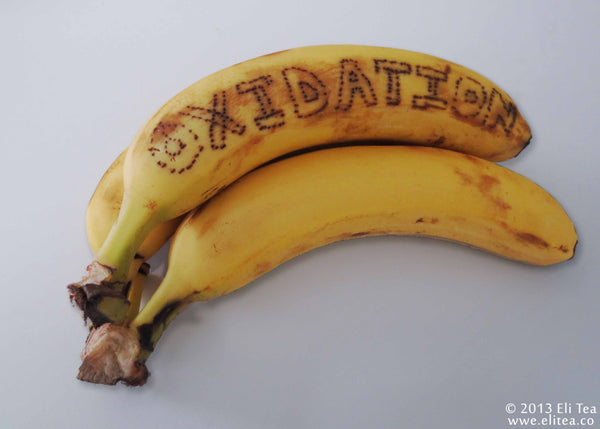
<p dir="ltr" style="line-height: 1.15; margin-top: 0pt; margin-bottom: 0pt;"><span style="font-size: 15px; font-family: Arial; background-color: transparent; font-weight: bold; vertical-align: baseline; white-space: pre-wrap;">Oxidation -</span><span style="font-size: 15px; font-family: Arial; background-color: transparent; vertical-align: baseline; white-space: pre-wrap;"> A chemical reaction involving oxygen</span></p>
<p dir="ltr" style="line-height: 1.15; margin-top: 0pt; margin-bottom: 0pt;"><span style="font-size: 15px; font-family: Arial; background-color: transparent; vertical-align: baseline; white-space: pre-wrap;"><br />In tea and food, this reaction results not only in a physical browning of the substance (like a banana peel) but also in the creation and unlocking of new compounds at a molecular level. Click the photo to the left for a more information.</span><b style="font-family: 'Times New Roman'; font-size: medium; line-height: normal; font-weight: normal;"> </b></p>
<p dir="ltr" style="line-height: 1.15; margin-top: 0pt; margin-bottom: 0pt; margin-left: 40.5pt;"> </p>
<p dir="ltr" style="line-height: 1.15; margin-top: 0pt; margin-bottom: 0pt; margin-left: 40.5pt;"><span style="font-size: 15px; font-family: Arial; background-color: transparent; text-decoration: underline; vertical-align: baseline; white-space: pre-wrap;">Passive Oxidation</span></p>
<p dir="ltr" style="line-height: 1.15; margin-top: 0pt; margin-bottom: 0pt; margin-left: 40.5pt;"><span style="font-size: 15px; font-family: Arial; background-color: transparent; vertical-align: baseline; white-space: pre-wrap;">This is a natural oxidation lacking an </span><span style="font-size: 15px; font-family: Arial; background-color: transparent; font-style: italic; vertical-align: baseline; white-space: pre-wrap;">outside </span><span style="font-size: 15px; font-family: Arial; background-color: transparent; vertical-align: baseline; white-space: pre-wrap;">stimulus, such as the greening of copper or the rusting of metal. This process is </span><span style="font-size: 15px; font-family: Arial; background-color: transparent; font-style: italic; vertical-align: baseline; white-space: pre-wrap;">excruciatingly</span><span style="font-size: 15px; font-family: Arial; background-color: transparent; vertical-align: baseline; white-space: pre-wrap;"> slow in comparison to active oxidation. In regards to tea, the moment the leaf is plucked, the oxidase (oxidative enzymes) are activated, resulting in passive oxidation.  During this passive oxidation/withering stage, aromatic compounds especially are likely to develop. This method of oxidation continues throughout withering until it is halted by the enzyme kill stage, where the tea leaves are briefly </span><span style="font-size: 15px; font-family: Arial; background-color: transparent; font-style: italic; vertical-align: baseline; white-space: pre-wrap;">flashed </span><span style="font-size: 15px; font-family: Arial; background-color: transparent; vertical-align: baseline; white-space: pre-wrap;">with heat.</span></p>
<p dir="ltr" style="line-height: 1.15; margin-top: 0pt; margin-bottom: 0pt; margin-left: 40.5pt;"> </p>
<p dir="ltr" style="line-height: 1.15; margin-top: 0pt; margin-bottom: 0pt; margin-left: 40.5pt;"><span style="font-size: 15px; font-family: Arial; background-color: transparent; text-decoration: underline; vertical-align: baseline; white-space: pre-wrap;">Controlled Oxidation </span></p>
<p dir="ltr" style="line-height: 1.15; margin-top: 0pt; margin-bottom: 0pt; margin-left: 40.5pt;"><span style="font-size: 15px; font-family: Arial; background-color: transparent; vertical-align: baseline; white-space: pre-wrap;">Controlled oxidation is where the conditions for oxidation have been manipulated by raising room temperature, humidity, and physically breaking the leaf epidermis. The degree of oxidation can be measured in various parameters. For example, in black tea, this process is usually controlled to maintain a specific ratio of theaflavins to thearubigins (usually around 1:10 to 1:12</span><span style="font-size: 9px; font-family: Arial; background-color: transparent; vertical-align: super; white-space: pre-wrap;">*</span><span style="font-size: 15px; font-family: Arial; background-color: transparent; vertical-align: baseline; white-space: pre-wrap;">).</span></p>
<p><b style="font-family: 'Times New Roman'; font-size: medium; line-height: normal; font-weight: normal;"> </b></p>
<p dir="ltr" style="line-height: 1.15; margin-top: 0pt; margin-bottom: 0pt;"><b id="docs-internal-guid-39523129-72f2-d0b7-e878-07eccba3679a" style="font-family: 'Times New Roman'; font-size: medium; line-height: normal; font-weight: normal;"><span style="font-size: 11px; font-family: Arial; font-style: italic; vertical-align: baseline; white-space: pre-wrap;">*Spiller, Gene A. Caffeine. Boca Raton, FL: CRC P, 1998. 47.</span></b></p>
<p> </p>
<p><span style="background-color: transparent; font-size: 15px; font-family: Arial; font-weight: bold; vertical-align: baseline; white-space: pre-wrap;">Drying </span><span style="background-color: transparent; font-size: 15px; font-family: Arial; vertical-align: baseline; white-space: pre-wrap;">- Reduction of water content to 3-6%</span></p>
<p dir="ltr" style="line-height: 1.15; margin-top: 0pt; margin-bottom: 0pt;"><span style="font-size: 15px; font-family: Arial; background-color: transparent; vertical-align: baseline; white-space: pre-wrap;">The goal of the last step is to reduce the water content of the tea leaves down to 3-6%.  This will cease all enzymatic activity and preserve the chemical and flavor compounds for the tea’s shelf life.  Drying occurs in oven-like rooms where the leaves are laid out in thin layers and dried at 212-248</span><span style="font-size: 15px; font-family: Arial; color: #444444; vertical-align: baseline; white-space: pre-wrap;">°F (</span><span style="font-size: 15px; font-family: Arial; vertical-align: baseline; white-space: pre-wrap;">100-120°C).  The exact time of drying varies depending on the water content of the leaves prior to drying.  For example, Taiwanese-styled oolong tea requires only 5-10 minutes of drying while Indian black teas require up to 20-30 minutes. </span></p>
<p><b style="font-family: 'Times New Roman'; font-size: medium; line-height: normal; font-weight: normal;"> </b></p>
<p dir="ltr" style="line-height: 1.15; margin-top: 0pt; margin-bottom: 0pt;"><span style="font-size: 15px; font-family: Arial; background-color: transparent; font-weight: bold; vertical-align: baseline; white-space: pre-wrap;">Aged Tea</span><span style="font-size: 15px; font-family: Arial; background-color: transparent; vertical-align: baseline; white-space: pre-wrap;"> -</span><span style="font-size: 15px; font-family: Arial; background-color: transparent; vertical-align: baseline; white-space: pre-wrap;">Post-Fermentation and Post-Oxidation</span></p>
<p dir="ltr" style="line-height: 1.15; margin-top: 0pt; margin-bottom: 0pt;"><span style="font-size: 15px; font-family: Arial; background-color: transparent; vertical-align: baseline; white-space: pre-wrap;">These two techniques are used for the creation of pu’erh and sometimes oolong teas, and involve exposing tea for months to years. Traditionally, these teas would ferment as they picked up microorganisms from exposure on the Silk Road. In modern times, however the tea is stored in dark, humid rooms, conditions which are conducive to microbiological activity and oxidation.  Researchers and tea growers continually experiment with new bacterial inoculations to create new pu-erh flavors.  Some popular organisms include </span><span style="font-size: 15px; font-family: Arial; vertical-align: baseline; white-space: pre-wrap;">Aspergillus, Blastobotrys, and Streptomyces*.</span></p>
<p><b style="font-family: 'Times New Roman'; font-size: medium; line-height: normal; font-weight: normal;"> </b></p>
<p dir="ltr" style="line-height: 1.15; margin-top: 0pt; margin-bottom: 0pt;"><b id="docs-internal-guid-39523129-72f4-5450-88ed-3e96b9b2ba17" style="font-family: 'Times New Roman'; font-size: medium; line-height: normal; font-weight: normal;"><span style="font-size: 11px; font-family: Arial; background-color: transparent; vertical-align: baseline; white-space: pre-wrap;">*Hou, C.W., K.C. Jeng, and Y.S. Chen. "Enhancement of Fermentation Process in Pu-Erh Tea by Tea-Leaf Extract." </span><span style="font-size: 11px; font-family: Arial; background-color: transparent; font-style: italic; vertical-align: baseline; white-space: pre-wrap;">Journal of Food Science</span><span style="font-size: 11px; font-family: Arial; background-color: transparent; vertical-align: baseline; white-space: pre-wrap;"> 75.1 (2010): H44-48. Print.</span></b></p>
<p><b style="font-family: 'Times New Roman'; font-size: medium; line-height: normal; font-weight: normal;"> </b></p>
<p dir="ltr" style="line-height: 1.15; margin-top: 0pt; margin-bottom: 0pt;"><span style="font-size: 15px; font-family: Arial; background-color: transparent; text-decoration: underline; vertical-align: baseline; white-space: pre-wrap;">A final Thoughts on the matter</span></p>
<p dir="ltr" style="line-height: 1.15; margin-top: 0pt; margin-bottom: 0pt;"><span style="font-size: 15px; font-family: Arial; background-color: transparent; vertical-align: baseline; white-space: pre-wrap;">The possibilities for tea processing are infinite and changing all the time. Tea has been around for thousands of years and the methods of altering its makeup and use are constantly evolving. Don’t be afraid to try new teas, I highly recommend blending different teas together or adding some spices to create a chai!  </span></p>
<p dir="ltr" style="line-height: 1.15; margin-top: 0pt; margin-bottom: 0pt;"> </p>
<p dir="ltr" style="line-height: 1.15; margin-top: 0pt; margin-bottom: 0pt;"><span style="font-size: 15px; font-family: Arial; background-color: transparent; vertical-align: baseline; white-space: pre-wrap;">Some more foot notes to think about:</span></p>
<p dir="ltr" style="line-height: 1.15; margin-top: 0pt; margin-bottom: 0pt; padding-left: 30px;"><span style="font-size: 15px; font-family: Arial; background-color: transparent; text-decoration: underline; vertical-align: baseline; white-space: pre-wrap;">Avoiding microbiological activity</span></p>
<p dir="ltr" style="line-height: 1.15; margin-top: 0pt; margin-bottom: 0pt; padding-left: 30px;"><span style="font-size: 15px; font-family: Arial; background-color: transparent; vertical-align: baseline; white-space: pre-wrap;">The utmost care is taken by tea processors to avoid any microbiological activity, which is a polite way of saying rotting or contamination. Tea is not the most encouraging environment for bacterial growth, however, as tea leaves and the liquor they produce are mostly acidic in nature and the finished product contains only 3-6% water, which is significantly below a level supportive of bacterial growth.  </span></p>
<p dir="ltr" style="line-height: 1.15; margin-top: 0pt; margin-bottom: 0pt; padding-left: 30px;"> </p>
<p dir="ltr" style="line-height: 1.15; margin-top: 0pt; margin-bottom: 0pt; padding-left: 30px;"><span style="font-size: 15px; font-family: Arial; background-color: transparent; vertical-align: baseline; white-space: pre-wrap;">Tea growers and processors do, however, take extra precautions to avoid the loss of a harvest.  In harvesting stages, tea pickers only select healthy and clean leaves.  If any leaves happen to show signs of fungal growth, they are removed from the tree immediately.</span></p>
<p dir="ltr" style="line-height: 1.15; margin-top: 0pt; margin-bottom: 0pt; padding-left: 30px;"> </p>
<p dir="ltr" style="line-height: 1.15; margin-top: 0pt; margin-bottom: 0pt; padding-left: 30px;"><span style="font-size: 15px; font-family: Arial; background-color: transparent; vertical-align: baseline; white-space: pre-wrap;">Throughout every step of processing, tea leaves are arranged in thin layers and continually turned to allow for adequate exposure to air and inspection.  This is why the technique of heaping is more difficult than it may initially sound: if the leaves are not periodically turned, bacteria could potentially grow.  The enzyme kill and drying stages are also essential to prevent any bacterial growth.  </span></p>
<p style="padding-left: 30px;"><b style="font-family: 'Times New Roman'; font-size: medium; line-height: normal; font-weight: normal;"> </b></p>
<p dir="ltr" style="line-height: 1.15; margin-top: 0pt; margin-bottom: 0pt; padding-left: 30px;"><span style="font-size: 15px; font-family: Arial; background-color: transparent; text-decoration: underline; vertical-align: baseline; white-space: pre-wrap;">Hybridization and stage treatments</span></p>
<p dir="ltr" style="line-height: 1.15; margin-top: 0pt; margin-bottom: 0pt; padding-left: 30px;"><span style="font-size: 15px; font-family: Arial; background-color: transparent; vertical-align: baseline; white-space: pre-wrap;">As mentioned previously, there are multiple steps to each stage of processing.  In the case of Japanese green tea, where withering is skipped, the tea will be dried 3-4 times throughout processing.  In other cases, some teas undergo a drying treatment in which their leaves are baked, allowed to rest, and then baked rested again for several treatments.</span></p>
<p><span style="font-size: 15px; font-family: Arial; background-color: transparent; vertical-align: baseline; white-space: pre-wrap;"> </span></p>]]>
    </content>
  </entry>
  <entry>
    <id>https://www.eliteabar.com/blogs/tea-education/7750767-green-tea-101</id>
    <published>2013-04-23T14:10:00-04:00</published>
    <updated>2015-10-17T19:46:37-04:00</updated>
    <link rel="alternate" type="text/html" href="https://www.eliteabar.com/blogs/tea-education/7750767-green-tea-101"/>
    <title>Green Tea 101</title>
    <author>
      <name>elias majid</name>
    </author>
    <content type="html">
      <![CDATA[<p dir="ltr" style="line-height: 1.15; margin-top: 0pt; margin-bottom: 0pt;"><span style="font-size: 15px; font-family: Arial; color: #666666; background-color: #f6f6f6; font-weight: bold; font-style: italic; vertical-align: baseline; white-space: pre-wrap;">Feeling Green</span></p>
<p style="text-align: left;"><b style="font-family: 'Times New Roman'; font-size: medium; line-height: normal; font-weight: normal;"> </b></p>
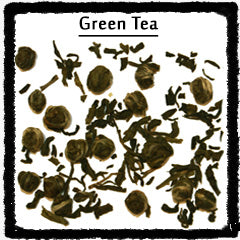
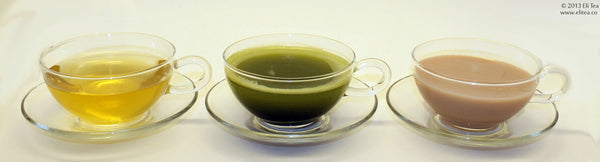
<p dir="ltr" style="line-height: 1.15; margin-top: 0pt; margin-bottom: 0pt;"><span style="font-size: 15px; font-family: Arial; color: #444444; background-color: transparent; vertical-align: baseline; white-space: pre-wrap;"><img style="float: left; margin-right: 8px;" alt="Types of Green Tea Leaves" src="//cdn.shopify.com/s/files/1/0171/0582/files/green_tea_240px_frame_medium.jpg?410">Buddhist monks and traditional herbal healers have used green tea as a stimulant and medicinal drink for centuries. Its popularity is found in its ability to capture the essence of nature, containing high levels of micronutrients like chlorophyll. Brewed green tea lives up to its name with its vegetal, earthy flavor, and is often compared with fresh fruits and vegetables for its nutraceuticals. For much of tea’s long history, this green variety was the go-to, reliable choice for China and much of the world, but modern times have found black tea to be a fierce rival.</span></p>
<p style="text-align: left;"><b style="font-family: 'Times New Roman'; font-size: medium; line-height: normal; font-weight: normal;"> </b></p>
<p dir="ltr" style="line-height: 1.15; margin-top: 0pt; margin-bottom: 0pt;"><span style="font-size: 15px; font-family: Arial; color: #444444; background-color: transparent; vertical-align: baseline; white-space: pre-wrap;">Green tea has received praise for its high levels of the weight loss-related antioxidant compounds like epigallocatechin gallate (EGCG), which may also hold cancer-fighting properties. These compounds known as catechins found in tea leaves are simple to extract and use for pharmaceutical purposes and are continually being researched and refined. Please refer to the scientific studies at the bottom of this page for more information.</span></p>
<p dir="ltr" style="line-height: 1.15; margin-top: 0pt; margin-bottom: 0pt;"> </p>
<p dir="ltr" style="line-height: 1.15; margin-top: 0pt; margin-bottom: 0pt;"><span style="font-size: 15px; font-family: Arial; color: #444444; background-color: transparent; vertical-align: baseline; white-space: pre-wrap;">Green tea can also be found in a variety of products beyond brewed beverages and cafes, as its now available in many forms including ice cream, candy, and cosmetics.</span></p>
<p dir="ltr" style="line-height: 1.15; margin-top: 0pt; margin-bottom: 0pt;"> </p>
<p dir="ltr" style="line-height: 1.15; margin-top: 0pt; margin-bottom: 0pt;"><span style="font-size: 15px; font-family: Arial; color: #444444; background-color: transparent; vertical-align: baseline; white-space: pre-wrap;">These teas generally have a moderate amount of caffeine, less than black tea but more than white. </span></p>
<p style="text-align: left;"><b style="font-family: 'Times New Roman'; font-size: medium; line-height: normal; font-weight: normal;"> </b></p>
<p dir="ltr" style="line-height: 1.15; margin-top: 0pt; margin-bottom: 0pt; padding-left: 30px;"><span style="font-size: 15px; font-family: Arial; color: #666666; background-color: #f6f6f6; text-decoration: underline; vertical-align: baseline; white-space: pre-wrap;">Energizing Power Hierarchy: White&lt;</span><span style="font-size: 15px; font-family: Arial; color: #b45f06; background-color: #f6f6f6; font-weight: bold; text-decoration: underline; vertical-align: baseline; white-space: pre-wrap;">Green</span><span style="font-size: 15px; font-family: Arial; color: #666666; background-color: #f6f6f6; text-decoration: underline; vertical-align: baseline; white-space: pre-wrap;">&lt;Oolong&lt;Black&lt;Coffee&lt;Maté</span></p>
<p dir="ltr" style="line-height: 1.15; margin-top: 0pt; margin-bottom: 0pt; padding-left: 30px;"><span style="font-size: 15px; font-family: Arial; color: #666666; background-color: #f6f6f6; vertical-align: baseline; white-space: pre-wrap;">Green Tea Caffeine Level: 15-20 mg per 6 oz. cup</span></p>
<p dir="ltr" style="line-height: 1.15; margin-top: 0pt; margin-bottom: 0pt; padding-left: 30px;"><span style="font-size: 15px; font-family: Arial; color: #666666; background-color: #f6f6f6; vertical-align: baseline; white-space: pre-wrap;">Coffee Caffeine Level: 100-120 mg per 6 oz. cup</span></p>
<p dir="ltr" style="line-height: 1.15; margin-top: 0pt; margin-bottom: 0pt; padding-left: 30px;"><span style="font-size: 11px; font-family: Arial; color: #444444; background-color: transparent; font-style: italic; vertical-align: baseline; white-space: pre-wrap;">*Note: These caffeine levels are industry standard averages.</span></p>
<p style="text-align: left;"><b style="font-family: 'Times New Roman'; font-size: medium; line-height: normal; font-weight: normal;"><br><br></b></p>
<p dir="ltr" style="line-height: 1.15; margin-top: 0pt; margin-bottom: 0pt;"><span style="font-size: 15px; font-family: Arial; color: #666666; background-color: transparent; font-weight: bold; text-decoration: underline; vertical-align: baseline; white-space: pre-wrap;">Production</span></p>
<p style="text-align: left;"><b style="font-family: 'Times New Roman'; font-size: medium; line-height: normal; font-weight: normal;"> </b></p>
<p dir="ltr" style="line-height: 1.15; margin-top: 0pt; margin-bottom: 0pt;"><span style="font-size: 15px; font-family: Arial; color: #666666; vertical-align: baseline; white-space: pre-wrap;">Like white, oolong, and black teas, green tea is a product of the </span><span style="font-size: 15px; font-family: Arial; color: #666666; font-style: italic; vertical-align: baseline; white-space: pre-wrap;">camellia sinensis</span><span style="font-size: 15px; font-family: Arial; color: #666666; vertical-align: baseline; white-space: pre-wrap;"> plant. Green tea undergoes only a minor amount of processing to yield a gentle brew with vegetal and floral flavors. </span></p>
<p style="text-align: left;"><b style="font-family: 'Times New Roman'; font-size: medium; line-height: normal; font-weight: normal;"> </b></p>
<p dir="ltr" style="line-height: 1.15; margin-top: 0pt; margin-bottom: 0pt;"><span style="font-size: 15px; font-family: Arial; color: #666666; background-color: transparent; vertical-align: baseline; white-space: pre-wrap;">Green tea undergoes four stages of production: withering, Chinese style pan frying or Japanese style steaming, rolling, and drying.  The extent of each of these steps varies by region and producer preferences. The variation or alteration of each step can produce distinctly different tea flavors and textures.</span></p>
<p dir="ltr" style="line-height: 1.15; margin-top: 0pt; margin-bottom: 0pt;"> </p>
<p dir="ltr" style="line-height: 1.15; margin-top: 0pt; margin-bottom: 0pt;"><b style="font-family: 'Times New Roman'; font-size: medium; line-height: normal; font-weight: normal;"><b style="font-family: 'Times New Roman'; font-size: medium; line-height: normal; font-weight: normal;"><span style="font-size: 15px; font-family: Arial; color: #666666; background-color: transparent; vertical-align: baseline; white-space: pre-wrap;"><img style="display: block; margin-left: auto; margin-right: auto;" alt="" src="//cdn.shopify.com/s/files/1/0171/0582/files/shades_of_green_tea_grande.jpg?412"></span></b></b></p>
<p style="text-align: left;"><b style="font-family: 'Times New Roman'; font-size: medium; line-height: normal; font-weight: normal;"> </b></p>
<p dir="ltr" style="line-height: 1.15; margin-top: 0pt; margin-bottom: 0pt;"><span style="font-size: 15px; font-family: Arial; color: #666666; background-color: transparent; vertical-align: baseline; white-space: pre-wrap;">Withering:</span></p>
<p dir="ltr" style="line-height: 1.15; margin-top: 0pt; margin-bottom: 0pt;"><span style="font-size: 15px; font-family: Arial; color: #666666; background-color: transparent; vertical-align: baseline; white-space: pre-wrap;">First, freshly picked leaves are left to wither for up 4 hours; however, shorter withering times are generally favored, as chlorophyll content decreases as time elapses. </span></p>
<p style="text-align: left;"><b style="font-family: 'Times New Roman'; font-size: medium; line-height: normal; font-weight: normal;"> </b></p>
<p dir="ltr" style="line-height: 1.15; margin-top: 0pt; margin-bottom: 0pt;"><span style="font-size: 15px; font-family: Arial; color: #666666; background-color: transparent; vertical-align: baseline; white-space: pre-wrap;">Enzyme Kill:</span></p>
<p dir="ltr" style="line-height: 1.15; margin-top: 0pt; margin-bottom: 0pt;"><span style="font-size: 15px; font-family: Arial; color: #666666; background-color: transparent; vertical-align: baseline; white-space: pre-wrap;">Second, the tea leaves undergo one of two enzyme killing procedures: Chinese style pan frying or Japanese style steaming. </span></p>
<p style="text-align: left;"><b style="font-family: 'Times New Roman'; font-size: medium; line-height: normal; font-weight: normal;"> </b></p>
<p dir="ltr" style="line-height: 1.15; margin-top: 0pt; margin-bottom: 0pt;"><span style="font-size: 15px; font-family: Arial; color: #b45f06; background-color: transparent; vertical-align: baseline; white-space: pre-wrap;">Chinese pan frying</span><span style="font-size: 15px; font-family: Arial; color: #666666; background-color: transparent; vertical-align: baseline; white-space: pre-wrap;">: The withered tea leaves are roasted by tossing the leaves in a dry, hot wok for 1-2 minutes.</span></p>
<p style="text-align: left;"><b style="font-family: 'Times New Roman'; font-size: medium; line-height: normal; font-weight: normal;"> </b></p>
<p dir="ltr" style="line-height: 1.15; margin-top: 0pt; margin-bottom: 0pt;"><span style="font-size: 15px; font-family: Arial; color: #b45f06; background-color: transparent; vertical-align: baseline; white-space: pre-wrap;">Japanese steaming</span><span style="font-size: 15px; font-family: Arial; color: #666666; background-color: transparent; vertical-align: baseline; white-space: pre-wrap;">: The leaves are moved through a rolling, steaming tunnel for 60 seconds or less.  This process produces green teas that are darker in color and allow more vitamins and nutrients to stay intact compared to pan frying.</span></p>
<p style="text-align: left;"><b style="font-family: 'Times New Roman'; font-size: medium; line-height: normal; font-weight: normal;"> </b></p>
<p dir="ltr" style="line-height: 1.15; margin-top: 0pt; margin-bottom: 0pt;"><span style="font-size: 15px; font-family: Arial; color: #666666; background-color: transparent; vertical-align: baseline; white-space: pre-wrap;">Rolling:</span></p>
<p dir="ltr" style="line-height: 1.15; margin-top: 0pt; margin-bottom: 0pt;"><span style="font-size: 15px; font-family: Arial; color: #666666; background-color: transparent; vertical-align: baseline; white-space: pre-wrap;">Next, the leaves are rolled (shaped) into balls or needle-like shapes.  This process is done by hand or, in some cases, by machine.</span></p>
<p style="text-align: left;"><b style="font-family: 'Times New Roman'; font-size: medium; line-height: normal; font-weight: normal;"> </b></p>
<p dir="ltr" style="line-height: 1.15; margin-top: 0pt; margin-bottom: 0pt;"><span style="font-size: 15px; font-family: Arial; color: #666666; background-color: transparent; vertical-align: baseline; white-space: pre-wrap;">Drying:</span></p>
<p dir="ltr" style="line-height: 1.15; margin-top: 0pt; margin-bottom: 0pt;"><span style="font-size: 15px; font-family: Arial; color: #666666; background-color: transparent; vertical-align: baseline; white-space: pre-wrap;">Finally, the tea leaves are placed in a drying room/oven where they are dried until their water content has dropped to 3-6%.</span></p>
<p style="text-align: left;"><b style="font-family: 'Times New Roman'; font-size: medium; line-height: normal; font-weight: normal;"><a title="Steps of Tea Processing" href="http://www.elitea.co/blogs/tea-education/7780719-tea-processing"><img style="display: block; margin-left: auto; margin-right: auto;" alt="" src="//cdn.shopify.com/s/files/1/0171/0582/files/click_to_learn_more_large.jpg?412"></a><br></b></p>
<p dir="ltr" style="line-height: 1.15; margin-top: 0pt; margin-bottom: 0pt;"> </p>
<p dir="ltr" style="line-height: 1.15; margin-top: 0pt; margin-bottom: 0pt;"><span style="font-size: 15px; font-family: Arial; color: #666666; background-color: transparent; font-weight: bold; text-decoration: underline; vertical-align: baseline; white-space: pre-wrap;">Brewing:</span></p>
<p style="text-align: left;"><b style="font-family: 'Times New Roman'; font-size: medium; line-height: normal; font-weight: normal;"> </b></p>
<p dir="ltr" style="line-height: 1.15; margin-top: 0pt; margin-bottom: 0pt;"><span style="font-size: 15px; font-family: Arial; color: #666666; background-color: transparent; vertical-align: baseline; white-space: pre-wrap;">The rule of thumb is to</span><span style="font-size: 15px; font-family: Arial; color: #b45f06; background-color: transparent; vertical-align: baseline; white-space: pre-wrap;"> brew green tea at 180</span><span style="font-size: 15px; font-family: Arial; color: #b45f06; vertical-align: baseline; white-space: pre-wrap;">°</span><span style="font-size: 15px; font-family: Arial; color: #b45f06; background-color: transparent; vertical-align: baseline; white-space: pre-wrap;">F for 1-2 minutes</span><span style="font-size: 15px; font-family: Arial; color: #666666; background-color: transparent; vertical-align: baseline; white-space: pre-wrap;">; however, depending on the cut of the leaf and the level of processing, the brew time may be longer.  For example, a rolled tea leaf like Eli Tea Jasmine Pearls requires 2-3 minutes to brew compared to Eli Tea Kyoto Sencha Rose Festival which only needs 1-2 minutes.  This is partially because the Jasmine Pearls are rolled into pearl-balls, thus requiring additional time to unfold.</span></p>
<p style="text-align: left;"><b style="font-family: 'Times New Roman'; font-size: medium; line-height: normal; font-weight: normal;"> </b></p>
<p dir="ltr" style="line-height: 1.15; margin-top: 0pt; margin-bottom: 0pt;"><span style="font-size: 15px; font-family: Arial; background-color: transparent; font-weight: bold; text-decoration: underline; vertical-align: baseline; white-space: pre-wrap;">Health Benefits</span></p>
<p style="text-align: left;"><b style="font-family: 'Times New Roman'; font-size: medium; line-height: normal; font-weight: normal;"> </b></p>
<p dir="ltr" style="line-height: 1.15; margin-top: 0pt; margin-bottom: 0pt;"><span style="font-size: 15px; font-family: Arial; background-color: transparent; vertical-align: baseline; white-space: pre-wrap;">Good diuretic </span></p>
<p dir="ltr" style="line-height: 1.15; margin-top: 0pt; margin-bottom: 0pt;"><span style="font-size: 15px; font-family: Arial; background-color: transparent; vertical-align: baseline; white-space: pre-wrap;">Boost metabolism</span></p>
<p dir="ltr" style="line-height: 1.15; margin-top: 0pt; margin-bottom: 0pt;"><span style="font-size: 15px; font-family: Arial; background-color: transparent; vertical-align: baseline; white-space: pre-wrap;">Cancer-fighting compounds</span></p>
<p dir="ltr" style="line-height: 1.15; margin-top: 0pt; margin-bottom: 0pt;"><span style="font-size: 15px; font-family: Arial; background-color: transparent; vertical-align: baseline; white-space: pre-wrap;">Antibacterial properties</span></p>
<p dir="ltr" style="line-height: 1.15; margin-top: 0pt; margin-bottom: 0pt;"><span style="font-size: 15px; font-family: Arial; background-color: transparent; vertical-align: baseline; white-space: pre-wrap;">Antioxidants</span></p>
<p style="text-align: left;"><b style="font-family: 'Times New Roman'; font-size: medium; line-height: normal; font-weight: normal;"> </b></p>
<p dir="ltr" style="line-height: 1.15; margin-top: 0pt; margin-bottom: 0pt;"><span style="font-size: 15px; font-family: Arial; background-color: transparent; text-decoration: underline; vertical-align: baseline; white-space: pre-wrap;">Trending Scientific Research:</span></p>
<p style="text-align: left;"><b id="docs-internal-guid-5580658c-72aa-7940-80eb-87a9fe5b3a03" style="font-family: 'Times New Roman'; font-size: medium; line-height: normal; font-weight: normal;"> </b></p>
<p dir="ltr" style="line-height: 1.15; margin-top: 0pt; margin-bottom: 0pt;"><a href="http://onlinelibrary.wiley.com/doi/10.1038/oby.2005.142/full"><span style="font-size: 15px; font-family: Arial; vertical-align: baseline; white-space: pre-wrap;">Body Weight Loss and Weight Maintenance in Relation to Habitual Caffeine Intake and Green Tea Supplementation (Sep. 2012)</span></a></p>
<h1 dir="ltr" style="line-height: 1.15; margin-top: 24pt; margin-bottom: 6pt; display: inline !important;"><a href="http://www.ncbi.nlm.nih.gov/pmc/articles/PMC2829848/"><span style="font-size: 15px; font-family: Arial; vertical-align: baseline; white-space: pre-wrap;">Cancer prevention by tea: animal studies, molecular mechanisms and human relevance</span></a></h1>
<p dir="ltr" style="line-height: 1.15; margin-top: 0pt; margin-bottom: 0pt;"> </p>
<p style="text-align: left;"><b id="docs-internal-guid-5580658c-72aa-7940-80eb-87a9fe5b3a03" style="font-family: 'Times New Roman'; font-size: medium; line-height: normal; font-weight: normal;"> </b></p>]]>
    </content>
  </entry>
  <entry>
    <id>https://www.eliteabar.com/blogs/tea-education/7750673-mate-tea-profile</id>
    <published>2013-04-23T14:01:19-04:00</published>
    <updated>2014-01-09T17:21:33-05:00</updated>
    <link rel="alternate" type="text/html" href="https://www.eliteabar.com/blogs/tea-education/7750673-mate-tea-profile"/>
    <title>Mate Tea Profile</title>
    <author>
      <name>elias majid</name>
    </author>
    <content type="html">
      <![CDATA[<p class="MsoNormal"><i><span style="font-size: 14.0pt; line-height: 115%; font-family: 'Arial','sans-serif';">Going Beyond Coffee</span></i></p>
<p dir="ltr" style="line-height: 1.15; margin-top: 0pt; margin-bottom: 0pt;"><img style="float: left; margin-right: 4px;" src="//cdn.shopify.com/s/files/1/0171/0582/files/mate_240px_frame_medium.jpg?404" /></p>
<p dir="ltr" style="line-height: 1.15; margin-top: 0pt; margin-bottom: 0pt;"><span style="font-size: 15px; font-family: Arial; background-color: transparent; vertical-align: baseline; white-space: pre-wrap;">Mat</span><span style="font-size: 15px; font-family: Arial; background-color: #f6f6f6; vertical-align: baseline; white-space: pre-wrap;">é</span><span style="font-size: 15px; font-family: Arial; background-color: transparent; vertical-align: baseline; white-space: pre-wrap;"> is from the </span><span style="font-size: 15px; font-family: Arial; font-style: italic; vertical-align: baseline; white-space: pre-wrap;">Ilex paraguariensis </span><span style="font-size: 15px; font-family: Arial; vertical-align: baseline; white-space: pre-wrap;">plant</span><span style="font-size: 15px; font-family: Arial; vertical-align: baseline; white-space: pre-wrap;">of the holly family and is not related to </span><span style="font-size: 15px; font-family: Arial; font-style: italic; vertical-align: baseline; white-space: pre-wrap;">Camellia sinensis,</span><span style="font-size: 15px; font-family: Arial; vertical-align: baseline; white-space: pre-wrap;"> the origin of which white, green, oolong, and black teas.  The plant is native to South America and can be harvested year round. </span><span style="font-size: 15px; font-family: Arial; background-color: transparent; vertical-align: baseline; white-space: pre-wrap;">The brewed drink is known as </span><span style="font-size: 15px; font-family: Arial; color: #b45f06; font-style: italic; vertical-align: baseline; white-space: pre-wrap;">chimarrão</span><span style="font-size: 15px; font-family: Arial; background-color: transparent; vertical-align: baseline; white-space: pre-wrap;">, or cimarron, and is both steeped and consumed from calabash gourd.  A metal (traditionally silver) filter straw known as a </span><span style="font-size: 15px; font-family: Arial; color: #b45f06; background-color: transparent; font-style: italic; vertical-align: baseline; white-space: pre-wrap;">bomba</span><span style="font-size: 15px; font-family: Arial; background-color: transparent; vertical-align: baseline; white-space: pre-wrap;"> (also known as </span><span style="font-size: 15px; font-family: Arial; background-color: transparent; font-style: italic; vertical-align: baseline; white-space: pre-wrap;">bombilla</span><span style="font-size: 15px; font-family: Arial; background-color: transparent; vertical-align: baseline; white-space: pre-wrap;">) is used to consume the </span><span style="font-size: 15px; font-family: Arial; color: #444444; font-style: italic; vertical-align: baseline; white-space: pre-wrap;">chimarrão </span><span style="font-size: 15px; font-family: Arial; background-color: transparent; vertical-align: baseline; white-space: pre-wrap;">without consuming the leaves.  </span><span style="font-size: 15px; font-family: Arial; color: #444444; font-style: italic; vertical-align: baseline; white-space: pre-wrap;">Chimarrão</span><span style="font-size: 15px; font-family: Arial; background-color: transparent; vertical-align: baseline; white-space: pre-wrap;">is usually consumed as a social beverage where the gourd will be passed from person to person for a sip of the beverage until empty. </span></p>
<p><b style="font-family: 'Times New Roman'; font-size: medium; line-height: normal; font-weight: normal;"> </b></p>
<p dir="ltr" style="line-height: 1.15; margin-top: 0pt; margin-bottom: 0pt;"><span style="font-size: 15px; font-family: Arial; background-color: transparent; vertical-align: baseline; white-space: pre-wrap;">Two popular forms of mat</span><span style="font-size: 15px; font-family: Arial; background-color: #f6f6f6; vertical-align: baseline; white-space: pre-wrap;">é </span><span style="font-size: 15px; font-family: Arial; background-color: transparent; vertical-align: baseline; white-space: pre-wrap;">have developed: the traditional green mat</span><span style="font-size: 15px; font-family: Arial; background-color: #f6f6f6; vertical-align: baseline; white-space: pre-wrap;">é</span><span style="font-size: 15px; font-family: Arial; background-color: transparent; vertical-align: baseline; white-space: pre-wrap;"> (referred to as yerba mat</span><span style="font-size: 15px; font-family: Arial; background-color: #f6f6f6; vertical-align: baseline; white-space: pre-wrap;">é)</span><span style="font-size: 15px; font-family: Arial; background-color: transparent; vertical-align: baseline; white-space: pre-wrap;"> and the brown mat</span><span style="font-size: 15px; font-family: Arial; background-color: #f6f6f6; vertical-align: baseline; white-space: pre-wrap;">é</span><span style="font-size: 15px; font-family: Arial; background-color: transparent; vertical-align: baseline; white-space: pre-wrap;"> (referred to as roasted mat</span><span style="font-size: 15px; font-family: Arial; background-color: #f6f6f6; vertical-align: baseline; white-space: pre-wrap;">é)</span><span style="font-size: 15px; font-family: Arial; background-color: transparent; vertical-align: baseline; white-space: pre-wrap;">.  The brewed yerba mat</span><span style="font-size: 15px; font-family: Arial; background-color: #f6f6f6; vertical-align: baseline; white-space: pre-wrap;">é </span><span style="font-size: 15px; font-family: Arial; background-color: transparent; vertical-align: baseline; white-space: pre-wrap;">produces a lemony, vegetal flavor while the roasted mate variety produces a cocoa-like flavor.  Mat</span><span style="font-size: 15px; font-family: Arial; background-color: #f6f6f6; vertical-align: baseline; white-space: pre-wrap;">é</span><span style="font-size: 15px; font-family: Arial; background-color: transparent; vertical-align: baseline; white-space: pre-wrap;"> tea is high in the energizing category due to a stimulant compounds known as xanthines. Specifically, mat</span><span style="font-size: 15px; font-family: Arial; background-color: #f6f6f6; vertical-align: baseline; white-space: pre-wrap;">é </span><span style="font-size: 15px; font-family: Arial; background-color: transparent; vertical-align: baseline; white-space: pre-wrap;">contains the xanthines caffeine, theophylline, and theobromine, the energizing compounds found in coffee, chocolate, and tea (</span><span style="font-size: 15px; font-family: Arial; background-color: transparent; font-style: italic; vertical-align: baseline; white-space: pre-wrap;">Camellia sinensis</span><span style="font-size: 15px; font-family: Arial; background-color: transparent; vertical-align: baseline; white-space: pre-wrap;">), respectively, but all in one cup of mat</span><span style="font-size: 15px; font-family: Arial; background-color: #f6f6f6; vertical-align: baseline; white-space: pre-wrap;">é</span><span style="font-size: 15px; font-family: Arial; background-color: transparent; vertical-align: baseline; white-space: pre-wrap;">. Occasionally in literature, these energizing compounds, along with other accessory energizing alkaloid compounds, are collectively referred to as mat</span><span style="font-size: 15px; font-family: Arial; background-color: #f6f6f6; vertical-align: baseline; white-space: pre-wrap;">éine.</span><span style="font-size: 15px; font-family: Arial; background-color: transparent; vertical-align: baseline; white-space: pre-wrap;">   Many mat</span><span style="font-size: 15px; font-family: Arial; background-color: #f6f6f6; vertical-align: baseline; white-space: pre-wrap;">é</span><span style="font-size: 15px; font-family: Arial; background-color: transparent; vertical-align: baseline; white-space: pre-wrap;"> drinkers claim the symphony of mat</span><span style="font-size: 15px; font-family: Arial; background-color: #f6f6f6; vertical-align: baseline; white-space: pre-wrap;">é</span><span style="font-size: 15px; font-family: Arial; background-color: transparent; vertical-align: baseline; white-space: pre-wrap;">ine compounds to provide a more energizing experience than coffee without the “jitters.”</span></p>
<table>
<tbody>
<tr>
<td> </td>
<td>
<p><span style="font-size: 13px; font-family: Arial; color: #666666; background-color: #f6f6f6; text-decoration: underline; vertical-align: baseline; white-space: pre-wrap;">Energizing Power Hierarchy: </span></p>
<p><span style="font-size: 13px; font-family: Arial; color: #666666; background-color: #f6f6f6; text-decoration: underline; vertical-align: baseline; white-space: pre-wrap;">White&lt;Green&lt;Oolong&lt;Black&lt;&lt;Coffee&lt;</span><span style="font-size: 13px; font-family: Arial; color: #b45f06; background-color: #f6f6f6; font-weight: bold; text-decoration: underline; vertical-align: baseline; white-space: pre-wrap;">Maté</span></p>
<p dir="ltr" style="line-height: 1.15; margin-top: 0pt; margin-bottom: 0pt;"><span style="font-size: 13px; font-family: Arial; color: #666666; background-color: #f6f6f6; font-weight: bold; vertical-align: baseline; white-space: pre-wrap;">Maté Caffeine level: 80-92 mg per 6 oz. cup</span></p>
<p dir="ltr" style="line-height: 1.15; margin-top: 0pt; margin-bottom: 0pt;"><span style="font-size: 13px; font-family: Arial; color: #666666; background-color: #f6f6f6; font-weight: bold; vertical-align: baseline; white-space: pre-wrap;">Coffee Caffeine level: 100-120 mg per 6 oz. cup</span></p>
<p dir="ltr" style="line-height: 1.15; margin-top: 0pt; margin-bottom: 0pt;"> </p>
<p style="margin-bottom: 1em; padding: 0px; border: 0px; font-family: Helvetica, Arial, sans-serif; font-weight: normal; line-height: 19.5px; vertical-align: baseline; white-space: normal;"><strong id="internal-source-marker_0.3448616839013994" style="font-weight: normal; font-family: 'Times New Roman'; font-size: medium; line-height: normal;"><span style="margin: 0px; padding: 0px; border: 0px; font-family: Arial; font-size: 11px; font-style: italic; font-variant: inherit; line-height: inherit; vertical-align: baseline; background-color: transparent; white-space: pre-wrap;">* the following caffeine levels are industry averages</span></strong></p>
<p dir="ltr" style="line-height: 1.15; margin-top: 0pt; margin-bottom: 0pt;"> </p>
</td>
</tr>
</tbody>
</table>
<p dir="ltr" style="line-height: 1.15; margin-top: 0pt; margin-bottom: 0pt;"> </p>
<p dir="ltr" style="line-height: 1.15; margin-top: 0pt; margin-bottom: 0pt;"><span style="font-size: 13px; font-family: Arial; background-color: transparent; font-style: italic; vertical-align: baseline; white-space: pre-wrap;">Note: Studies have reported that mate contains up to 92 mg (15 mg/oz)</span><span style="font-size: 8px; font-family: Arial; background-color: transparent; font-style: italic; vertical-align: super; white-space: pre-wrap;">1</span><span style="font-size: 13px; font-family: Arial; background-color: transparent; font-style: italic; vertical-align: baseline; white-space: pre-wrap;"> of caffeine per 6 oz. cup; however, in the methods of traditional intake, drinkers receive up to 260 mg of caffeine.</span><span style="font-size: 8px; font-family: Arial; background-color: transparent; font-style: italic; vertical-align: super; white-space: pre-wrap;">2</span></p>
<p><b style="font-family: 'Times New Roman'; font-size: medium; line-height: normal; font-weight: normal;"> </b></p>
<p dir="ltr" style="line-height: 1.15; margin-top: 0pt; margin-bottom: 0pt;"><span style="font-size: 15px; font-family: Arial; background-color: transparent; font-weight: bold; vertical-align: baseline; white-space: pre-wrap;">Production</span><span style="font-size: 15px; font-family: Arial; background-color: transparent; vertical-align: baseline; white-space: pre-wrap;">:</span></p>
<p dir="ltr" style="line-height: 1.15; margin-top: 0pt; margin-bottom: 0pt;"><span style="font-size: 15px; font-family: Arial; background-color: transparent; vertical-align: baseline; white-space: pre-wrap;">The production of mat</span><span style="font-size: 15px; font-family: Arial; background-color: #f6f6f6; vertical-align: baseline; white-space: pre-wrap;">é</span><span style="font-size: 15px; font-family: Arial; background-color: transparent; vertical-align: baseline; white-space: pre-wrap;"> is fairly simple compared to teas from the </span><span style="font-size: 15px; font-family: Arial; background-color: transparent; font-style: italic; vertical-align: baseline; white-space: pre-wrap;">Camellia sinensis</span><span style="font-size: 15px; font-family: Arial; background-color: transparent; vertical-align: baseline; white-space: pre-wrap;"> plant.  After the harvest there are three stages of processing:</span></p>
<p><b style="font-family: 'Times New Roman'; font-size: medium; line-height: normal; font-weight: normal;"> </b></p>
<p dir="ltr" style="line-height: 1.15; margin-top: 0pt; margin-bottom: 0pt;"><span style="font-size: 15px; font-family: Arial; background-color: transparent; vertical-align: baseline; white-space: pre-wrap;">1. Supeco: As an enzyme kill stage, the goal is to cease basal enzymatic activity by lightly toasting the leaves, still on their branches, over an open fire.</span></p>
<p><b style="font-family: 'Times New Roman'; font-size: medium; line-height: normal; font-weight: normal;"> </b></p>
<p dir="ltr" style="line-height: 1.15; margin-top: 0pt; margin-bottom: 0pt;"><span style="font-size: 15px; font-family: Arial; background-color: transparent; vertical-align: baseline; white-space: pre-wrap;">2. Barbaqua: The leaves are moved to a rotating drum that is heated by burning wood. This is a slow process and can take anywhere from 5 to 15 hours.</span><span style="font-size: 9px; font-family: Arial; background-color: transparent; vertical-align: super; white-space: pre-wrap;">3</span><span style="font-size: 15px; font-family: Arial; background-color: transparent; vertical-align: baseline; white-space: pre-wrap;">  Traditionally, the leaves (while still on the branches) were suspended over a moderate open fire for half a day.</span></p>
<p><b style="font-family: 'Times New Roman'; font-size: medium; line-height: normal; font-weight: normal;"> </b></p>
<p dir="ltr" style="line-height: 1.15; margin-top: 0pt; margin-bottom: 0pt;"><span style="font-size: 15px; font-family: Arial; background-color: transparent; vertical-align: baseline; white-space: pre-wrap;">3. The leaves undergo a final drying and are then separated from the branch and ground up.</span></p>
<p style="text-align: center;"><a title="Steps of Tea Processing" href="http://www.elitea.co/blogs/tea-education/7780719-tea-processing"><b style="font-family: 'Times New Roman'; font-size: medium; line-height: normal; font-weight: normal;"><img alt="" src="//cdn.shopify.com/s/files/1/0171/0582/files/click_to_learn_more_grande.jpg?404" /></b></a></p>
<p><b id="docs-internal-guid-7ba4d19d-5b87-2048-4972-3411b4afca8f" style="font-family: 'Times New Roman'; font-size: medium; line-height: normal; font-weight: normal;"> </b></p>
<p dir="ltr" style="line-height: 1.15; margin-top: 0pt; margin-bottom: 0pt;"><b id="docs-internal-guid-7ba4d19d-5b87-2048-4972-3411b4afca8f" style="font-family: 'Times New Roman'; font-size: medium; line-height: normal; font-weight: normal;"><span style="font-size: 15px; font-family: Arial; background-color: transparent; font-weight: bold; vertical-align: baseline; white-space: pre-wrap;">Brewing</span></b></p>
<p dir="ltr" style="line-height: 1.15; margin-top: 0pt; margin-bottom: 0pt;"><b id="docs-internal-guid-7ba4d19d-5b87-2048-4972-3411b4afca8f" style="font-family: 'Times New Roman'; font-size: medium; line-height: normal; font-weight: normal;"><span style="font-size: 15px; font-family: Arial; color: #b45f06; background-color: transparent; vertical-align: baseline; white-space: pre-wrap;">Mat</span><span style="font-size: 15px; font-family: Arial; color: #b45f06; background-color: #f6f6f6; vertical-align: baseline; white-space: pre-wrap;">é</span><span style="font-size: 15px; font-family: Arial; color: #b45f06; background-color: transparent; vertical-align: baseline; white-space: pre-wrap;"> tea is best brewed with hot water just under boiling at 210</span><span style="font-size: 15px; font-family: Arial; color: #b45f06; vertical-align: baseline; white-space: pre-wrap;">°</span><span style="font-size: 15px; font-family: Arial; color: #b45f06; background-color: transparent; vertical-align: baseline; white-space: pre-wrap;">F (99</span><span style="font-size: 15px; font-family: Arial; color: #b45f06; vertical-align: baseline; white-space: pre-wrap;">°C</span><span style="font-size: 15px; font-family: Arial; color: #b45f06; background-color: transparent; vertical-align: baseline; white-space: pre-wrap;">) for 5-6 minutes</span><span style="font-size: 15px; font-family: Arial; background-color: transparent; vertical-align: baseline; white-space: pre-wrap;">.  The tea is great for multiple infusions and even capable of brewing in a coffee machine or microwave.</span></b></p>
<p><b style="font-family: 'Times New Roman'; font-size: medium; line-height: normal; font-weight: normal;"><b style="font-family: 'Times New Roman'; font-size: medium; line-height: normal; font-weight: normal;"> </b></b></p>
<p dir="ltr" style="line-height: 1.15; margin-top: 0pt; margin-bottom: 0pt;"><span style="font-size: 15px; font-family: Arial; background-color: transparent; vertical-align: baseline; white-space: pre-wrap;">Traditionally, mat</span><span style="font-size: 15px; font-family: Arial; background-color: #f6f6f6; vertical-align: baseline; white-space: pre-wrap;">é</span><span style="font-size: 15px; font-family: Arial; background-color: transparent; vertical-align: baseline; white-space: pre-wrap;"> is brewed in a communal calabash gourd that is passed from person to person.  The leaves are left in the gourd and re-steaped with hot water multiple times.</span></p>
<p><b style="font-family: 'Times New Roman'; font-size: medium; line-height: normal; font-weight: normal;"><b style="font-family: 'Times New Roman'; font-size: medium; line-height: normal; font-weight: normal;"> </b></b></p>
<p dir="ltr" style="line-height: 1.15; margin-top: 0pt; margin-bottom: 0pt;"><span style="font-size: 15px; font-family: Arial; background-color: transparent; font-weight: bold; vertical-align: baseline; white-space: pre-wrap;">Health Benefits</span></p>
<p dir="ltr" style="line-height: 1.15; margin-top: 0pt; margin-bottom: 0pt;"><span style="font-size: 15px; font-family: Arial; background-color: transparent; vertical-align: baseline; white-space: pre-wrap;">Energizer</span></p>
<p dir="ltr" style="line-height: 1.15; margin-top: 0pt; margin-bottom: 0pt;"><span style="font-size: 15px; font-family: Arial; background-color: transparent; vertical-align: baseline; white-space: pre-wrap;">Appetite curbing</span></p>
<p dir="ltr" style="line-height: 1.15; margin-top: 0pt; margin-bottom: 0pt;"><span style="font-size: 15px; font-family: Arial; background-color: transparent; vertical-align: baseline; white-space: pre-wrap;">Digestion aid</span></p>
<p dir="ltr" style="line-height: 1.15; margin-top: 0pt; margin-bottom: 0pt;"><span style="font-size: 15px; font-family: Arial; background-color: transparent; vertical-align: baseline; white-space: pre-wrap;">Vitamins: A, B1, B2, B3, C and E</span></p>
<p dir="ltr" style="line-height: 1.15; margin-top: 0pt; margin-bottom: 0pt;"><span style="font-size: 15px; font-family: Arial; background-color: transparent; vertical-align: baseline; white-space: pre-wrap;">Minerals: potassium, magnesium, calcium, manganese, iron, selenium, phosphorus, and zinc</span></p>
<p><b style="font-family: 'Times New Roman'; font-size: medium; line-height: normal; font-weight: normal;"><b style="font-family: 'Times New Roman'; font-size: medium; line-height: normal; font-weight: normal;"> </b></b></p>
<p dir="ltr" style="line-height: 1.15; margin-top: 0pt; margin-bottom: 0pt;"><span style="font-size: 15px; font-family: Arial; background-color: transparent; font-weight: bold; vertical-align: baseline; white-space: pre-wrap;">Trending Scientific Research</span></p>
<p dir="ltr" style="line-height: 1.15; margin-top: 0pt; margin-bottom: 0pt;"> </p>
<h2 dir="ltr" style="line-height: 1.15; margin-top: 18pt; margin-bottom: 4pt; display: inline !important; padding-left: 30px;"><b id="docs-internal-guid-7ba4d19d-5b87-2048-4972-3411b4afca8f" style="line-height: normal; font-weight: normal;"><span style="font-size: 15px; font-family: Arial; background-color: transparent; font-weight: normal; vertical-align: baseline; white-space: pre-wrap;"><a href="https://www.jstage.jst.go.jp/article/bpb/34/12/34_12_1849/_article" target="_blank">Mat</a></span><a href="#temp_created_link"><span style="font-size: 15px; font-family: Arial; background-color: #f6f6f6; font-weight: normal; vertical-align: baseline; white-space: pre-wrap;">é</span><span style="font-size: 15px; font-family: Arial; background-color: transparent; font-weight: normal; vertical-align: baseline; white-space: pre-wrap;"> Tea (</span><span style="font-size: 15px; font-family: Arial; background-color: transparent; font-weight: normal; vertical-align: baseline; white-space: pre-wrap;">Ilex paraguariensis</span><span style="font-size: 15px; font-family: Arial; background-color: transparent; font-weight: normal; vertical-align: baseline; white-space: pre-wrap;">) Promotes Satiety and Body Weight Lowering in Mice: Involvement of Glucagon-Like Peptide-1</span></a></b></h2>
<h1 dir="ltr" style="line-height: 1.15; margin-top: 8pt; margin-bottom: 6pt; padding-left: 30px;"><span style="font-size: 15px; font-family: Arial; font-weight: normal; vertical-align: baseline; white-space: pre-wrap;"><a href="http://mutage.oxfordjournals.org/content/23/4/261.short" target="_blank">Protective effects of mat</a></span><a href="#temp_created_link"><span style="font-size: 15px; font-family: Arial; background-color: #f6f6f6; font-weight: normal; vertical-align: baseline; white-space: pre-wrap;">é</span><span style="font-size: 15px; font-family: Arial; font-weight: normal; vertical-align: baseline; white-space: pre-wrap;"> tea (</span><span style="font-size: 15px; font-family: Arial; font-weight: normal; font-style: italic; vertical-align: baseline; white-space: pre-wrap;">Ilex paraguariensis</span><span style="font-size: 15px; font-family: Arial; font-weight: normal; vertical-align: baseline; white-space: pre-wrap;">) on H</span><span style="font-size: 9px; font-family: Arial; font-weight: normal; vertical-align: sub; white-space: pre-wrap;">2</span><span style="font-size: 15px; font-family: Arial; font-weight: normal; vertical-align: baseline; white-space: pre-wrap;">O</span><span style="font-size: 9px; font-family: Arial; font-weight: normal; vertical-align: sub; white-space: pre-wrap;">2</span><span style="font-size: 15px; font-family: Arial; font-weight: normal; vertical-align: baseline; white-space: pre-wrap;">-induced DNA damage and DNA repair in mice</span></a></h1>
<p><b style="font-family: 'Times New Roman'; font-size: medium; line-height: normal; font-weight: normal;"><b style="font-family: 'Times New Roman'; font-size: medium; line-height: normal; font-weight: normal;"> </b></b></p>
<p dir="ltr" style="line-height: 1.15; margin-top: 0pt; margin-bottom: 0pt;"><span style="font-size: 12px; font-family: Arial; color: #666666; background-color: transparent; text-decoration: underline; vertical-align: baseline; white-space: pre-wrap;">References</span></p>
<p dir="ltr" style="line-height: 1.15; margin-top: 0pt; margin-bottom: 0pt;"><span style="font-size: 12px; font-family: Arial; color: #666666; background-color: transparent; vertical-align: baseline; white-space: pre-wrap;">1) Heck, C.I. and De Mejia, E.G. (2007), Yerba Mate Tea (</span><span style="font-size: 12px; font-family: Arial; color: #666666; background-color: transparent; font-style: italic; vertical-align: baseline; white-space: pre-wrap;">Ilex paraguariensis</span><span style="font-size: 12px; font-family: Arial; color: #666666; background-color: transparent; vertical-align: baseline; white-space: pre-wrap;">): A Comprehensive Review on Chemistry, Health Implications, and Technological Considerations. Journal of Food Science, 72: R138–R151. doi: 10.1111/j.1750-3841.2007.00535.x</span></p>
<p><b style="font-family: 'Times New Roman'; font-size: medium; line-height: normal; font-weight: normal;"><b style="font-family: 'Times New Roman'; font-size: medium; line-height: normal; font-weight: normal;"> </b></b></p>
<p dir="ltr" style="line-height: 1.5; margin-top: 0pt; margin-bottom: 0pt;"><span style="font-size: 12px; font-family: Arial; color: #666666; background-color: transparent; vertical-align: baseline; white-space: pre-wrap;">2) </span><a style="text-decoration: none;" href="http://onlinelibrary.wiley.com/doi/10.1111/j.1750-3841.2007.00535.x/full#b72"><span style="font-size: 12px; font-family: Arial; color: #666666; background-color: transparent; vertical-align: baseline; white-space: pre-wrap;">Mazzafera P. 1997. Mate drinking: caffeine and phenolic acid intake. Food Chem 60:67–71.</span></a></p>
<p><b id="docs-internal-guid-7ba4d19d-5b87-2048-4972-3411b4afca8f" style="font-family: 'Times New Roman'; font-size: medium; line-height: normal; font-weight: normal;"><br /><span style="font-size: 12px; font-family: Arial; color: #666666; background-color: transparent; font-style: italic; vertical-align: baseline; white-space: pre-wrap;">3) *Spiller, Gene A. Caffeine. Boca Raton, FL: CRC P, 1998. 196.</span></b></p>
<p> </p>
<p> </p>]]>
    </content>
  </entry>
  <entry>
    <id>https://www.eliteabar.com/blogs/tea-education/7750671-herbal-tea-101</id>
    <published>2013-04-23T14:00:00-04:00</published>
    <updated>2015-10-17T19:47:26-04:00</updated>
    <link rel="alternate" type="text/html" href="https://www.eliteabar.com/blogs/tea-education/7750671-herbal-tea-101"/>
    <title>Herbal Tea 101</title>
    <author>
      <name>elias majid</name>
    </author>
    <content type="html">
      <![CDATA[<p dir="ltr" style="line-height: 1.15; margin-top: 0pt; margin-bottom: 11pt;"><span style="font-size: 15px; font-family: Arial; background-color: transparent; font-weight: bold; vertical-align: baseline; white-space: pre-wrap;">Herbal Tea Profile</span></p>
<p dir="ltr" style="line-height: 1.15; margin-top: 0pt; margin-bottom: 11pt;"><span style="font-size: 15px; font-family: Arial; background-color: transparent; vertical-align: baseline; white-space: pre-wrap;"><img style="float: left; margin-right: 4px;" src="//cdn.shopify.com/s/files/1/0171/0582/files/Herbal_tea_240px_frame_medium.jpg?412">By industry terms, the use of “tea” to describe anything that does not originate from the </span><span style="font-size: 15px; font-family: Arial; background-color: transparent; font-style: italic; vertical-align: baseline; white-space: pre-wrap;">Camellia sinensis</span><span style="font-size: 15px; font-family: Arial; background-color: transparent; vertical-align: baseline; white-space: pre-wrap;"> plant is incorrect. To stay in tune with the American vernacular of English, however, the use of "herbal tea" to describe herbal infusions seems efficient and appropriate. </span></p>
<p dir="ltr" style="line-height: 1.15; margin-top: 0pt; margin-bottom: 11pt;"><span style="font-size: 15px; font-family: Arial; background-color: transparent; vertical-align: baseline; white-space: pre-wrap;">Herbal tea is properly termed as “herbal infusion” or “tisane” in industry vocabulary. It refers to anything that is infused in hot water and not from the </span><span style="font-size: 15px; font-family: Arial; background-color: transparent; font-style: italic; vertical-align: baseline; white-space: pre-wrap;">Camellia sinensis</span><span style="font-size: 15px; font-family: Arial; background-color: transparent; vertical-align: baseline; white-space: pre-wrap;"> plant, a bean plant (i.e. coffee), or anything containing caffeine. </span></p>
<p dir="ltr" style="line-height: 1.15; margin-top: 0pt; margin-bottom: 11pt;"><span style="font-size: 15px; font-family: Arial; background-color: transparent; vertical-align: baseline; white-space: pre-wrap;">The roots of tisanes, like tea, are often medicinal; in many cases tisanes were the first form of medicine for peoples across the world.  Tisanes are often composed of flowers, leaves, bark, roots, etc., whereby the infusion of the herbal product into hot water allows for the extraction of organic chemical and medicinal compounds into a form more palatable and active for human consumption (please note some herbal infusions can be toxic).  Tisanes are categorically limited to caffeine-free compounds; </span><span style="font-size: 15px; font-family: Arial; background-color: transparent; font-style: italic; vertical-align: baseline; white-space: pre-wrap;">maté </span><span style="font-size: 15px; font-family: Arial; background-color: transparent; vertical-align: baseline; white-space: pre-wrap;">and </span><span style="font-size: 15px; font-family: Arial; background-color: transparent; font-style: italic; vertical-align: baseline; white-space: pre-wrap;">guarana </span><span style="font-size: 15px; font-family: Arial; background-color: transparent; vertical-align: baseline; white-space: pre-wrap;">are of plant origin also but are independently categorized for containing </span><span style="font-size: 15px; font-family: Arial; background-color: transparent; font-style: italic; vertical-align: baseline; white-space: pre-wrap;">xanthines, </span><span style="font-size: 15px; font-family: Arial; background-color: transparent; vertical-align: baseline; white-space: pre-wrap;">energizing caffeine-like compounds</span><span style="font-size: 15px; font-family: Arial; background-color: transparent; font-style: italic; vertical-align: baseline; white-space: pre-wrap;">.</span></p>
<p dir="ltr" style="line-height: 1.15; margin-top: 0pt; margin-bottom: 11pt;"><span style="font-size: 15px; font-family: Arial; background-color: transparent; vertical-align: baseline; white-space: pre-wrap;">Listed below are a few common herbal components used in tea:</span></p>
<p dir="ltr" style="line-height: 1.15; margin-top: 0pt; margin-bottom: 11pt;"><span style="font-size: 15px; font-family: Arial; background-color: transparent; text-decoration: underline; vertical-align: baseline; white-space: pre-wrap;">Flowers</span><span style="font-size: 15px; font-family: Arial; background-color: transparent; vertical-align: baseline; white-space: pre-wrap;">:  Flowers are not only a visually attractive component of teas, but contain many essential oils.  These oils often contain many medicinal compounds of interest. A common 100% flower tea, for example, is chamomile, which is revered as a digestive aid.</span></p>
<p dir="ltr" style="line-height: 1.15; margin-top: 0pt; margin-bottom: 11pt;"><span style="font-size: 15px; font-family: Arial; background-color: transparent; text-decoration: underline; vertical-align: baseline; white-space: pre-wrap;">Roots</span><span style="font-size: 15px; font-family: Arial; background-color: transparent; vertical-align: baseline; white-space: pre-wrap;">: Infused roots tend to be bitter in flavor because of the alkaline compounds found in the roots.  These bitter compounds are often medicinally beneficial; however, in high quantities they can be quite toxic.  A popular root used in many tea products is ginseng.</span></p>
<p dir="ltr" style="line-height: 1.15; margin-top: 0pt; margin-bottom: 11pt;"><span style="font-size: 15px; font-family: Arial; background-color: transparent; text-decoration: underline; vertical-align: baseline; white-space: pre-wrap;">Bark</span><span style="font-size: 15px; font-family: Arial; background-color: transparent; vertical-align: baseline; white-space: pre-wrap;">:  Cinnamon is a popular herbal bark infusion used in tea.  Pieces of the bark are peeled off and then usually ground.</span></p>
<p dir="ltr" style="line-height: 1.15; margin-top: 0pt; margin-bottom: 11pt;"><span style="font-size: 15px; font-family: Arial; background-color: transparent; vertical-align: baseline; white-space: pre-wrap;">Bush tea refers to herbal tea made from the ground up: branches, rather than the leaves, of a plant.  This, for example, is how rooibos and honeybush are produced.</span></p>
<p dir="ltr" style="line-height: 1.15; margin-top: 0pt; margin-bottom: 11pt;"><span style="font-size: 15px; font-family: Arial; background-color: transparent; font-weight: bold; vertical-align: baseline; white-space: pre-wrap;">Brewing</span></p>
<p dir="ltr" style="line-height: 1.15; margin-top: 0pt; margin-bottom: 11pt;"><span style="font-size: 15px; font-family: Arial; background-color: transparent; vertical-align: baseline; white-space: pre-wrap;">Herbal infusions tend to brew best at a water temperature close to boiling.  Seeds and nuts usually require longer steeping times than flowers or leaves.</span></p>
<p dir="ltr" style="line-height: 1.15; margin-top: 0pt; margin-bottom: 11pt;"><span style="font-size: 15px; font-family: Arial; background-color: transparent; font-weight: bold; vertical-align: baseline; white-space: pre-wrap;">Trending Research</span></p>
<p><b id="docs-internal-guid-39523129-72d7-abd4-c7e3-2f1894824dff" style="font-family: 'Times New Roman'; font-size: medium; line-height: normal; font-weight: normal;"><span style="font-size: 15px; font-family: Arial; background-color: transparent; vertical-align: baseline; white-space: pre-wrap;">Because the category of herbal infusions encompasses so many different types of plants, there is a wide variety of research for the various medicinal uses of these herbals.  Throughout human history, people of various cultures and geographic regions have used herbal infusions medicinally. Since 1999 the <a href="http://apps.who.int/medicinedocs/en/d/Js4927e/">WHO has created an ongoing series</a> exploring to explore the “</span><span style="font-size: 15px; font-family: Arial; vertical-align: baseline; white-space: pre-wrap;">safety, efficacy, and quality control of widely used medicinal plants”</span></b></p>
<p> </p>
<p><b id="docs-internal-guid-39523129-72db-e6da-cf5a-7e897c91804a" style="font-family: 'Times New Roman'; font-size: medium; line-height: normal; font-weight: normal;"><span style="font-size: 15px; font-family: Arial; vertical-align: baseline; white-space: pre-wrap;">Another resource I often consult is</span><a style="text-decoration: none;" href="http://herb.umd.umich.edu/"><span style="font-size: 15px; font-family: Arial; color: #1155cc; text-decoration: underline; vertical-align: baseline; white-space: pre-wrap;">University of Michigan-Dearborn Native American Ethnobotany Database</span></a><span style="font-size: 15px; font-family: Arial; vertical-align: baseline; white-space: pre-wrap;">. It is one of the best resources for native medicinal herbs used in the Mid-Western United States.</span></b></p>
<p> </p>]]>
    </content>
  </entry>
  <entry>
    <id>https://www.eliteabar.com/blogs/tea-education/7750663-oolong-tea-101</id>
    <published>2013-04-23T13:59:00-04:00</published>
    <updated>2015-10-17T19:48:09-04:00</updated>
    <link rel="alternate" type="text/html" href="https://www.eliteabar.com/blogs/tea-education/7750663-oolong-tea-101"/>
    <title>Oolong Tea 101</title>
    <author>
      <name>elias majid</name>
    </author>
    <content type="html">
      <![CDATA[<p dir="ltr" style="line-height: 1.15; margin-top: 0pt; margin-bottom: 0pt;"><b id="docs-internal-guid-501420e9-5e1f-7852-8ed4-adf6004f1f92" style="font-family: 'Times New Roman'; font-size: medium; line-height: normal; font-weight: normal;"><span style="font-size: 15px; font-family: Arial; background-color: transparent; font-style: italic; vertical-align: baseline; white-space: pre-wrap;">The Connoiseur’s Tea.</span></b></p>
<p style="text-align: left;"><b id="docs-internal-guid-501420e9-5e1f-7852-8ed4-adf6004f1f92" style="font-family: 'Times New Roman'; font-size: medium; line-height: normal; font-weight: normal;"> </b></p>
<p dir="ltr" style="line-height: 1.15; margin-top: 0pt; margin-bottom: 0pt;"><img style="float: left;" alt="" src="//cdn.shopify.com/s/files/1/0171/0582/files/oolong_240px_frame_medium.jpg?410"><span style="font-size: 15px; font-family: Arial; background-color: transparent; vertical-align: baseline; white-space: pre-wrap;">Like white, green, and black teas, oolong is a product of the </span><span style="font-size: 15px; font-family: Arial; background-color: transparent; font-style: italic; vertical-align: baseline; white-space: pre-wrap;">Camellia sinensis</span><span style="font-size: 15px; font-family: Arial; background-color: transparent; vertical-align: baseline; white-space: pre-wrap;"> plant and is prized among tea connoisseurs for the difficulty of creating the tea. In the oxidation spectrum, oolong teas are more oxidized than green but less so than black teas.  Essentially, oolong undergoes a very controlled oxidation where tea processors must catch/stop the tea at a precise level of oxidation between green and black.  For this reason, as I like to say, oolong is “the connoisseur’s tea”</span></p>
<p style="text-align: left;"><b style="font-family: 'Times New Roman'; font-size: medium; line-height: normal; font-weight: normal;"> </b></p>
<p dir="ltr" style="line-height: 1.15; margin-top: 0pt; margin-bottom: 0pt;"><span style="font-size: 15px; font-family: Arial; background-color: transparent; vertical-align: baseline; white-space: pre-wrap;">This unique level of oxidation and processing that defines oolong creates a very durable tea that is great for multiple infusions.  Oolong is also used as a popular weight loss tea in Asia due to the catechins and high levels of polymerized polyphenols that develop during tea production. When brewed, oolong tea produces a woody-malty flavor, characteristic of a dark green tea, but without the over-brewed bite.</span></p>
<p style="text-align: left;"><b style="font-family: 'Times New Roman'; font-size: medium; line-height: normal; font-weight: normal;"> </b></p>
<p dir="ltr" style="line-height: 1.15; margin-top: 0pt; margin-bottom: 0pt;"><span style="font-size: 15px; font-family: Arial; background-color: transparent; vertical-align: baseline; white-space: pre-wrap;">Literally, the word oolong translated into from Chinese means "black dragon [tea].”  The Chinese word for oolong is </span><span style="font-size: 15px; font-family: Arial; vertical-align: baseline; white-space: pre-wrap;"> </span><a style="text-decoration: none;" href="http://en.wiktionary.org/wiki/%E7%83%8F"><span style="font-size: 15px; font-family: Arial; color: #663366; vertical-align: baseline; white-space: pre-wrap;">烏</span></a><a style="text-decoration: none;" href="http://en.wiktionary.org/wiki/%E9%BE%8D"><span style="font-size: 15px; font-family: Arial; color: #663366; vertical-align: baseline; white-space: pre-wrap;">龍</span></a><span style="font-size: 15px; font-family: Arial; background-color: transparent; vertical-align: baseline; white-space: pre-wrap;">, which is translated as </span><span style="font-size: 15px; font-family: Arial; background-color: transparent; font-style: italic; vertical-align: baseline; white-space: pre-wrap;">wulong </span><span style="font-size: 15px; font-family: Arial; background-color: transparent; vertical-align: baseline; white-space: pre-wrap;">under the pinyin system.  “Wulong” was mistranslated as “oolong” sometime back; however, because it has been in use for so long, the use of oolong is accepted in its English usage. </span></p>
<p style="text-align: left;"><b style="font-family: 'Times New Roman'; font-size: medium; line-height: normal; font-weight: normal;"> </b></p>
<p dir="ltr" style="line-height: 1.15; margin-top: 0pt; margin-bottom: 0pt; padding-left: 30px;"><span style="font-size: 13px; font-family: Arial; background-color: transparent; text-decoration: underline; vertical-align: baseline; white-space: pre-wrap;">Energizing Power Hierarchy: White&lt;Green&lt;</span><span style="font-size: 13px; font-family: Arial; color: #b45f06; background-color: transparent; font-weight: bold; text-decoration: underline; vertical-align: baseline; white-space: pre-wrap;">Oolong</span><span style="font-size: 13px; font-family: Arial; background-color: transparent; text-decoration: underline; vertical-align: baseline; white-space: pre-wrap;">&lt;Black&lt;Coffee&lt;Maté</span></p>
<p dir="ltr" style="line-height: 1.15; margin-top: 0pt; margin-bottom: 0pt; padding-left: 30px;"><span style="font-size: 13px; font-family: Arial; background-color: transparent; vertical-align: baseline; white-space: pre-wrap;">Oolong Tea Caffeine level: 25-35 mg per 6 oz. cup</span></p>
<p dir="ltr" style="line-height: 1.15; margin-top: 0pt; margin-bottom: 0pt; padding-left: 30px;"><span style="font-size: 13px; font-family: Arial; background-color: transparent; vertical-align: baseline; white-space: pre-wrap;">Coffee Caffeine level:100-120 mg per 6 oz. cup</span></p>
<p dir="ltr" style="line-height: 1.15; margin-top: 0pt; margin-bottom: 0pt; padding-left: 30px;"><span style="font-size: 13px; font-family: Arial; color: #444444; background-color: transparent; font-style: italic; vertical-align: baseline; white-space: pre-wrap;">*Note: These caffeine levels are industry standard averages.</span></p>
<p style="text-align: left;"><b style="font-family: 'Times New Roman'; font-size: medium; line-height: normal; font-weight: normal;"> </b></p>
<p dir="ltr" style="line-height: 1.15; margin-top: 0pt; margin-bottom: 0pt;"><b id="docs-internal-guid-501420e9-5e20-db9a-fc4f-2b9f73fea01c" style="line-height: normal; font-weight: normal;"><span style="font-size: 15px; font-family: Arial; background-color: transparent; font-weight: bold; text-decoration: underline; vertical-align: baseline; white-space: pre-wrap;">Production</span></b></p>
<p dir="ltr" style="line-height: 1.15; margin-top: 0pt; margin-bottom: 0pt;"><span style="font-size: 15px; font-family: Arial; background-color: transparent; vertical-align: baseline; white-space: pre-wrap;">The creation of oolong tea is the most technically difficult in comparison to white, green and black teas. The two most notable stages of oolong processing are the leaf bruising and oxidation stages.</span></p>
<p style="text-align: left;"><b style="font-family: 'Times New Roman'; font-size: medium; line-height: normal; font-weight: normal;"> </b></p>
<p dir="ltr" style="line-height: 1.15; margin-top: 0pt; margin-bottom: 0pt;"><span style="font-size: 15px; font-family: Arial; background-color: transparent; vertical-align: baseline; white-space: pre-wrap;">First, the fresh-picked leaves are lightly withered for 30 minutes to 2 hours, considerably less than withering times for white, green, and black teas.  The leaves are then rushed to the enzyme kill stage to cease all enzymatic activity.  </span></p>
<p style="text-align: left;"><b style="font-family: 'Times New Roman'; font-size: medium; line-height: normal; font-weight: normal;"> </b></p>
<p dir="ltr" style="line-height: 1.15; margin-top: 0pt; margin-bottom: 0pt;"><span style="font-size: 15px; font-family: Arial; background-color: transparent; vertical-align: baseline; white-space: pre-wrap;">Next, the leaves are bruised, a unique and difficult technique used only for oolong and depends entirely on human skill.  The leaves are shaken in a bamboo basket or heaped into large piles by a metal rake, bruising them.  Heaping especially helps to augment oxidation.  Bruising the leaves releases oxidative enzymes and oils found in the leaf epidermis, instigating a more intense, proactive oxidation than the passive oxidation of the withering stage. The leaves are then left to oxidize for just enough time before undergoing the final drying stage. </span></p>
<p style="text-align: left;"><b style="font-family: 'Times New Roman'; font-size: medium; line-height: normal; font-weight: normal;"> </b></p>
<p dir="ltr" style="line-height: 1.15; margin-top: 0pt; margin-bottom: 0pt;"><span style="font-size: 15px; font-family: Arial; background-color: transparent; vertical-align: baseline; white-space: pre-wrap;">Post oxidation: Often, after the final drying step, oolong tea is only partially dried or misted with water and then left to oxidize in a closed room from a few hours to 3 weeks. After this post oxidation the oolong will be flashed with heat over 212</span><span style="font-size: 15px; font-family: Arial; vertical-align: baseline; white-space: pre-wrap;">°F (</span><span style="font-size: 15px; font-family: Arial; background-color: transparent; vertical-align: baseline; white-space: pre-wrap;">100</span><span style="font-size: 15px; font-family: Arial; vertical-align: baseline; white-space: pre-wrap;">°</span><span style="font-size: 15px; font-family: Arial; background-color: transparent; vertical-align: baseline; white-space: pre-wrap;">C) for under 60 seconds, a process similar to the enzyme kill stage.</span></p>
<p style="text-align: left;"><b style="font-family: 'Times New Roman'; font-size: medium; line-height: normal; font-weight: normal;"><br><a title="Learn about tea processing" href="http://www.elitea.co/blogs/tea-education/7780719-tea-processing"><img style="display: block; margin-left: auto; margin-right: auto;" alt="" src="//cdn.shopify.com/s/files/1/0171/0582/files/click_to_learn_more_grande.jpg?410"></a><br></b></p>
<p dir="ltr" style="line-height: 1.15; margin-top: 0pt; margin-bottom: 0pt;"><span style="font-size: 15px; font-family: Arial; background-color: transparent; font-weight: bold; text-decoration: underline; vertical-align: baseline; white-space: pre-wrap;">Brewing</span></p>
<p dir="ltr" style="line-height: 1.15; margin-top: 0pt; margin-bottom: 0pt;"><span style="font-size: 15px; font-family: Arial; background-color: transparent; vertical-align: baseline; white-space: pre-wrap;">Oolong teas are also quite tolerant, durable brewing teas, and work well for multiple infusions. The rule of thumb is to brew oolong for 3 to 5 minutes at 185</span><span style="font-size: 15px; font-family: Arial; vertical-align: baseline; white-space: pre-wrap;">°</span><span style="font-size: 15px; font-family: Arial; background-color: transparent; vertical-align: baseline; white-space: pre-wrap;">F (85</span><span style="font-size: 15px; font-family: Arial; vertical-align: baseline; white-space: pre-wrap;">°</span><span style="font-size: 15px; font-family: Arial; background-color: transparent; vertical-align: baseline; white-space: pre-wrap;">C).  To create additional infusions of the tea, simply steep for an additional 30 seconds per infusion.</span></p>
<p style="text-align: left;"><b style="font-family: 'Times New Roman'; font-size: medium; line-height: normal; font-weight: normal;"> </b></p>
<p dir="ltr" style="line-height: 1.15; margin-top: 0pt; margin-bottom: 0pt;"><span style="font-size: 15px; font-family: Arial; background-color: transparent; font-weight: bold; text-decoration: underline; vertical-align: baseline; white-space: pre-wrap;">Health Benefits</span></p>
<p dir="ltr" style="line-height: 1.15; margin-top: 0pt; margin-bottom: 0pt;"><span style="font-size: 15px; font-family: Arial; background-color: transparent; vertical-align: baseline; white-space: pre-wrap;">Skin health</span></p>
<p dir="ltr" style="line-height: 1.15; margin-top: 0pt; margin-bottom: 0pt;"><span style="font-size: 15px; font-family: Arial; background-color: transparent; vertical-align: baseline; white-space: pre-wrap;">High levels of antioxidants, especially catechins</span></p>
<p dir="ltr" style="line-height: 1.15; margin-top: 0pt; margin-bottom: 0pt;"><span style="font-size: 15px; font-family: Arial; background-color: transparent; vertical-align: baseline; white-space: pre-wrap;">Weight loss aid</span></p>
<p dir="ltr" style="line-height: 1.15; margin-top: 0pt; margin-bottom: 0pt;"><span style="font-size: 15px; font-family: Arial; background-color: transparent; vertical-align: baseline; white-space: pre-wrap;">Antibacterial compounds</span></p>
<p style="text-align: left;"><b id="docs-internal-guid-501420e9-5e1f-7852-8ed4-adf6004f1f92" style="font-family: 'Times New Roman'; font-size: medium; line-height: normal; font-weight: normal;"> </b></p>
<p dir="ltr" style="line-height: 1.15; margin-top: 0pt; margin-bottom: 0pt;"><strong><span style="font-size: 15px; font-family: Arial; background-color: transparent; text-decoration: underline; vertical-align: baseline; white-space: pre-wrap;">Trending Research studies</span></strong></p>
<p dir="ltr" style="line-height: 1.15; margin-top: 0pt; margin-bottom: 0pt;"> </p>
<h1 dir="ltr" style="line-height: 1.15; margin-top: 24pt; margin-bottom: 6pt; display: inline !important; padding-left: 30px;"><b id="docs-internal-guid-501420e9-5e1f-7852-8ed4-adf6004f1f92" style="line-height: normal; font-weight: normal;"><b id="docs-internal-guid-501420e9-5e1f-7852-8ed4-adf6004f1f92" style="line-height: normal; font-weight: normal;"><a href="http://www.biomedcentral.com/1472-6882/9/27/abstract"><span style="font-size: 15px; font-family: Arial; vertical-align: baseline; white-space: pre-wrap;">Anti-collagenase, anti-elastase and anti-oxidant activities of extracts from 21 plants<br></span></a></b></b></h1>
<h1 dir="ltr" style="line-height: 1.15; margin-top: 24pt; margin-bottom: 6pt; display: inline !important; padding-left: 30px;"><a href="http://nccam.nih.gov/research/results/spotlight/092110.htm"><b id="docs-internal-guid-501420e9-5e1f-7852-8ed4-adf6004f1f92" style="line-height: normal; font-weight: normal;"><span style="font-size: 15px; font-family: Arial; vertical-align: baseline; white-space: pre-wrap;">Laboratory Study Suggests Potential Anti-Cancer Benefit of White Tea Extract</span></b></a></h1>
<p> </p>
<p><b style="font-family: 'Times New Roman'; font-size: medium; line-height: normal; font-weight: normal;"> </b></p>
<p dir="ltr" style="line-height: 1.15; margin-top: 0pt; margin-bottom: 0pt;"> </p>
<p><span style="font-size: 15px; font-family: Arial; background-color: transparent; text-decoration: underline; vertical-align: baseline; white-space: pre-wrap;"> </span></p>
<p> </p>]]>
    </content>
  </entry>
  <entry>
    <id>https://www.eliteabar.com/blogs/tea-education/7712215-black-tea-101</id>
    <published>2013-04-17T00:13:00-04:00</published>
    <updated>2014-01-09T17:22:27-05:00</updated>
    <link rel="alternate" type="text/html" href="https://www.eliteabar.com/blogs/tea-education/7712215-black-tea-101"/>
    <title>Black Tea 101</title>
    <author>
      <name>elias majid</name>
    </author>
    <content type="html">
      <![CDATA[<p><strong style="font-family: 'Times New Roman'; font-size: medium; line-height: normal; font-weight: normal;"><strong style="font-family: 'Times New Roman'; font-size: medium; line-height: normal; font-weight: normal;"><span style="font-size: 15px; font-family: Arial; color: #444444; background-color: transparent; font-weight: bold; font-style: italic; vertical-align: baseline; white-space: pre-wrap;">Tea Of The Empire</span></strong></strong></p>
<p style="text-align: left;"><strong style="font-family: 'Times New Roman'; font-size: medium; line-height: normal; font-weight: normal;"><strong style="font-family: 'Times New Roman'; font-size: medium; line-height: normal; font-weight: normal;"><strong style="font-family: 'Times New Roman'; font-size: medium; line-height: normal; font-weight: normal;"><strong style="font-family: 'Times New Roman'; font-size: medium; line-height: normal; font-weight: normal;"><span style="font-size: 15px; font-family: Arial; background-color: transparent; font-weight: bold; vertical-align: baseline; white-space: pre-wrap;"><br></span></strong></strong><strong id="internal-source-marker_0.021757033187896013" style="font-weight: normal;"></strong></strong></strong></p>
<p dir="ltr" style="line-height: 1.15; margin-top: 0pt; margin-bottom: 0pt;"><strong style="font-family: 'Times New Roman'; font-size: medium; line-height: normal; font-weight: normal;"><strong style="font-family: 'Times New Roman'; font-size: medium; line-height: normal; font-weight: normal;"><strong id="internal-source-marker_0.021757033187896013" style="font-weight: normal;"><span style="font-size: 15px; font-family: Arial; background-color: transparent; vertical-align: baseline; white-space: pre-wrap;" data-mce-mark="1"><img style="float: left; margin-right: 4px;" src="//cdn.shopify.com/s/files/1/0171/0582/files/black_240px_frame_medium.jpg?410">Black tea was developed in the 1500’s as a method of extending the shelf life of tea. Black tea’s predecessors, green and white tea, were not suited to withstand the long journey from China, and later India, to European nations.  In China, black tea is often referred to as “red” tea for the amber color of liquor produced when brewed.</span></strong></strong></strong></p>
<p><strong style="font-family: 'Times New Roman'; font-size: medium; line-height: normal; font-weight: normal;"><strong style="font-family: 'Times New Roman'; font-size: medium; line-height: normal; font-weight: normal;"><strong id="internal-source-marker_0.021757033187896013" style="font-weight: normal;"><br><span style="font-size: 15px; font-family: Arial; background-color: transparent; vertical-align: baseline; white-space: pre-wrap;">Black tea was a favorite of the British Empire and is the most commonly consumed tea in North America.  It’s also the brew of choice for iced, mixed, and chai teas, as well as favorites such as Earl Grey and English Breakfast. The development of black tea created new flavors and unlocked higher levels of caffeine and medicinal compounds like theobromine (which in high levels is used as a bronchodilator in </span><span style="font-size: 15px; font-family: Arial; background-color: transparent; font-style: italic; vertical-align: baseline; white-space: pre-wrap;">asthmatic medicine</span><span style="font-size: 15px; font-family: Arial; background-color: transparent; vertical-align: baseline; white-space: pre-wrap;">). When brewed, black tea produces a dark olive-brown liquor with muscatel-woody notes and is moderately high in caffeine.</span></strong></strong></strong></p>
<table style="height: 128px; width: 689px;">
<tbody>
<tr>
<td style="text-align: left;"> </td>
<td>
<p style="text-align: left;"><strong id="internal-source-marker_0.3448616839013994" style="font-family: 'Times New Roman'; font-size: medium; line-height: normal; font-weight: normal;"><span style="font-size: 15px; font-family: Arial; background-color: #f6f6f6; text-decoration: underline; vertical-align: baseline; white-space: pre-wrap;">Energizing Power: </span></strong></p>
<p style="text-align: left;"><strong id="internal-source-marker_0.3448616839013994" style="font-family: 'Times New Roman'; font-size: medium; line-height: normal; font-weight: normal;"><span style="font-size: 15px; font-family: Arial; background-color: #f6f6f6; text-decoration: underline; vertical-align: baseline; white-space: pre-wrap;"><strong id="internal-source-marker_0.3448616839013994" style="font-family: 'Times New Roman'; font-size: medium; line-height: normal; font-weight: normal;"><span style="font-size: 15px; font-family: Arial; background-color: #f6f6f6; text-decoration: underline; vertical-align: baseline; white-space: pre-wrap;">White</span></strong>&lt;Green&lt;Oolong&lt;</span></strong><strong><span style="font-size: 15px; font-family: Arial; background-color: #f6f6f6; text-decoration: underline; vertical-align: baseline; white-space: pre-wrap;"><span style="color: #b45f06; line-height: 18px;">Black</span></span></strong><strong id="internal-source-marker_0.3448616839013994" style="font-family: 'Times New Roman'; font-size: medium; line-height: normal; font-weight: normal;"><span style="font-size: 15px; font-family: Arial; background-color: #f6f6f6; text-decoration: underline; vertical-align: baseline; white-space: pre-wrap;">&lt;&lt;Coffee&lt;Maté</span><br><span style="font-size: 15px; font-family: Arial; background-color: #f6f6f6; vertical-align: baseline; white-space: pre-wrap;">BlackTea Caffeine Level: <strong id="internal-source-marker_0.04833335289731622" style="font-family: 'Times New Roman'; font-size: medium; white-space: normal; font-weight: normal;"><span style="font-size: 15px; font-family: Arial; vertical-align: baseline; white-space: pre-wrap;">40-45 mg</span></strong> per 6 oz cup</span><br><span style="font-size: 15px; font-family: Arial; background-color: #f6f6f6; vertical-align: baseline; white-space: pre-wrap;">Coffee Caffeine Level:100-120 mg per 6 oz cup</span><br><span style="font-size: 11px; font-family: Arial; background-color: transparent; font-style: italic; vertical-align: baseline; white-space: pre-wrap;">* the following caffeine levels are industry averages</span></strong></p>
</td>
</tr>
</tbody>
</table>
<p><strong style="font-family: 'Times New Roman'; font-size: medium; line-height: normal; font-weight: normal;"><strong style="font-family: 'Times New Roman'; font-size: medium; line-height: normal; font-weight: normal;"><span style="font-size: 15px; font-family: Arial; background-color: transparent; font-weight: bold; vertical-align: baseline; white-space: pre-wrap;">Production</span></strong></strong></p>
<p><span style="font-size: 15px; font-family: Arial; background-color: transparent; vertical-align: baseline; white-space: pre-wrap;">Like white, green, and oolong teas, black tea is a product of the </span><span style="font-size: 15px; font-family: Arial; background-color: transparent; vertical-align: baseline; white-space: pre-wrap;">camellia sinensis</span><span style="font-size: 15px; font-family: Arial; background-color: transparent; vertical-align: baseline; white-space: pre-wrap;"> plant and undergoes a high amount of oxidation. </span><span style="font-size: 15px; font-family: Arial; background-color: transparent; vertical-align: baseline; white-space: pre-wrap;">Oxidation is important in the formation of many taste and aromatic compounds, which give a tea its color, strength, and flavor.</span><span style="font-size: 15px; font-family: Arial; background-color: transparent; vertical-align: baseline; white-space: pre-wrap;">  </span><span style="font-size: 15px; font-family: Arial; background-color: transparent; vertical-align: baseline; white-space: pre-wrap;">Depending on the type of tea desired, under or over-oxidation can result in grassy flavors, or overly thick winey flavors. </span><span style="font-size: 15px; font-family: Arial; background-color: transparent; vertical-align: baseline; white-space: pre-wrap;"> (Oxidation is how an apple changes color when the flesh is exposed to air.)</span></p>
<p><strong style="font-family: 'Times New Roman'; font-size: medium; line-height: normal; font-weight: normal;"><strong style="font-family: 'Times New Roman'; font-size: medium; line-height: normal; font-weight: normal;"><br><span style="font-size: 15px; font-family: Arial; background-color: transparent; vertical-align: baseline; white-space: pre-wrap;">The four notable stages of black tea processing are: </span><span style="font-size: 15px; font-family: Arial; color: #b45f06; background-color: transparent; font-weight: bold; vertical-align: baseline; white-space: pre-wrap;">withering, rolling, controlled oxidation, and drying.</span><span style="font-size: 15px; font-family: Arial; background-color: transparent; vertical-align: baseline; white-space: pre-wrap;"> The extent of each of these steps varies by region and by producer preferences. The variation or alteration of each step can produce distinctly different tea flavors and textures.</span></strong></strong></p>
<p><span style="text-decoration: underline;"><span style="text-decoration: underline;"><strong style="font-family: 'Times New Roman'; font-size: medium; line-height: normal; font-weight: normal;"><strong style="font-family: 'Times New Roman'; font-size: medium; line-height: normal; font-weight: normal;"><img alt="" src="//cdn.shopify.com/s/files/1/0171/0582/files/black_tea_cups_banner_crop_small_grande.jpg?386" height="203" width="703"></strong></strong></span></span><strong style="font-family: 'Times New Roman'; font-size: medium; line-height: normal; font-weight: normal;"><strong style="font-family: 'Times New Roman'; font-size: medium; line-height: normal; font-weight: normal;"><span style="font-size: 8.0pt; line-height: 115%; font-family: 'Arial','sans-serif';">(Shades of black tea left to right: Assam, Darjeeling, and Turkish)</span></strong></strong></p>
<p> </p>
<p><span style="text-decoration: underline;"><span style="text-decoration: underline;">Withering</span></span><span style="text-decoration: underline;">:</span></p>
<p dir="ltr" style="line-height: 1.15; margin-top: 0pt; margin-bottom: 0pt;"><strong id="internal-source-marker_0.021757033187896013" style="line-height: normal; font-weight: normal;"><span style="font-size: 15px; font-family: Arial; background-color: transparent; vertical-align: baseline; white-space: pre-wrap;">After picking, the leaves are spread out bamboo mats and left to wither until water content has been reduced by 50-70%. This process occurs by the natural circulation of air and can take place outside in sunlight or indoors.  </span></strong></p>
<p> </p>
<p dir="ltr" style="line-height: 1.15; margin-top: 0pt; margin-bottom: 0pt;"><span style="font-size: 15px; font-family: Arial; background-color: transparent; vertical-align: baseline; white-space: pre-wrap;"><span style="text-decoration: underline;">Rolling</span>:</span></p>
<p><span style="font-size: 15px; font-family: Arial; background-color: transparent; vertical-align: baseline; white-space: pre-wrap;">After withering, a rolling machine lightly breaks the leaves, triggering the release of enzymes to promote oxidation.  </span></p>
<p><span style="text-decoration: underline;">Controlled oxidation:</span></p>
<p><strong style="font-family: 'Times New Roman'; font-size: medium; line-height: normal; font-weight: normal;"><strong style="font-family: 'Times New Roman'; font-size: medium; line-height: normal; font-weight: normal;"><span style="font-size: 15px; font-family: Arial; background-color: transparent; vertical-align: baseline; white-space: pre-wrap;"><strong id="internal-source-marker_0.021757033187896013" style="font-family: 'Times New Roman'; font-size: medium; white-space: normal; font-weight: normal;"><span style="font-size: 15px; font-family: Arial; background-color: transparent; vertical-align: baseline; white-space: pre-wrap;">The broken leaves are then laid out for 1-2 hours to oxidize where the tea is carefully watched to maintain a ratio of theaflavins and thearubigins of around 1:10 to 1:12</span><span style="font-size: 9px; font-family: Arial; background-color: transparent; vertical-align: super; white-space: pre-wrap;">1</span><span style="font-size: 15px; font-family: Arial; background-color: transparent; vertical-align: baseline; white-space: pre-wrap;">.  </span></strong></span></strong></strong></p>
<p><strong style="font-family: 'Times New Roman'; font-size: medium; line-height: normal; font-weight: normal;"><strong style="font-family: 'Times New Roman'; font-size: medium; line-height: normal; font-weight: normal;"><span style="font-size: 15px; font-family: Arial; background-color: transparent; vertical-align: baseline; white-space: pre-wrap;"><strong id="internal-source-marker_0.021757033187896013" style="font-family: 'Times New Roman'; font-size: medium; white-space: normal; font-weight: normal;"><span style="font-size: 15px; font-family: Arial; background-color: transparent; vertical-align: baseline; white-space: pre-wrap;">In the final stage of <span style="text-decoration: underline;">drying</span>, the leaves’ color changes from brown to black. </span></strong></span></strong></strong></p>
<p><a title="Click to learn more about tea processing" href="http://www.elitea.co/blogs/tea-education/7780719-tea-processing"><strong style="font-family: 'Times New Roman'; font-size: medium; line-height: normal; font-weight: normal;"><strong style="font-family: 'Times New Roman'; font-size: medium; line-height: normal; font-weight: normal;"><img style="display: block; margin-left: auto; margin-right: auto;" alt="" src="//cdn.shopify.com/s/files/1/0171/0582/files/click_to_learn_more.jpg?366"></strong></strong></a></p>
<p><strong style="font-family: 'Times New Roman'; font-size: medium; line-height: normal; font-weight: normal;"><strong style="font-family: 'Times New Roman'; font-size: medium; line-height: normal; font-weight: normal;"><strong id="internal-source-marker_0.021757033187896013" style="font-weight: normal;"><span style="font-size: 15px; font-family: Arial; color: #999999; background-color: transparent; vertical-align: baseline; white-space: pre-wrap;">Note: One misnomer of black tea production to take into account is that black tea is often referenced as “fully oxidized tea”.  This term is incorrect, </span><span style="font-size: 15px; font-family: Arial; color: #b45f06; background-color: transparent; vertical-align: baseline; white-space: pre-wrap;">the oxidation of black tea is a highly controlled process</span><span style="font-size: 15px; font-family: Arial; color: #999999; background-color: transparent; vertical-align: baseline; white-space: pre-wrap;">.  Fully oxidized tea, in reality, would more appropriately be termed as </span><span style="font-size: 15px; font-family: Arial; color: #999999; background-color: transparent; font-weight: bold; vertical-align: baseline; white-space: pre-wrap;">stale tea.</span></strong><br><br></strong></strong><strong><span style="margin: 0px; padding: 0px; border: 0px; font-family: Arial; font-size: 15px; font-style: inherit; font-variant: inherit; line-height: inherit; vertical-align: baseline; background-color: transparent; white-space: pre-wrap;">Brewing</span></strong><strong style="font-family: 'Times New Roman'; font-size: medium; line-height: normal; font-weight: normal;"><strong style="font-family: 'Times New Roman'; font-size: medium; line-height: normal; font-weight: normal;"><br><strong id="internal-source-marker_0.021757033187896013" style="font-weight: normal;"><span style="font-size: 15px; font-family: Arial; background-color: transparent; vertical-align: baseline; white-space: pre-wrap;">On average, black teas are brewed at higher temperatures than white, green, or oolong teas. </span><span style="font-size: 15px; font-family: Arial; color: #b45f06; background-color: transparent; font-weight: bold; vertical-align: baseline; white-space: pre-wrap;"> </span></strong></strong></strong><span style="font-size: 15px; font-family: Arial; color: #b45f06; background-color: transparent; vertical-align: baseline; white-space: pre-wrap;">The rule of thumb is to brew black tea at 210</span><span style="font-size: 15px; font-family: Arial; color: #b45f06; vertical-align: baseline; white-space: pre-wrap;">°</span><span style="font-size: 15px; font-family: Arial; color: #b45f06; background-color: transparent; vertical-align: baseline; white-space: pre-wrap;">F for 2-3 minutes.</span><strong style="font-family: 'Times New Roman'; font-size: medium; line-height: normal; font-weight: normal;"><strong style="font-family: 'Times New Roman'; font-size: medium; line-height: normal; font-weight: normal;"><strong id="internal-source-marker_0.021757033187896013" style="font-weight: normal;"><span style="font-size: 15px; font-family: Arial; background-color: transparent; vertical-align: baseline; white-space: pre-wrap;">  Depending on the cut of the leaf and the level of processing, however, the brew time may be longer.  For example, chai teas (black tea mixed with spices) are traditionally boiled in milk</span><span style="font-size: 15px; font-family: Arial; background-color: transparent; vertical-align: baseline; white-space: pre-wrap;">for 5-10 minutes.</span></strong><br><br></strong></strong><strong><span style="margin: 0px; padding: 0px; border: 0px; font-family: Arial; font-size: 15px; font-style: inherit; font-variant: inherit; line-height: inherit; vertical-align: baseline; background-color: transparent; white-space: pre-wrap;">Health Benefits</span></strong></p>
<p dir="ltr" style="margin-top: 0pt; margin-bottom: 0pt;"><strong style="font-family: 'Times New Roman'; font-size: medium; line-height: normal; font-weight: normal;"><strong style="font-family: 'Times New Roman'; font-size: medium; line-height: normal; font-weight: normal;"><strong id="internal-source-marker_0.04833335289731622" style="font-weight: normal;"><span style="font-size: 15px; font-family: Arial; background-color: transparent; vertical-align: baseline; white-space: pre-wrap;">Cardiovascular health</span></strong></strong></strong></p>
<p dir="ltr" style="margin-top: 0pt; margin-bottom: 0pt;"><strong style="font-family: 'Times New Roman'; font-size: medium; line-height: normal; font-weight: normal;"><strong style="font-family: 'Times New Roman'; font-size: medium; line-height: normal; font-weight: normal;"><strong id="internal-source-marker_0.04833335289731622" style="font-weight: normal;"><span style="font-size: 15px; font-family: Arial; background-color: transparent; vertical-align: baseline; white-space: pre-wrap;">Regulation of blood sugar</span></strong></strong></strong></p>
<p dir="ltr" style="margin-top: 0pt; margin-bottom: 0pt;"><strong style="font-family: 'Times New Roman'; font-size: medium; line-height: normal; font-weight: normal;"><strong style="font-family: 'Times New Roman'; font-size: medium; line-height: normal; font-weight: normal;"><strong id="internal-source-marker_0.04833335289731622" style="font-weight: normal;"><span style="font-size: 15px; font-family: Arial; background-color: transparent; vertical-align: baseline; white-space: pre-wrap;">Improved circulation </span></strong></strong></strong></p>
<p dir="ltr" style="margin-top: 0pt; margin-bottom: 0pt;"><strong style="font-family: 'Times New Roman'; font-size: medium; line-height: normal; font-weight: normal;"><strong style="font-family: 'Times New Roman'; font-size: medium; line-height: normal; font-weight: normal;"><strong id="internal-source-marker_0.04833335289731622" style="font-weight: normal;"><span style="font-size: 15px; font-family: Arial; background-color: transparent; vertical-align: baseline; white-space: pre-wrap;">Stress reducer</span></strong></strong></strong></p>
<p><strong style="font-family: 'Times New Roman'; font-size: medium; line-height: normal; font-weight: normal;"><strong style="font-family: 'Times New Roman'; font-size: medium; line-height: normal; font-weight: normal;"><strong id="internal-source-marker_0.04833335289731622" style="font-weight: normal;"><span style="font-size: 15px; font-family: Arial; background-color: transparent; vertical-align: baseline; white-space: pre-wrap;">A good source of antioxidants</span></strong><br><br></strong></strong><strong>Trending Scientific Research</strong></p>
<p dir="ltr" style="margin-top: 0pt; margin-bottom: 0pt; padding-left: 30px;"><span style="font-size: 15px; font-family: Arial; color: #000000; background-color: transparent; vertical-align: baseline; white-space: pre-wrap;">- <a href="http://jn.nutrition.org/content/133/10/3298S.short">Black tea consumption reduces total and LDL cholesterol in mildly hypercholesterolemic adults</a></span><span style="font-size: 15px; font-family: Arial; background-color: transparent; text-decoration: underline; vertical-align: baseline; white-space: pre-wrap;">. </span></p>
<p dir="ltr" style="margin-top: 0pt; margin-bottom: 0pt; padding-left: 30px;"><span style="font-size: 15px; font-family: Arial; color: #000000; background-color: transparent; vertical-align: baseline; white-space: pre-wrap;">- <a href="http://news.bbc.co.uk/2/hi/health/5405686.stm">Black tea soothes away stress</a></span></p>
<p style="padding-left: 30px;"><span style="font-size: 15px; font-family: Arial; color: #000000; background-color: transparent; vertical-align: baseline; white-space: pre-wrap;">- <a href="http://link.springer.com/article/10.1007%2Fs00213-006-0573-2?LI=true">The effects of tea on psychophysiological stress responsivity and post-stress recovery: a randomised double- blind trial</a></span></p>
<p> </p>
<p> <span style="text-decoration: underline;">References</span></p>
<p><span style="margin: 0px; padding: 0px; border: 0px; font-family: Arial; font-size: 11px; font-style: italic; line-height: inherit; vertical-align: baseline; color: #666666; background-color: #f6f6f6; white-space: pre-wrap;"> 1) Spiller, Gene A. </span><span style="margin: 0px; padding: 0px; border: 0px; font-family: Arial; font-size: 11px; font-style: italic; line-height: inherit; vertical-align: baseline; color: #666666; background-color: #f6f6f6; white-space: pre-wrap;">Caffeine</span><span style="margin: 0px; padding: 0px; border: 0px; font-family: Arial; font-size: 11px; font-style: italic; line-height: inherit; vertical-align: baseline; color: #666666; background-color: #f6f6f6; white-space: pre-wrap;">. Boca Raton, FL: CRC P, 1998. 47.</span> </p>
<blockquote style="padding-left: 30px;"><strong style="font-family: 'Times New Roman'; font-size: medium; line-height: normal; font-weight: normal;"><strong style="font-family: 'Times New Roman'; font-size: medium; line-height: normal; font-weight: normal;"> </strong></strong></blockquote>
<p><strong id="internal-source-marker_0.03778008138760924" style="font-family: 'Times New Roman'; font-size: medium; line-height: normal; font-weight: normal;"><span style="font-size: medium; font-family: Times New Roman; background-color: transparent; vertical-align: baseline; white-space: pre-wrap;"> </span></strong></p>]]>
    </content>
  </entry>
  <entry>
    <id>https://www.eliteabar.com/blogs/tea-education/7564628-tea-oxidation</id>
    <published>2013-03-24T13:55:57-04:00</published>
    <updated>2014-02-06T00:50:23-05:00</updated>
    <link rel="alternate" type="text/html" href="https://www.eliteabar.com/blogs/tea-education/7564628-tea-oxidation"/>
    <title>Tea Oxidation</title>
    <author>
      <name>elias majid</name>
    </author>
    <content type="html">
      <![CDATA[<p style="text-align: left;"><strong id="internal-source-marker_0.6199074578471482" style="font-family: 'Times New Roman'; font-size: medium; line-height: normal; font-weight: normal;"><strong style="font-family: 'Times New Roman'; font-size: medium; line-height: normal; font-weight: normal;"><img alt="" src="//cdn.shopify.com/s/files/1/0171/0582/files/oxidation_banana_small_grande.jpg?368" /></strong></strong></p>
<p dir="ltr" style="margin-top: 0pt; margin-bottom: 0pt;"><strong id="internal-source-marker_0.6199074578471482" style="font-family: 'Times New Roman'; font-size: medium; line-height: normal; font-weight: normal;"><span style="font-size: 15px; font-family: Arial; background-color: transparent; vertical-align: baseline; white-space: pre-wrap;">White, Green, oolong, and black tea all come from the same plant (<em>camellia sinensis</em>) but are differentiated by the level of oxidation they undergo.</span></strong></p>
<p> </p>
<p dir="ltr" style="margin-top: 0pt; margin-bottom: 0pt;"><strong id="internal-source-marker_0.6199074578471482" style="font-family: 'Times New Roman'; font-size: medium; line-height: normal; font-weight: normal;"><span style="font-size: 15px; font-family: Arial; background-color: transparent; font-weight: bold; vertical-align: baseline; white-space: pre-wrap;">What is oxidation?</span></strong></p>
<p><strong id="internal-source-marker_0.6199074578471482" style="font-family: 'Times New Roman'; font-size: medium; line-height: normal; font-weight: normal;"><span style="font-size: 15px; font-family: Arial; background-color: transparent; vertical-align: baseline; white-space: pre-wrap;">In layman's terms, oxidation is a chemical reaction involving oxygen</span><span style="font-size: 9px; font-family: Arial; background-color: transparent; vertical-align: super; white-space: pre-wrap;">1</span><span style="font-size: 15px; font-family: Arial; background-color: transparent; vertical-align: baseline; white-space: pre-wrap;">.  In tea and food, this reaction results not only in a physical browning of the substance (like the banana peel above) but also in the creation and unlocking of new compounds at</span><span style="font-size: 15px; font-family: Arial; background-color: transparent; vertical-align: baseline; white-space: pre-wrap;"> a molecular level.  Sometimes, oxidation is a good thing and leads to the creation of compounds like theobromine, which is used as a bronchodilator in pharmaceutical drugs (i.e. </span><span style="font-size: 15px; font-family: Arial; background-color: transparent; font-style: italic; vertical-align: baseline; white-space: pre-wrap;">asthmatic medicine</span><span style="font-size: 15px; font-family: Arial; background-color: transparent; vertical-align: baseline; white-space: pre-wrap;">).  Other times, oxidation is not a good thing; for example, the </span><span style="font-size: 15px; font-family: Arial; background-color: transparent; font-style: italic; vertical-align: baseline; white-space: pre-wrap;">weight loss</span><span style="font-size: 15px; font-family: Arial; background-color: transparent; vertical-align: baseline; white-space: pre-wrap;"> compound EGCG found in green teas quickly degrades by oxidation.  The following formula summarizes the biological oxidative reaction:</span></strong></p>
<blockquote>
<p><strong id="internal-source-marker_0.6199074578471482" style="font-family: 'Times New Roman'; font-size: medium; line-height: normal; font-weight: normal;"><strong id="internal-source-marker_0.6199074578471482" style="font-family: 'Times New Roman'; font-size: medium; line-height: normal; font-weight: normal;">                     enzymes or light + oxygen + biochemical compound = oxidation</strong></strong></p>
</blockquote>
<p><strong id="internal-source-marker_0.6199074578471482" style="font-family: 'Times New Roman'; font-size: medium; line-height: normal; font-weight: normal;"><span style="font-size: 15px; font-family: Arial; background-color: transparent; vertical-align: baseline; white-space: pre-wrap;">This reaction occurs best in a humid and warm environment (under 95</span><span style="font-size: 15px; font-family: Arial; vertical-align: baseline; white-space: pre-wrap;">°</span><span style="font-size: 15px; font-family: Arial; background-color: transparent; vertical-align: baseline; white-space: pre-wrap;">F)</span></strong></p>
<p>       <strong id="internal-source-marker_0.6199074578471482" style="font-family: 'Times New Roman'; font-size: medium; line-height: normal; font-weight: normal;"><span style="text-decoration: underline;"><span style="font-size: 15px; font-family: Arial; background-color: transparent; vertical-align: baseline; white-space: pre-wrap;">Oxidation </span><span style="font-size: 15px; font-family: Arial; font-weight: bold; vertical-align: baseline; white-space: pre-wrap;">≠</span><span style="font-size: 15px; font-family: Arial; background-color: transparent; vertical-align: baseline; white-space: pre-wrap;"> fermentation</span></span></strong></p>
<p style="padding-left: 30px;"><strong id="internal-source-marker_0.6199074578471482" style="font-family: 'Times New Roman'; font-size: medium; line-height: normal; font-weight: normal;"><span style="font-size: 15px; font-family: Arial; background-color: transparent; vertical-align: baseline; white-space: pre-wrap;">Although disproven for sometime, the process of oxidation is mistakenly referred to as fermentation in regards to tea. Until the advent of newer technology it was assumed that the browning of tea leaves was through fermentation, which would entail microbiological activity like yeast and beer.  This has been disproven for sometime, however there is still much literature in the tea world that confuse the two or use the words equivalently.</span></strong></p>
<p dir="ltr" style="margin-top: 0pt; margin-bottom: 0pt;"> </p>
<p dir="ltr" style="margin-top: 0pt; margin-bottom: 0pt;"><strong id="internal-source-marker_0.6199074578471482" style="font-family: 'Times New Roman'; font-size: medium; line-height: normal; font-weight: normal;"><span style="font-size: 15px; font-family: Arial; background-color: transparent; font-weight: bold; vertical-align: baseline; white-space: pre-wrap;">Two forms of oxidation</span></strong></p>
<p dir="ltr" style="margin-top: 0pt; margin-bottom: 0pt;"><strong id="internal-source-marker_0.6199074578471482" style="font-family: 'Times New Roman'; font-size: medium; line-height: normal; font-weight: normal;"><span style="font-size: 15px; font-family: Arial; background-color: transparent; text-decoration: underline; vertical-align: baseline; white-space: pre-wrap;">Passive oxidation</span></strong></p>
<p dir="ltr" style="margin-top: 0pt; margin-bottom: 0pt;"><strong id="internal-source-marker_0.6199074578471482" style="font-family: 'Times New Roman'; font-size: medium; line-height: normal; font-weight: normal;"><span style="font-size: 15px; font-family: Arial; background-color: transparent; vertical-align: baseline; white-space: pre-wrap;">Passive oxidation is natural oxidation without an </span><span style="font-size: 15px; font-family: Arial; background-color: transparent; font-style: italic; vertical-align: baseline; white-space: pre-wrap;">outside </span><span style="font-size: 15px; font-family: Arial; background-color: transparent; vertical-align: baseline; white-space: pre-wrap;">stimulus, such as the greening of copper, or the rusting of metal. This process is excruciatingly slow in comparison to active oxidation. In regards to tea, the moment the leaf is plucked off, the bush oxidase (oxidative enzymes) are activated resulting in passive oxidation.  During this passive oxidation/withering stage, aromatic compounds are especially keen to develop. This method of oxidation continues on through the withering stage until it is halted by the enzyme kill stage, where the tea leaves are briefly </span><span style="font-size: 15px; font-family: Arial; background-color: transparent; font-style: italic; vertical-align: baseline; white-space: pre-wrap;">flashed </span><span style="font-size: 15px; font-family: Arial; background-color: transparent; vertical-align: baseline; white-space: pre-wrap;">with heat.</span></strong></p>
<p dir="ltr" style="margin-top: 0pt; margin-bottom: 0pt;"> </p>
<p dir="ltr" style="margin-top: 0pt; margin-bottom: 0pt;"><strong id="internal-source-marker_0.6199074578471482" style="font-family: 'Times New Roman'; font-size: medium; line-height: normal; font-weight: normal;"><span style="font-size: 15px; font-family: Arial; background-color: transparent; text-decoration: underline; vertical-align: baseline; white-space: pre-wrap;">Controlled oxidation</span></strong></p>
<p dir="ltr" style="margin-top: 0pt; margin-bottom: 0pt;"><strong id="internal-source-marker_0.6199074578471482" style="font-family: 'Times New Roman'; font-size: medium; line-height: normal; font-weight: normal;"><span style="font-size: 15px; font-family: Arial; background-color: transparent; vertical-align: baseline; white-space: pre-wrap;">Controlled oxidation is where the conditions for oxidation have been augmented by raising room temperature, humidity, and physically breaking leaf epidermis. The degree of oxidation can be measured by various parameters. For example, </span><span style="font-size: 15px; font-family: Arial; background-color: transparent; vertical-align: baseline; white-space: pre-wrap;">in black tea, this process is usually controlled to maintain a ratio of theaflavins and thearubigins of around 1:10 to 1:12.</span><span style="font-size: 9px; font-family: Arial; background-color: transparent; vertical-align: super; white-space: pre-wrap;">2</span></strong></p>
<p dir="ltr" style="margin-top: 0pt; margin-bottom: 0pt; padding-left: 30px;"> </p>
<p dir="ltr" style="margin-top: 0pt; margin-bottom: 0pt; padding-left: 30px;"><strong style="font-family: 'Times New Roman'; font-size: medium; line-height: normal; font-weight: normal;"><strong id="internal-source-marker_0.6199074578471482" style="font-family: 'Times New Roman'; font-size: medium; white-space: normal; font-weight: normal;"><span style="text-decoration: underline;"><span style="font-size: 15px; font-family: Arial; background-color: transparent; vertical-align: baseline; white-space: pre-wrap;">Black tea </span><span style="font-size: 15px; font-family: Arial; font-weight: bold; vertical-align: baseline; white-space: pre-wrap;">≠</span><span style="font-size: 15px; font-family: Arial; background-color: transparent; vertical-align: baseline; white-space: pre-wrap;"> fully oxidized</span></span></strong></strong></p>
<p style="padding-left: 30px;"><strong style="font-family: 'Times New Roman'; font-size: medium; line-height: normal; font-weight: normal;"><strong id="internal-source-marker_0.6199074578471482" style="font-family: 'Times New Roman'; font-size: medium; white-space: normal; font-weight: normal;"><span style="font-size: 15px; font-family: Arial; background-color: transparent; vertical-align: baseline; white-space: pre-wrap;">On a related note, black tea is often incorrectly referred to as being “fully oxidized”;  this is untrue, as oxidation halts when the right parameters are reached.  A fully oxidized tea would more appropriately be termed a “stale” tea, a tea way beyond its shelf life.</span></strong></strong></p>
<p><strong id="internal-source-marker_0.6199074578471482" style="font-family: 'Times New Roman'; font-size: medium; line-height: normal; font-weight: normal;"> </strong></p>
<p dir="ltr" style="margin-top: 0pt; margin-bottom: 0pt;"><span style="font-size: 15px; font-family: Arial; background-color: transparent; font-weight: bold; vertical-align: baseline; white-space: pre-wrap;">How is oxidation stopped?</span></p>
<p dir="ltr" style="margin-top: 0pt; margin-bottom: 0pt;"><span style="font-size: 15px; font-family: Arial; background-color: transparent; vertical-align: baseline; white-space: pre-wrap;">There are two things that can be done to halt oxidation: 1) denature oxidation enzymes or 2) displace oxygen.</span></p>
<p dir="ltr" style="margin-top: 0pt; margin-bottom: 0pt;"> </p>
<p dir="ltr" style="margin-top: 0pt; margin-bottom: 0pt;"><span style="font-family: Arial; font-size: 15px; line-height: 18px; white-space: pre-wrap;">1) Denaturing the oxidation enzymes entails treating raw tea leaves with heat.  This occurs in two different stages: the “enzyme kill” stage and the “final firing” (drying). The earlier stage, “enzyme kill”, is a high heat quick process lasting under one minute. This can be done by steaming, pan-frying (tossing in a wok), or by baking the leaves.  The later stage, “final firing”, is done only by baking the leaves for about 20-60 min with the goal of reducing water content in the leaves to 3-5%.</span></p>
<p dir="ltr" style="margin-top: 0pt; margin-bottom: 0pt;"> </p>
<p dir="ltr" style="margin-top: 0pt; margin-bottom: 0pt;"><span style="font-size: 15px; font-family: Arial; background-color: transparent; vertical-align: baseline; white-space: pre-wrap;">The use of heat during the final firing step actually results in an initial rise in enzymatic activity where 10-15% of theaflavins will form in the first 10 minutes.</span><span style="font-size: 9px; font-family: Arial; background-color: transparent; vertical-align: super; white-space: pre-wrap;">3</span></p>
<p dir="ltr" style="margin-top: 0pt; margin-bottom: 0pt;"> </p>
<p dir="ltr" style="margin-top: 0pt; margin-bottom: 0pt;"><span style="font-size: 15px; line-height: 18px; white-space: pre-wrap;">2) The second way to halt oxidation is to remove oxygen.  This is mainly the issue for the storage of tea. I strongly recommend storing tea in an air-tight and light proof container will minimize the opportunity for passive oxidation. This is why Eli Tea tea’s are sold in tins. </span></p>
<p dir="ltr" style="margin-top: 0pt; margin-bottom: 0pt;"> </p>
<p dir="ltr" style="margin-top: 0pt; margin-bottom: 0pt;"><span style="font-family: Arial; font-size: 15px; line-height: 18px; white-space: pre-wrap;">I</span><span style="font-family: Arial; font-size: 15px; line-height: 18px; white-space: pre-wrap;">n the tea trade, wholesalers of tea usually package tea in vacuum sealed, nitrogen enriched bags.  Sealing bags with nitrogen would displace and or diffuse any oxygen from reacting with the tea.  These stringent measures for preservation increase shelf life of the tea to up to ten years, compared to tea simply sealed in an airtight container, which has a shelf life of 6-24 months.</span></p>
<p><span style="font-size: 15px; font-family: Arial; background-color: transparent; vertical-align: baseline; white-space: pre-wrap;">Continuing on the topic of nitrogen, Japanese researchers in 1987 developed a new technique for the “enzyme kill stage” where the tea was given a nitrogen treatment instead of the traditional heat treatment methods.  Treating the tea with nitrogen increased gamma </span><span style="font-size: 15px; font-family: Arial; vertical-align: baseline; white-space: pre-wrap;">aminobutyric acid and therefore these teas have adopted the acronym suffix of GABA. (i.e. GABA oolong, GABA green etc.)  GABA can be naturally found in the brain and functions as neurotransmitter.</span></p>
<p> </p>
<p dir="ltr" style="margin-top: 0pt; margin-bottom: 0pt;"><span style="font-size: 15px; font-family: Arial; background-color: transparent; font-weight: bold; vertical-align: baseline; white-space: pre-wrap;">Health benefits of oxidation in tea.</span></p>
<p><strong style="font-family: 'Times New Roman'; font-size: medium; line-height: normal; font-weight: normal;"><img style="float: right;" alt="" src="//cdn.shopify.com/s/files/1/0171/0582/files/oxidation_graph_large.jpg?370" /></strong></p>
<div>
<p dir="ltr"> </p>
<p dir="ltr">Tabulating the health benefits of oxidation of tea is not an “apples-to-apples” argument; white tea has many health benefits due to a lack of oxidation, and conversely, black tea has many health benefits because of the extra oxidation.  There are two categories of compounds to show this sometimes good sometimes bad oxidation relationship.</p>
<p dir="ltr"><span>Catechins are an organic compound of interest for their involvement in metabolic reactions in the body.  In layman's terms, these are compounds that encourage weight loss, while xanthines, like caffeine, are stimulatory compounds. Oxidation causes the loss of catechins and the gain of xanthines. The take-away message from this example and post is that there is value in each of the teas (white, green, oolong, black) that make up this spectrum.</span></p>
<br />I hope this post shed some light on the relevance of oxidation in tea processing. As always, there is much more that can be said about the topic, so if you have any comments or questions, please leave them below.</div>
<p> </p>
<p dir="ltr" style="margin-top: 0pt; margin-bottom: 0pt; display: inline !important;"><a href="http://www.elitea.co/blogs/tea-education/7780719-tea-processing" title="how is tea processsed"> Click here for a full explanation of tea processing steps</a></p>
<p><a href="#temp_created_link"> </a></p>
<blockquote><strong style="line-height: 1.2;"><span style="font-size: 11px; font-family: Arial; background-color: transparent; vertical-align: baseline; white-space: pre-wrap;">Footnotes and References.</span></strong></blockquote>
<blockquote><span style="font-size: 11px; font-family: Arial; vertical-align: baseline; white-space: pre-wrap;">The definition of oxidation as found in the The American Heritage® Stedman's Medical Dictionary</span><strong style="font-family: 'Times New Roman'; font-size: medium; line-height: normal; font-weight: normal;"> </strong><span style="font-size: 11px; font-family: Arial; vertical-align: baseline; white-space: pre-wrap;">1. oxidation</span><span style="font-size: 11px; font-family: Arial; vertical-align: baseline; white-space: pre-wrap;"> ox·i·da·tion (ŏk'sĭ-dā'shən) </span><span style="font-size: 11px; font-family: Arial; vertical-align: baseline; white-space: pre-wrap;">    n.</span><ol style="margin-top: 0pt; margin-bottom: 0pt;">
<li dir="ltr" style="list-style-type: decimal; font-size: 11px; font-family: Arial; background-color: transparent; vertical-align: baseline; margin-left: 5px;"><span style="vertical-align: baseline; white-space: pre-wrap;"> The combination of a substance with oxygen.</span></li>
<li dir="ltr" style="list-style-type: decimal; font-size: 11px; font-family: Arial; background-color: transparent; vertical-align: baseline; margin-left: 5px;"><span style="vertical-align: baseline; white-space: pre-wrap;"> A reaction in </span><a href="http://dictionary.reference.com/browse/which"><span style="color: #000000; text-decoration: none; vertical-align: baseline; white-space: pre-wrap;">which</span></a><span style="vertical-align: baseline; white-space: pre-wrap;"> the atoms in an element lose electrons and the valence of the element is correspondingly increased.</span></li>
</ol><strong style="font-family: 'Arial; font-size: 15px; line-height: normal; font-weight: normal;"> </strong><span style="font-size: 11px; font-family: Arial; vertical-align: baseline; white-space: pre-wrap;">2. Spiller, Gene A. </span><span style="font-size: 11px; font-family: Arial; vertical-align: baseline; white-space: pre-wrap;">Caffeine</span><span style="font-size: 11px; font-family: Arial; vertical-align: baseline; white-space: pre-wrap;">. Boca Raton, FL: CRC P, 1998. 47.</span><span style="font-family: 'Arial; font-size: 15px; line-height: normal; font-weight: normal;"><span style="font-size: 11px; font-family: Arial; vertical-align: baseline; white-space: pre-wrap;"><b> </b></span></span></blockquote>
<blockquote><span style="font-family: 'Arial; font-size: 15px; line-height: normal; font-weight: normal;"><span style="font-size: 11px; font-family: Arial; vertical-align: baseline; white-space: pre-wrap;">3<b>. </b>Preedy, Victor R. </span><span style="font-size: 11px; font-family: Arial; text-decoration: underline; vertical-align: baseline; white-space: pre-wrap;">Tea in health and disease prevention</span><span style="font-size: 11px; font-family: Arial; vertical-align: baseline; white-space: pre-wrap;">. Amsterdam: Elsevier/Academic P, 2013. 958.</span></span></blockquote>
<p><span style="font-size: 15px; font-family: Arial; vertical-align: baseline; white-space: pre-wrap;"><b> </b></span></p>
<p style="padding-left: 30px;"> </p>
<p style="padding-left: 30px;"><span style="font-family: 'Times New Roman'; font-size: medium;"><span style="line-height: normal;"> </span></span></p>
<p style="padding-left: 30px;"> </p>
<a href="http://feeds.feedburner.com/EliTeaThoughtfulAmericanHerbalsChaiAndApothecaries-TeaEducation" rel="alternate" type="application/rss+xml"><img src="//feedburner.google.com/fb/images/pub/feed-icon32x32.png" alt="" style="vertical-align: middle; border: 0;" /></a> <a href="http://feeds.feedburner.com/EliTeaThoughtfulAmericanHerbalsChaiAndApothecaries-TeaEducation" rel="alternate" type="application/rss+xml">Subscribe in a reader</a>
<p> </p>]]>
    </content>
  </entry>
</feed>