<?xml version="1.0" encoding="UTF-8"?><feed
	xmlns="http://www.w3.org/2005/Atom"
	xmlns:thr="http://purl.org/syndication/thread/1.0"
	xml:lang="en-US"
	>
	<title type="text">Blog | VoiceActing Academy</title>
	<subtitle type="text">Training in the Craft and Business of voiceover</subtitle>

	<updated>2020-11-05T01:00:50Z</updated>

	<link rel="alternate" type="text/html" href="https://voiceacting.com" />
	<id>https://voiceacting.com/feed/atom/</id>
	<link rel="self" type="application/atom+xml" href="http://voiceacting.com/blog/feed/atom/" />

	
<icon>https://voiceacting.com/wp-content/uploads/2014/12/Conductor_TRANS_color-_72dpi_172x100_for_SoundCloud.png</icon>
	<entry>
		<author>
			<name>James Alburger</name>
							<uri>https://voiceacting.com</uri>
						</author>

		<title type="html"><![CDATA[VIDEO PODCAST 1: Talking about Audio Books &#038; a History Lesson]]></title>
		<link rel="alternate" type="text/html" href="https://voiceacting.com/video-podcast-1-talking-about-audio-books-a-history-lesson/" />

		<id>https://voiceacting.com/?p=6238</id>
		<updated>2020-11-05T01:00:49Z</updated>
		<published>2020-10-09T23:32:36Z</published>
		<category scheme="https://voiceacting.com" term="All Posts" />
		<summary type="html"><![CDATA[Over the past several months, I&#8217;ve been looking for a way to offer the voiceover community something different. It seems like there are a lot of videos and online events that feature major names in the voiceover world. As interesting as these might be, I think there are a lot of unknown voice actors who [&#8230;]]]></summary>

					<content type="html" xml:base="https://voiceacting.com/video-podcast-1-talking-about-audio-books-a-history-lesson/"><![CDATA[<p><span style="font-family: Arial, Helvetica, sans-serif; font-size: 14pt;">Over the past several months, I&#8217;ve been looking for a way to offer the voiceover community something different. It seems like there are a lot of videos and online events that feature major names in the voiceover world. As interesting as these might be, I think there are a lot of unknown voice actors who have interesting stories to tell and backgrounds that can be as much, or more beneficial to hear as those of the celebrity talent.</span></p>
<p><span style="font-family: Arial, Helvetica, sans-serif; font-size: 14pt;">So, I&#8217;ve decided to add video interviews to my occasional blog posts. The general idea is to interview an up-and-coming voice talent, who may or may not already have some established credentials, but who definitely has something to share and especially has an interesting story to tell. If you have an interesting story to tell, please send an email to <a href="mailto:info@voiceacting.com">info@voiceacting.com</a>. I don&#8217;t have a specific schedule for these video podcasts, but I&#8217;m striving for at least one a month and I&#8217;d love to hear your story.</span></p>
<p><span style="font-family: Arial, Helvetica, sans-serif; font-size: 14pt;">The first of these is one of our long-time Conductor&#8217;s Club members, Bill Johnston. Many of you may know that I&#8217;ve been hosting this weekly mastermind group since 2011. If you&#8217;ve never heard of Conductor&#8217;s Club, and you think you might be interested in participating in a weekly VO masters class, visit <a href="http://www.conductorsclub.com">www.ConductorsClub.com</a>. </span></p>
<p><span style="font-size: 14pt; font-family: Arial, Helvetica, sans-serif;">In the voiceover world, Bill has chosen audio books as his favorite genre. He loves to tell stories and has a warm, comfortable voice and a compelling style. He&#8217;s not a &#8220;big name&#8221; yet, having only 8 published books to his credit, but his process and insights as to how he works with an author and a book are well worth hearing. Whether you work in audio books or not, I think you&#8217;ll find Bill&#8217;s process and observations interesting.</span></p>
<p><span style="font-family: Arial, Helvetica, sans-serif; font-size: 14pt;">Bill also has an amazing background serving our Country as a U.S. Naval officer and Commander during the Vietnam War. His credentials literally cover more than a few pages, single-spaced! Some of his duties included missions that are still classified Top Secret to this day (which, obviously, are not included in his list of credentials). Bill is a frequent contributor to our often lively Conductor&#8217;s Club discussions and, almost weekly, introduces topics with which he is very familiar, including personal experiences with events and situations that have a direct relationship to some of the things going on in today&#8217;s world. The man is literally a walking encyclopedia of knowledge! </span></p>
<p><span style="font-family: Arial, Helvetica, sans-serif; font-size: 14pt;">During the second section of this interview, Bill discusses some aspects of his role as a Naval Commander during the Vietnam War. However, the most interesting part of our conversation is a history lesson given by Bill, in which he talks about his personal experiences with Socialism during his military service and since. It&#8217;s definitely worth a listen.</span></p>
<p>You can watch the full interview <a href="https://vimeo.com/463695310">HERE</a>. Please feel free to leave a comment below the video. Or you can watch the interview by clicking on the video below.</p>
<p>Until next time.</p>
<p>James R. Alburger</p>
<p><iframe title="VAA Vlog 001 - Bill Johnston - 092620-1" src="https://player.vimeo.com/video/463695310?dnt=1&amp;app_id=122963" width="1080" height="608" frameborder="0" allow="autoplay; fullscreen" allowfullscreen></iframe></p>
]]></content>
		
			</entry>
		<entry>
		<author>
			<name>James Alburger</name>
							<uri>https://voiceacting.com</uri>
						</author>

		<title type="html"><![CDATA[Acting Technique &#038; More&#8230; a Refresher -DAP]]></title>
		<link rel="alternate" type="text/html" href="https://voiceacting.com/acting-technique-refresher/" />

		<id>https://voiceacting.com/?p=6068</id>
		<updated>2020-11-05T01:00:49Z</updated>
		<published>2020-08-22T23:44:59Z</published>
		<category scheme="https://voiceacting.com" term="All Posts" /><category scheme="https://voiceacting.com" term="Performance" />
		<summary type="html"><![CDATA[Every actor knows that there are a number of fundamental techniques and processes that must be understood, mastered and applied in order to create a compelling and believable performance. If you&#8217;ve studied voice acting at all, you&#8217;ve probably been taught at least a few of these techniques and you may have even developed your own [&#8230;]]]></summary>

					<content type="html" xml:base="https://voiceacting.com/acting-technique-refresher/"><![CDATA[<p><span style="font-family: Arial, Helvetica, sans-serif; font-size: 14pt;"><br />
Every actor knows that there are a number of fundamental techniques and processes that must be understood, mastered and applied in order to create a compelling and believable performance. If you&#8217;ve studied voice acting at all, you&#8217;ve probably been taught at least a few of these techniques and you may have even developed your own process for wood-shedding and creating your performance. </span></p>
<p><span style="font-family: Arial, Helvetica, sans-serif; font-size: 14pt;">Every once in a while, it&#8217;s helpful to review some of those things we already know, if for no other reason than to simply remind ourselves that we are on track and working in a way that is moving us forward.</span></p>
<p><span style="font-family: Arial, Helvetica, sans-serif; font-size: 14pt;">If you&#8217;ve read my book, &#8220;The Art of Voice Acting,&#8221; or if you&#8217;ve attended a VoiceActing Academy P.I.E. workshop, you already know what follows. If so, please allow this to be a reminder or to reinforce what you already know. </span></p>
<p><span style="font-family: Arial, Helvetica, sans-serif; font-size: 14pt;">If you haven&#8217;t read my book or attended P.I.E., what you&#8217;re about to read is just scratching the surface of voice acting. but it will give you a head start with any other study you might pursue. If you&#8217;d like to study with VoiceActing Academy, you&#8217;ll find everything you need to know at <a href="https://voiceacting.com">www.VoiceActing.com</a>. </span></p>
<p><strong><span style="font-family: Arial, Helvetica, sans-serif; font-size: 14pt;">The Seven Core Elements:</span></strong></p>
<p><span style="font-family: Arial, Helvetica, sans-serif; font-size: 14pt;">The “Seven Core Elements of Performance&#8221; is a process we’ve developed to allow a voice actor to very quickly define the critical elements of a performance and develop a strong and effective interpretation, resulting in a compelling performance. Once understood, you can use these 7 steps to quickly analyze, or woodshed, just about any script in a matter of seconds. It&#8217;s almost magical!</span></p>
<p><span style="font-family: Arial, Helvetica, sans-serif; font-size: 14pt;"><b>A = Audience:  </b>Who are you talking to?  It will always be only one person.  Your audience is the perfect person who needs to hear the message. Define that individual and give him or her a name.  Doing this will make your delivery more conversational and believable.</span></p>
<p><span style="font-family: Arial, Helvetica, sans-serif; font-size: 14pt;"><b>B = Back Story:  </b>The back story is the specific event that took place immediately before the first word of copy.  It’s what you are responding to. The back story is the reason why your character is saying the words in the script.  If the back story is not clearly defined in the script – make one up!  This is a very important aspect of performing from a written script because the back story sets your character&#8217;s motivation, attitude and purpose for speaking.</span></p>
<p><span style="font-family: Arial, Helvetica, sans-serif; font-size: 14pt;"><b>C = Character:  </b>Who are you as the speaker?  Define your character in as much detail as you like.  The more details you can come up with, the more believable your character will be to you and to your audience.  Every script has a character, regardless of how poorly the script may be written or what the content of the script may be.  Find that character and give it life to take the words “off the page.”</span></p>
<p><span style="font-family: Arial, Helvetica, sans-serif; font-size: 14pt;"><b>D = Desires:</b>  What does your character want and need as a result of speaking. This is your character’s intention or objective for speaking.</span></p>
<p><span style="font-family: Arial, Helvetica, sans-serif; font-size: 14pt;"><b>E = Energy:</b>  There are three levels of energy that must be present in a performance in order to communicate effectively:<b>1) Psychological Energy</b> &#8211; the thoughts behind the words. A thought, or subtext, is the underscore of the interpretation or attitude that is necessary in order for the listener to understand the meaning. <b>2) Physical Energy</b> &#8211; gestures, facial expression, posture, body language, and other physical movement. In everyday conversation, you are constantly moving. You must also be moving as you work from a script. Physical energy breathes life into the words. <b>3) Emotional Energy</b> &#8211; how does your character feel about the subject or message being spoken. This has nothing to do with how <u>you</u> feel about the message, but rather how your character feels. These three levels of energy can change during the course of a script to create a “flow” or “arc” that results in a dynamic delivery and interpretation.</span></p>
<p><span style="font-family: Arial, Helvetica, sans-serif; font-size: 14pt;"><b>F</b> <b>= Forget Who You Are and Focus </b>&#8211; One of the most challenging aspects of all forms of acting is mastering the ability of “getting out of your own way.” The basic process is that you (as the actor) step aside and allow the character you are creating to become real. Focus simply means that you must be paying attention to what you are doing with your performance. At first glance, this may seem like a contradiction. However, when the technique is mastered, Focus becomes a natural aspect the performance.</span></p>
<p><span style="font-family: Arial, Helvetica, sans-serif; font-size: 14pt;"><b>G = Gamble </b>&#8211; Be willing to take the risk to get out of your own way and give yourself permission to do whatever is necessary to create a believable and compelling performance.</span></p>
<p><span style="font-family: Arial, Helvetica, sans-serif; font-size: 14pt;"><b>M.O.V.E. to more effectively communicate your message:</b></span></p>
<p><span style="font-family: Arial, Helvetica, sans-serif; font-size: 14pt;">M.O.V.E stands for <b>M</b>ovement <b>O</b>rchestrates <b>V</b>ocal <b>E</b>xpression. This is another way of looking at the Physical Energy in a performance. The degree of your physical-ness, or physical movement, can directly affect the expression of your emotion and attitude. Movement includes facial expressions, the movement of arms, head and body, and even the posture of your body as you speak. Make some choices as to what your character&#8217;s emotions and attitudes are concerning the copy – even down to how you feel about a specific word or phrase. Every emotion has a related tension someplace in your body. Look within yourself as to how you personally feel about the copy – experience where the tension is and hold it there as you move and speak the words in the script. You may be amazed at the difference in honesty, sincerity and believability that results from simply moving your body.</span></p>
<p><span style="font-family: Arial, Helvetica, sans-serif; font-size: 14pt;"><b>Warm up before each session or performance:</b></span></p>
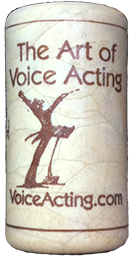
<p><span style="font-family: Arial, Helvetica, sans-serif; font-size: 14pt;"><img loading="lazy" decoding="async" class=" wp-image-4005 alignleft" src="https://voiceacting.com/wp-content/uploads/cork-vaa-cropped.png" alt="cork-vaa-cropped" width="94" height="184" srcset="https://voiceacting.com/wp-content/uploads/cork-vaa-cropped.png 131w, https://voiceacting.com/wp-content/uploads/cork-vaa-cropped-76x150.png 76w" sizes="(max-width: 94px) 100vw, 94px" />Dancers, singers and athletes warm up.  Voice actors should too!  After all, you are using very specific muscles to perform your craft.  Keep yourself &#8220;toned up&#8221; by using warm-up exercises.  Stretch your face, relax your neck and shoulders, yawn, or do your favorite tongue twisters.   Warming up will not only help you speak more clearly, but can also serve to relax you as you enter a studio for your session – and being relaxed is extremely important in order to be able to quickly find your character. </span></p>
<p><span style="font-family: Arial, Helvetica, sans-serif; font-size: 14pt;">My favorite warm-up exercise is one I call &#8220;The Cork&#8221;.  Get a cork from a wine bottle and place the cork between your teeth (I&#8217;d suggest saving the wine for later!).  With the cork between your teeth, read some copy out loud V – E – R – Y    S – L – O – W – L – Y.  Over-enunciate every vowel, consonant and syllable in every word, and make sure you clearly speak the ends of words.  Be careful that you don&#8217;t rush through little words like &#8220;a&#8221;, &#8220;in&#8221;, &#8220;the&#8221;, &#8220;if&#8221;, and so on.  You&#8217;ll find your cheeks, jaw and tongue will start to get tired after just a few minutes – but you&#8217;ll also notice that after this exercise you will speak much more clearly without sounding forced.  I have one student who uses this exercise by reading traffic signs on his way to the studio.  Another of my students keeps his cork on a chain around his neck.   This is a good one – use it.</span></p>
]]></content>
		
			</entry>
		<entry>
		<author>
			<name>James Alburger</name>
							<uri>https://voiceacting.com</uri>
						</author>

		<title type="html"><![CDATA[Reinventing Your Voiceover Acting Craft]]></title>
		<link rel="alternate" type="text/html" href="https://voiceacting.com/reinventing-your-craft/" />

		<id>http://voiceacting.com/?p=4688</id>
		<updated>2020-11-05T01:00:49Z</updated>
		<published>2017-11-08T23:21:07Z</published>
		<category scheme="https://voiceacting.com" term="All Posts" /><category scheme="https://voiceacting.com" term="Motivation" /><category scheme="https://voiceacting.com" term="Performance" /><category scheme="https://voiceacting.com" term="VoiceActing Academy Events" /><category scheme="https://voiceacting.com" term="acting" /><category scheme="https://voiceacting.com" term="performing" /><category scheme="https://voiceacting.com" term="voice acting" /><category scheme="https://voiceacting.com" term="voice-over" /><category scheme="https://voiceacting.com" term="voiceover" />
		<summary type="html"><![CDATA[Voice acting is about story-telling. There&#8230; I&#8217;ve said it! &#160; It&#8217;s not about how you read the script. And it&#8217;s not about your performing technique. And it&#8217;s definitely not about &#8220;selling,&#8221; although a lot of what we voice actors do is communicate a &#8220;sales&#8221; message. Nope.. voiceover is about story-telling. And the best way to [&#8230;]]]></summary>

					<content type="html" xml:base="https://voiceacting.com/reinventing-your-craft/"><![CDATA[<p><strong>Voice acting is about story-telling. There&#8230; I&#8217;ve said it!</strong></p>
<p>&nbsp;</p>
<p>It&#8217;s not about how you read the script. And it&#8217;s not about your performing technique. And it&#8217;s definitely not about &#8220;selling,&#8221; <span id="more-4688"></span>although a lot of what we voice actors do is communicate a &#8220;sales&#8221; message.</p>
<p>Nope.. voiceover is about story-telling. And the best way to tell a story is to base the story in reality. And the most effective way to reach an audience is to express the reality of the story by connecting with them on an emotional level. When your audience connects on an emotional level, nothing else matters to them. When the reality of your performance touches your audience on that emotional level, they can&#8217;t help but become involved in the story you are telling. And whey your audience is connected emotionally, the message (or story) will have an impact. As humans, we are wired to react to emotional stimulus.</p>
<p>So, how does that apply to a voiceover script? Read on and I&#8217;ll explain. And I know that what I&#8217;m about to say may be a bit controversial to some voiceover coaches.</p>
<p>Many voiceover coaches teach their students to &#8220;be the best &#8216;you&#8217; you can be&#8221; when performing a script. What they are saying is this:  &#8220;Find something within you that you feel connects with the story (script) you are reading and base your performance from that feeling.&#8221; OK, that can work&#8230; to a degree. However, basing a performance strictly on your personal gut instincts, behaviors, likes, dislikes and experiences cannot help but create a limited perspective on your performing. Every performance becomes little more than a facet of &#8220;you&#8221; attempting to relate to what is taking place in the story. Now, as I mentioned, this can work to a degree, and for some voiceover copy that can work&#8230; as long as the message (or story) in the script is something you can easily relate to and the phrasing of the script is in a form that will sound believable and natural coming out of your mouth.</p>
<p>There are some voice actors for whom this is the only viable approach to their voiceover work. These are the voice talent I refer to as &#8220;Celebrity Actors.&#8221; A celebrity actor is someone who bases every performance on some aspect of who they are. This is not necessarily a bad thing. It&#8217;s just what I believe to be a limiting thing. There are some very successful film actors who I consider to be celebrity actors. These are the actors who, when you watch their films, you see &#8220;Actor&#8217;s name here&#8221; playing the role of &#8220;Character here.&#8221; These actors do not become they character of the role they are playing. Instead, they do their best to represent the character. Also, most of the roles these actors choose have a personality very close to that of the actor. When a &#8220;Celebrity Actor&#8221; stretches in an effort to create a character that exists outside of their comfort zone, the result is often less than effective, simply because we (as an audience) are so accustomed to seeing the actor in the type of role we expect.</p>
<p>Now, there is an entirely different group of actors who literally re-invent themselves for every performance. These are the actors I refer to as &#8220;Character Actors.&#8221; A character actor is one who steps outside of his/her self to momentarily <span style="text-decoration: underline;">become</span> the character of the role they are playing. Yes, they bring their own personality, behavior and experiences to their performance. But they go much further than that by discovering the underlying reality, emotion, and driving forces of the character they are playing. These actors have learned how to temporarily forget who they are and the fact that they are &#8220;acting.&#8221; They literally become the character! It&#8217;s easy to tell who these actors are because the best of them have risen to the top of their game. When you watch their films, you are not watching them &#8220;being&#8221; the character they are playing &#8211; you are watching them &#8220;AS&#8221; the character they are playing.</p>
<p>And that&#8217;s a huge difference!</p>
<p>For more than two decades I&#8217;ve been teaching my Seven Core Elements of Performance and I&#8217;ve included it in all five editions of &#8220;The Art of Voice Acting.&#8221; Element #6 is &#8220;Forget Who You Are and Focus&#8221;. Learning how to forget who you are is not an easy thing to do. In fact, this is one of the most difficult and challenging skill sets for any actor &#8211; stage, screen&#8230; or voiceover. But if you&#8217;re going to be seen as anything other than &#8220;you doing the character,&#8221; it is a skill that must be learned&#8230; or not. That&#8217;s up to you.</p>
<p>In order to master this skill of forgetting who you are, you will need to look long and hard at what you are doing now with your voiceover work, and investigate the ways in which you can re-invent your craft. You may need to step outside your comfort zone and take an acting class or get involved with an improvisation group in your area. Studying some good acting books can be a start, but you will eventually need to truly experience what it&#8217;s like to become the character you are playing as opposed to &#8220;doing&#8221; the character you are playing. And that can only be accomplished by working with an experienced coach or teacher who can help you on your journey as a performer.</p>
<p>Documentarian Lee Ratcliff recently produced a short film titled &#8220;How Stanislavsky Reinvented the Craft of Acting.&#8221; Now, although this short film focuses on film acting, the concept of reinventing your craft still applies to voiceover. You can learn a lot from this short film.</p>
<p>I encourage you to re-invent your craft to become a better voice actor. If you&#8217;d like to get first-hand experience with me as your coach, you might want to consider attending an upcoming <a href="https://voiceacting.com/pie-special-2/" target="_blank" rel="noopener noreferrer">VoiceActing Academy Performance Intensive Event</a>.</p>
<p>James Alburger</p>
<p><iframe loading="lazy" title="How Stanislavski Reinvented the Craft of Acting" src="https://player.vimeo.com/video/240409401?dnt=1&amp;app_id=122963" width="1080" height="608" frameborder="0" allow="autoplay; fullscreen" allowfullscreen></iframe></p>
]]></content>
		
					<link rel="replies" type="text/html" href="https://voiceacting.com/reinventing-your-craft/#comments" thr:count="1" />
			<link rel="replies" type="application/atom+xml" href="https://voiceacting.com/reinventing-your-craft/feed/atom/" thr:count="1" />
			<thr:total>1</thr:total>
			</entry>
		<entry>
		<author>
			<name>James Alburger</name>
							<uri>https://voiceacting.com</uri>
						</author>

		<title type="html"><![CDATA[Your VO Future May be at Risk]]></title>
		<link rel="alternate" type="text/html" href="https://voiceacting.com/vo-future-may-risk/" />

		<id>http://voiceacting.com/?p=4507</id>
		<updated>2020-11-05T01:00:49Z</updated>
		<published>2017-08-12T00:49:25Z</published>
		<category scheme="https://voiceacting.com" term="All Posts" />
		<summary type="html"><![CDATA[By now, you&#8217;ve probably heard the news&#8230; and it&#8217;s probably not good news. One of the major pay-2-play sites, specifically Voices Dot Com (VDC), has acquired Voicebank.net. So, why is this acquisition a potential threat to the voiceover industry and why are voiceover talent at risk? There&#8217;s a pretty simple answer to that question. For [&#8230;]]]></summary>

					<content type="html" xml:base="https://voiceacting.com/vo-future-may-risk/"><![CDATA[<p><span style="font-size: 18pt; color: #cc0033;"><strong><span style="font-family: Arial, Helvetica, sans-serif;">By now, you&#8217;ve probably heard the news&#8230; and it&#8217;s probably not good news.</span></strong></span></p>
<p><span style="font-size: 14pt; font-family: Arial, Helvetica, sans-serif;">One of the major pay-2-play sites, specifically Voices Dot Com (VDC), has acquired Voicebank.net.</span></p>
<p><span style="font-size: 14pt; font-family: Arial, Helvetica, sans-serif;">So, why is this acquisition a potential threat to the voiceover industry and why are voiceover talent at risk? There&#8217;s a pretty simple answer to that question.</span></p>
<p><span style="font-family: Arial, Helvetica, sans-serif; font-size: 14pt;">For the past several years, VDC has made a variety of business decisions that have seriously undermined the fees paid for voiceover talent. The result has been the commoditization of voiceover talent and a consistent lowering of compensation paid for VO work. To be honest, most of the pay-2-play sites are guilty of this to some degree, but none to the extent of VDC.</span></p>
<p><span style="font-size: 14pt; font-family: Arial, Helvetica, sans-serif;">One thing I noticed several years ago was that VDC, more than other pay-2-play sites, seemed to be intent on serving the talent buyers &#8211; and themselves &#8211; much more than their customers. The shift in the VDC business model has been well documented by other voice talent and VO blog sites, so I won&#8217;t get into the details here. The important thing to keep in mind is just who are VDC&#8217;s customers? Here&#8217;s a hint&#8230; it&#8217;s NOT the talent buyers &#8211; they don&#8217;t pay a dime for the service beyond the negotiated talent fee.</span></p>
<p><span style="font-size: 14pt; font-family: Arial, Helvetica, sans-serif;">You, the voice actor subscribing to the audition service are their customers. Any reputable business with good business ethics will work hard to retain customer loyalty by serving their customers. But that&#8217;s apparently not what VDC does. Sure, on the surface and in their marketing, they&#8217;ll make your subscription sound like the best thing you can do for your VO business. But once you&#8217;ve paid your fee, they&#8217;ll put you in a bidding war to compete for work (which ultimately drives the price of voiceover work down), they&#8217;ll take an often unrealistic commission for the work you do (I&#8217;ve heard that can be up to 80% of the talent fee), and on top of that, they&#8217;ll hold they money you&#8217;ve earned in an escrow account in order to guarantee you&#8217;ll be paid, and charge you for allowing them to manage your payment. VDC will tell you that these aspects of their business are for your benefit, but I have serious doubts about that simply because they are making money at every turn of your VO job while chipping away at your hard-earned talent fee. And I haven&#8217;t even mentioned the (very expensive) &#8220;hidden&#8221; levels of membership that garner auditions for the prime, highest-paying gigs. As a regular VDC subscriber, you&#8217;ll never see these auditions.</span></p>
<p><span style="font-size: 14pt; font-family: Arial, Helvetica, sans-serif;">Granted, VDC is in business to make a profit, but in my opinion, the business tactics they use are, at best, questionable, and more likely highly unethical. But far be it for me to tell someone else how to run their business. VDC has clearly been very successful with their business model, even though that&#8217;s not how I choose to run my business. </span></p>
<p><span style="font-family: Arial, Helvetica, sans-serif; font-size: 14pt;">The way in which a pay-2-play site serves you, the voice actor, as their customer reveals a lot about the company in general. </span></p>
<p><span style="font-size: 18pt; color: #cc0033;"><strong><span style="font-family: Arial, Helvetica, sans-serif;">A new twist&#8230;</span></strong></span></p>
<p><span style="font-size: 14pt; font-family: Arial, Helvetica, sans-serif;">VDC&#8217;s recent acquisition of Voicebank.net is likely a major game-changer. <a href="http://www.businesswire.com/news/home/20170809005182/en/Voices.com-Acquires-Voicebank.net"><strong>The purchase of Voicebank.net in August 2017</strong></a>, is a clear indicator of VDC&#8217;s intention to dominate the voiceover world. And, in my opinion, there is no way that can be seen as a good thing &#8211; for either the voice actor or for businesses that use voiceover talent. </span></p>
<p><span style="font-size: 14pt; font-family: Arial, Helvetica, sans-serif;">Since its launch in 1998, Voicebank.net has served as a sort of clearing house for talent agents throughout the country. The service has given represented voice actors access to auditions from talent buyers that they would otherwise never know about. And it&#8217;s given talent buyers access to literally thousands of voiceover talent represented by hundreds of reputable talent agents. That diversification was a good thing&#8230; while it lasted.</span></p>
<p><span style="font-size: 14pt; font-family: Arial, Helvetica, sans-serif;">But, now that VDC has acquired Voicebank.net, the voiceover industry is likely to change. And if the history of VDC&#8217;s business model is any indication, that change will not be good for many of us working in voiceover. One potential threat is to the talent agents who have relied on Voicebank for at least some of the work they have booked for their talent. </span></p>
<p><span style="font-family: Arial, Helvetica, sans-serif; font-size: 14pt;">From what you&#8217;ve read so far, you can probably figure out that I see this acquisition as bad news for the VO world. I&#8217;ll reserve my final judgment until after the dust settles and we find out what VDC has in mind for Voicebank.net. I must say in full disclosure that VDC was a sponsor of more than one of our VOICE conventions, but that was several years ago, before some of the major shifts in their business model and the steady degrading of talent fees. I&#8217;ve met Stephanie and David and they both seem like very nice people. </span></p>
<p><span style="font-family: Arial, Helvetica, sans-serif; font-size: 14pt;"><strong><span style="color: #cc0033;">Now, what?</span></strong></span></p>
<p><span style="font-family: Arial, Helvetica, sans-serif; font-size: 14pt;">OK&#8230; with all that said&#8230; VDC is claiming that there will be no major changes in the way Voicebank.net operates. There is, of course, really no way of knowing what will actually happen. Time will tell. But judging from VDC&#8217;s history, I suspect some major changes in the way voiceover auditions are handled will be coming in the not-too distant future. Julie Williams&#8217; post (linked below) covers some of the possibilities.</span></p>
<p><span style="font-family: Arial, Helvetica, sans-serif; font-size: 14pt;">As with many other voice talent, coaches and talent agents, I&#8217;ve chosen to disassociate myself from VDC and I&#8217;m making my concerns with this acquisition very clear. I&#8217;m recommending to those I know who are currently listed with VDC to re-consider their association with VDC, remove their profiles and cancel their subscriptions &#8211; at least for now. If you have an agent who is listed on Voicebank.net, I&#8217;m recommending that you encourage your agent to cancel their subscription to Voicebank or at least re-evaluate the value of that relationship. It will be interesting to see how quickly &#8211; or if &#8211; VDC responds.</span></p>
<p><span style="font-family: Arial, Helvetica, sans-serif; font-size: 14pt;">If you&#8217;d like to know more about this acquisition and the opinions of some of voiceovers major players, I&#8217;ve included a few links below. Just click the link for the blog or video:</span></p>
<p><span style="font-size: 14pt;"><strong><span style="font-family: Arial, Helvetica, sans-serif; color: #cc0033;">Press Release:</span></strong></span></p>
<p><span style="font-family: Arial, Helvetica, sans-serif; font-size: 14pt;"><a href="http://www.businesswire.com/news/home/20170809005182/en/Voices.com-Acquires-Voicebank.net">Businesswire.com announcement of VDC acquisition of Voicebank.net</a></span></p>
<p><span style="color: #cc0033; font-size: 14pt; font-family: Arial, Helvetica, sans-serif;"><strong>Blog Posts:</strong></span></p>
<p><span style="font-family: Arial, Helvetica, sans-serif; font-size: 14pt;"><a href="https://mail.google.com/mail/u/0/#inbox/15dd33fdd30dab66">Julie Williams posts her thoughts about the acquisition</a></span></p>
<p><span style="font-family: Arial, Helvetica, sans-serif; font-size: 14pt;"><a href="http://www.nethervoice.com/2017/08/09/a-deal-with-the-devil/?utm_source=feedburner&amp;utm_medium=email&amp;utm_campaign=Feed%3A+nethervoice%2FkmaX+%28Nethervoice+Blog%29">Paul Strikwerda (Nethervoice) posts his thoughts about the acquisition</a></span></p>
<p><span style="font-size: 14pt;"><a href="http://sound4vo.com/voiceover-be-the-beer/"><span style="font-family: Arial, Helvetica, sans-serif;">Dan Friedman&#8217;s blog post about the acquisition</span></a></span></p>
<p><span style="color: #cc0033; font-size: 14pt; font-family: Arial, Helvetica, sans-serif;"><strong>Videos:</strong></span></p>
<p><span style="font-family: Arial, Helvetica, sans-serif; font-size: 14pt;">Terry Daniels interviews agency owner Eric Sheppard about the VDC acquisition of Voicebank.net</span></p>
<p><iframe loading="lazy" title="An Interview with Talent Agent, Erik Sheppard" width="1080" height="608" src="https://www.youtube.com/embed/Bu5JBu1MHdI?feature=oembed" frameborder="0" allow="accelerometer; autoplay; clipboard-write; encrypted-media; gyroscope; picture-in-picture" allowfullscreen></iframe></p>
]]></content>
		
			</entry>
		<entry>
		<author>
			<name>James Alburger</name>
							<uri>https://voiceacting.com</uri>
						</author>

		<title type="html"><![CDATA[Dealing with Conflicting Values]]></title>
		<link rel="alternate" type="text/html" href="https://voiceacting.com/dealing-conflicting-values/" />

		<id>http://voiceacting.com/?p=4083</id>
		<updated>2020-11-05T01:00:49Z</updated>
		<published>2016-11-28T22:05:13Z</published>
		<category scheme="https://voiceacting.com" term="All Posts" />
		<summary type="html"><![CDATA[Whether it&#8217;s a political position or a product or service that you don&#8217;t agree with&#8230;  Having to deal with the occasional voiceover session that might be in opposition to ones personal views or values is something every actor must deal with at one time or another. This is generally a pretty uncommon problem from my [&#8230;]]]></summary>

					<content type="html" xml:base="https://voiceacting.com/dealing-conflicting-values/"><![CDATA[<p><span style="font-family: Arial,Helvetica,sans-serif; font-size: 14pt;">Whether it&#8217;s a political position or a product or service that you don&#8217;t agree with&#8230;  Having to deal with the occasional voiceover session that might be in opposition to ones personal views or values is something every actor must deal with at one time or another. This is generally a pretty uncommon problem from my experience, but at certain times a voice actor might be requested for a session to promote a candidate, ballot proposition, product or service he or she might oppose.</span></p>
<p><span style="font-family: Arial,Helvetica,sans-serif; font-size: 14pt;">There is no single correct solution to this quandary. For some, the issue is as simple as black and white, and the actor will refuse the work (and income &#8211; no matter what the fee might be). Others will take the view that they are an actor being hired to play the role of a character. They view their performance for the voice over session as being no different than if they were playing a role of &#8220;the bad guy&#8221; in a stage play or movie. If the project is a commercial and the topic is known in advance, the actor can make the decision to refuse the work. However, if the booking is accepted and the topic is not fully understood before arriving at the studio (which can, and does, happen), a serious problem may result, which could affect the performer&#8217;s future in the business. If you are hired for a session it is expected, (and in fact you are obligated under verbal or written contract), to perform to your best abilities at the session.</span></p>
<p><span style="font-family: Arial,Helvetica,sans-serif; font-size: 14pt;">There&#8217;s a reason the word &#8220;acting&#8221; is a part of the voiceover business. Acting is all about taking on the attitudes and characteristics of someone or something other than the real you. It&#8217;s about pretending, it&#8217;s about play, it&#8217;s about creating illusion, and it&#8217;s about stepping beyond your true self to momentarily become someone else.</span></p>
<p><span style="font-family: Arial,Helvetica,sans-serif; font-size: 14pt;">The reality of all forms of acting is that performer is playing a role of a character. The words on the script are NOT the words of the performer (unless the performer wrote the script to specifically express his or her personal point of view). The script contains the words of a character. That character may have a belief system quite similar to that of the performer playing the role, or the personality and belief system of the character may be the complete opposite. But the fact remains that the performer and the character in the script are two completely separate entities. The only exception to this is when the actor&#8217;s real name is used and they are expressing their personal opinions.</span></p>
<p><span style="font-family: Arial,Helvetica,sans-serif; font-size: 14pt;">What it ultimately comes down to is the actors ability (and/or willingness) to accept the role of the character he or she is being asked to play. Not all actors are right for every role, and not all characters are right for every actor. If a role is being cast through an audition process, the actor will have a fairly good idea of the character he or she will play &#8211; and their performance at the audition will generally reflect their acceptance (or lack thereof) of the character, pretty much guaranteeing they won&#8217;t get the job &#8211; assuming they were to go through with the audition. However, many bookings are made directly from demo tapes, in which case the voice actor must be prepared to deal with a variety of situations. If personal or moral values are a serious issue with you as a voice actor, you have four options:</span></p>
<ol>
<li><span style="font-family: Arial,Helvetica,sans-serif; font-size: 14pt;">Focus your marketing efforts on only those producers who you know work on projects that are in alignment with your personal philosophy. This will reduce the amount of work you will get, but you will avoid the conflict of having to choose to refuse work. The characters you play will most likely be close to your own personality, so your growth as an actor may be somewhat slow.</span></li>
<li><span style="font-family: Arial,Helvetica,sans-serif; font-size: 14pt;">Make every effort to find out as much about the message you are being asked to deliver BEFORE you accept the booking. Sometimes this just isn&#8217;t possible, and asking a lot of questions can create an image of being very choosy. If you end up refusing a lot of work based on your personal beliefs you may end up losing work by getting a reputation of being a primadonna. The world of voiceover is a relatively small community &#8211; the producers and agents all know each other and word can spread quickly.</span></li>
<li><span style="font-family: Arial,Helvetica,sans-serif; font-size: 14pt;">Arrive at a personal acceptance and understanding that you are playing a character, and that the character you are playing is NOT you! This can be a stretch for some and can be impossible for others. However every good actor will tell you that the only reason your character exists is to play a part in the telling of a story. And if the character is not believable, the effectiveness of the story will suffer. They will also tell you that an actor who cannot create a believable character should not be playing that character in the first place. The worst thing (and least effective performance) an actor can do is to play his or her self doing the lines of the script. The hardest thing for an actor to do is to create a believable character when that character expresses feelings, a philosophy and a belief system that is in direct opposition to that of the actor.</span></li>
<li><span style="font-family: Arial,Helvetica,sans-serif; font-size: 14pt;">Get out of this business &#8211; because you will find yourself constantly being frustrated and confronted with the necessity of making uncomfortable choices.</span></li>
</ol>
<p><span style="font-family: Arial,Helvetica,sans-serif; font-size: 14pt;">As an actor, voiceover or otherwise, we are constantly making choices about the characters we play in the scripts we perform. Our acting ability can often be challenged by a difficult script or character. Regardless of the challenges that might confront us, we are the ones who must make the choice as to how we will deal with the situation.</span></p>
]]></content>
		
			</entry>
		<entry>
		<author>
			<name>James Alburger</name>
							<uri>https://voiceacting.com</uri>
						</author>

		<title type="html"><![CDATA[What&#8217;s YOUR Motivation?]]></title>
		<link rel="alternate" type="text/html" href="https://voiceacting.com/whats-your-motivation/" />

		<id>http://voiceacting.com/?p=4071</id>
		<updated>2020-11-05T01:00:49Z</updated>
		<published>2016-10-24T23:06:19Z</published>
		<category scheme="https://voiceacting.com" term="All Posts" /><category scheme="https://voiceacting.com" term="Motivation" /><category scheme="https://voiceacting.com" term="Performance" />
		<summary type="html"><![CDATA[If you&#8217;ve watched any TV or movies, you&#8217;ve probably heard the phrase &#8220;What&#8217;s my motivation?&#8221; That&#8217;s a very common, and basic question that every actor needs to ask regardless of the type of performance. It&#8217;s the motivation that determines how the actor will ultimately interpret the story and play the role. OK, sure&#8230; we might [&#8230;]]]></summary>

					<content type="html" xml:base="https://voiceacting.com/whats-your-motivation/"><![CDATA[<p><span style="font-family: Arial, Helvetica, sans-serif; font-size: 18pt;"><img loading="lazy" decoding="async" class=" wp-image-4076 alignleft" src="https://voiceacting.com/wp-content/uploads/quote-when-an-actor-comes-to-me-and-wants-to-discuss-his-character-i-say-it-s-in-the-script-if-he-alfred-hitchcock-85799-300x141.jpg" alt="quote-when-an-actor-comes-to-me-and-wants-to-discuss-his-character-i-say-it-s-in-the-script-if-he-alfred-hitchcock-85799" width="527" height="248" srcset="https://voiceacting.com/wp-content/uploads/quote-when-an-actor-comes-to-me-and-wants-to-discuss-his-character-i-say-it-s-in-the-script-if-he-alfred-hitchcock-85799-300x141.jpg 300w, https://voiceacting.com/wp-content/uploads/quote-when-an-actor-comes-to-me-and-wants-to-discuss-his-character-i-say-it-s-in-the-script-if-he-alfred-hitchcock-85799-768x361.jpg 768w, https://voiceacting.com/wp-content/uploads/quote-when-an-actor-comes-to-me-and-wants-to-discuss-his-character-i-say-it-s-in-the-script-if-he-alfred-hitchcock-85799-150x71.jpg 150w, https://voiceacting.com/wp-content/uploads/quote-when-an-actor-comes-to-me-and-wants-to-discuss-his-character-i-say-it-s-in-the-script-if-he-alfred-hitchcock-85799-400x188.jpg 400w, https://voiceacting.com/wp-content/uploads/quote-when-an-actor-comes-to-me-and-wants-to-discuss-his-character-i-say-it-s-in-the-script-if-he-alfred-hitchcock-85799.jpg 850w" sizes="(max-width: 527px) 100vw, 527px" />If you&#8217;ve watched any TV or movies, you&#8217;ve probably heard the phrase &#8220;What&#8217;s my motivation?&#8221; That&#8217;s a very common, and basic question that every actor needs to ask regardless of the type of performance. It&#8217;s the motivation that determines how the actor will ultimately interpret the story and play the role.</span></p>
<p><span style="font-family: Arial, Helvetica, sans-serif; font-size: 18pt;">OK, sure&#8230; we might be motivated to complete a project because we want to get paid. But that&#8217;s not the motivation that counts. The important motivation is the &#8220;why&#8221; or &#8220;what&#8221; of the story in the script.</span></p>
<p><span style="font-family: Arial, Helvetica, sans-serif; font-size: 18pt;">&#8220;Motivation&#8221; is the word most often used in theater, and it simply means: What is the reason behind a particular action, behavior or interpretation of a specific event taking place in the story. In the world of voiceover, we need to have a motivation for every script we work with. For those scripts that clearly tell a structured story, the motivation is often easy to understand. However, with dry, corporate or medical scripts, the motivation can often be challenging to understand. Without an understanding of what is taking place in the story, your interpretation of the script can lack inspiration and energy.</span></p>
<p><span style="font-family: Arial, Helvetica, sans-serif; font-size: 18pt;">In our world of voice acting, we literally don&#8217;t have the time available to study a script in detail to determine our motivation in telling the story. A theatrical script for a play, film or television program will usually have a fairly comprehensive breakdown that explains the interaction between characters and a synopsis of each scene, or the story as a whole, that helps the actor to better understand their role. </span></p>
<p><span style="font-family: Arial, Helvetica, sans-serif; font-size: 18pt;">These components also provide the actor with a history of their character and other aspects of the story. When combined, these descriptive elements form the &#8220;back story&#8221; and it is the back story that forms the foundation for every actor&#8217;s motivation.</span></p>
<p><span style="font-family: Arial, Helvetica, sans-serif; font-size: 18pt;">Back story can be defined as the events or history that has led to this moment in time, or the moment in time during which the story in a script is taking place. There are two basic forms of back story:</span></p>
<ol>
<li><span style="font-family: Arial, Helvetica, sans-serif; font-size: 18pt;">your personal back story and</span></li>
<li><span style="font-family: Arial, Helvetica, sans-serif; font-size: 18pt;">the character&#8217;s back story.</span></li>
</ol>
<p><span style="font-family: Arial, Helvetica, sans-serif; font-size: 18pt;">And each of these has two basic elements:</span></p>
<ol>
<li><span style="font-family: Arial, Helvetica, sans-serif; font-size: 18pt;">Long-term back story &#8211; the history of events that have brought you (or the character) this this moment in time, and</span></li>
<li><span style="font-family: Arial, Helvetica, sans-serif; font-size: 18pt;">Immediate back story &#8211; the specific event that occurs immediately before the first words out of your mouth (or the first word in a script). Of the two, the immediate back story is the most important for a voice actor. But you may want to define a long-term back story for your character as well to provide more substance.</span></li>
</ol>
<p><span style="font-family: Arial, Helvetica, sans-serif; font-size: 18pt;">When performing a voiceover script, you will find it much easier to allow the character in the script to come to life. Your character&#8217;s back story is critical because:</span></p>
<ul>
<li><span style="font-family: Arial, Helvetica, sans-serif; font-size: 18pt;">it tells you exactly who you are talking to</span></li>
<li><span style="font-family: Arial, Helvetica, sans-serif; font-size: 18pt;">it gives you the essential information about the character&#8217;s past that you need in order to effectively portray your character</span></li>
<li><span style="font-family: Arial, Helvetica, sans-serif; font-size: 18pt;">it provides a reason, or motivation, for the story that is taking place</span></li>
<li><span style="font-family: Arial, Helvetica, sans-serif; font-size: 18pt;">it establishes the emotion and feelings your character is experiencing</span></li>
<li><span style="font-family: Arial, Helvetica, sans-serif; font-size: 18pt;">it always answers the question &#8220;Why?&#8221;, which is ultimately the reason your character is speaking</span></li>
</ul>
<p><span style="font-family: Arial, Helvetica, sans-serif; font-size: 18pt;">Although it is important to understand the full story in every voiceover script, we can take some short cuts to discovering the back story. With the exception of Audio Books, we can usually use our first line of copy to determine the back story, or simply &#8220;what just happened that causes our character to speak the words in the script.&#8221;</span></p>
<p><span style="font-family: Arial, Helvetica, sans-serif; font-size: 18pt;">Sometimes a script will clearly define the back story while other times, you may have to make it up. If the back story is described in the script &#8211; take advantage of it! If you need to make up a back story, be as detailed as you can be, but be careful not to get into a long dissertation of the scene. You only need enough back story, or &#8220;pre-lif,e&#8221; to give you the inspiration on how to deliver your copy. The more real the back story is the more real your character will be and the easier it will be for you to get off the page with your performance.</span></p>
<p><span style="font-family: Arial, Helvetica, sans-serif; font-size: 18pt;">Here are a few tools you can use to make your back story more real:</span></p>
<ol>
<li><span style="font-family: Arial, Helvetica, sans-serif; font-size: 18pt;">Use visualization to create a vivid mental image of the scene for the immediate back story</span></li>
<li><span style="font-family: Arial, Helvetica, sans-serif; font-size: 18pt;">Use sense memory techniques to recall an experience from your own life that is similar to the emotion or feeling your character is expressing in the script.</span></li>
<li><span style="font-family: Arial, Helvetica, sans-serif; font-size: 18pt;">Observe the physical sensations that come up when you recall a past experience. Hold onto that physical tension and speak from that place in your body as you MOVE during your performance.</span></li>
<li><span style="font-family: Arial, Helvetica, sans-serif; font-size: 18pt;">Remember that Movement Orchestrates Vocal Expression. <strong>MOVE</strong> your body and your face to create the appropriate energy for the attitude and moment. &#8220;If your body isn&#8217;t moving, the only thing people will hear are the words.&#8221; (Bob Bergen)</span></li>
<li><span style="font-family: Arial, Helvetica, sans-serif; font-size: 18pt;">Use a lead-in line to verbalize the back story (the action that leads to your character speaking) and to bring you up to full speed for the first word of the copy. Your lead-in line could be an ad-lib response to what the person you are speaking to just did or said.</span></li>
</ol>
<p><span style="font-family: Arial, Helvetica, sans-serif; font-size: 18pt;">The more effectively you can create a back story for your character, the more real your character will be in your imagination. In most cases, the goal of voice acting is to allow the real you to step aside and allow the character in the copy to speak through you, expressing the mood, emotion and feelings that are in the script.</span></p>
<p><span style="font-family: Arial, Helvetica, sans-serif; font-size: 18pt;">Shirley MacClaine was once asked to describe her thoughts on acting. Her response was: &#8220;It&#8217;s all about listening and forgetting who you are&#8221;. Remember, its not you saying the words on the script &#8211; its the character in the copy who is really saying those words. Learn to “forget who you are” and let yourself step aside so the character can become real.</span></p>
<p><span style="font-family: Arial, Helvetica, sans-serif; font-size: 18pt;">Listen to how your character is speaking and make adjustments as needed, but be careful not to impose your personal attitudes on the character. You need to develop your performing skills to a point where this becomes automatic and you don&#8217;t have to think about it. When you reach that point, you will be able to bring any back story &#8211; and character &#8211; to life.</span></p>
]]></content>
		
			</entry>
		<entry>
		<author>
			<name>James Alburger</name>
							<uri>https://voiceacting.com</uri>
						</author>

		<title type="html"><![CDATA[Acting Technique &#038; More&#8230; a Refresher]]></title>
		<link rel="alternate" type="text/html" href="https://voiceacting.com/acting-technique-refresher-2/" />

		<id>http://voiceacting.com/?p=4002</id>
		<updated>2020-11-05T01:00:49Z</updated>
		<published>2016-07-17T00:48:29Z</published>
		<category scheme="https://voiceacting.com" term="All Posts" /><category scheme="https://voiceacting.com" term="Performance" />
		<summary type="html"><![CDATA[Every actor knows that there are a number of fundamental techniques and processes that must be understood, mastered and applied in order to create a compelling and believable performance. If you&#8217;ve studied voice acting at all, you&#8217;ve probably been taught at least a few of these techniques and you may have even developed your own [&#8230;]]]></summary>

					<content type="html" xml:base="https://voiceacting.com/acting-technique-refresher-2/"><![CDATA[<p><span style="font-family: Arial, Helvetica, sans-serif; font-size: 14pt;"><br />
Every actor knows that there are a number of fundamental techniques and processes that must be understood, mastered and applied in order to create a compelling and believable performance. If you&#8217;ve studied voice acting at all, you&#8217;ve probably been taught at least a few of these techniques and you may have even developed your own process for wood-shedding and creating your performance. </span></p>
<p><span style="font-family: Arial, Helvetica, sans-serif; font-size: 14pt;">Every once in a while, it&#8217;s helpful to review some of those things we already know, if for no other reason than to simply remind ourselves that we are on track and working in a way that is moving us forward.</span></p>
<p><span style="font-family: Arial, Helvetica, sans-serif; font-size: 14pt;">If you&#8217;ve read my book, &#8220;The Art of Voice Acting,&#8221; or if you&#8217;ve attended a VoiceActing Academy P.I.E. workshop, you already know what follows. If so, please allow this to be a reminder or to reinforce what you already know. </span></p>
<p><span style="font-family: Arial, Helvetica, sans-serif; font-size: 14pt;">If you haven&#8217;t read my book or attended P.I.E., what you&#8217;re about to read is just scratching the surface of voice acting. but it will give you a head start with any other study you might pursue. If you&#8217;d like to study with VoiceActing Academy, you&#8217;ll find everything you need to know at <a href="https://voiceacting.com">www.VoiceActing.com</a>. </span></p>
<p><strong><span style="font-family: Arial, Helvetica, sans-serif; font-size: 14pt;">The Seven Core Elements:</span></strong></p>
<p><span style="font-family: Arial, Helvetica, sans-serif; font-size: 14pt;">The “Seven Core Elements of Performance&#8221; is a process we’ve developed to allow a voice actor to very quickly define the critical elements of a performance and develop a strong and effective interpretation, resulting in a compelling performance. Once understood, you can use these 7 steps to quickly analyze, or woodshed, just about any script in a matter of seconds. It&#8217;s almost magical!</span></p>
<p><span style="font-family: Arial, Helvetica, sans-serif; font-size: 14pt;"><b>A = Audience:  </b>Who are you talking to?  It will always be only one person.  Your audience is the perfect person who needs to hear the message. Define that individual and give him or her a name.  Doing this will make your delivery more conversational and believable.</span></p>
<p><span style="font-family: Arial, Helvetica, sans-serif; font-size: 14pt;"><b>B = Back Story:  </b>The back story is the specific event that took place immediately before the first word of copy.  It’s what you are responding to. The back story is the reason why your character is saying the words in the script.  If the back story is not clearly defined in the script – make one up!  This is a very important aspect of performing from a written script because the back story sets your character&#8217;s motivation, attitude and purpose for speaking.</span></p>
<p><span style="font-family: Arial, Helvetica, sans-serif; font-size: 14pt;"><b>C = Character:  </b>Who are you as the speaker?  Define your character in as much detail as you like.  The more details you can come up with, the more believable your character will be to you and to your audience.  Every script has a character, regardless of how poorly the script may be written or what the content of the script may be.  Find that character and give it life to take the words “off the page.”</span></p>
<p><span style="font-family: Arial, Helvetica, sans-serif; font-size: 14pt;"><b>D = Desires:</b>  What does your character want and need as a result of speaking. This is your character’s intention or objective for speaking.</span></p>
<p><span style="font-family: Arial, Helvetica, sans-serif; font-size: 14pt;"><b>E = Energy:</b>  There are three levels of energy that must be present in a performance in order to communicate effectively:<b>1) Psychological Energy</b> &#8211; the thoughts behind the words. A thought, or subtext, is the underscore of the interpretation or attitude that is necessary in order for the listener to understand the meaning. <b>2) Physical Energy</b> &#8211; gestures, facial expression, posture, body language, and other physical movement. In everyday conversation, you are constantly moving. You must also be moving as you work from a script. Physical energy breathes life into the words. <b>3) Emotional Energy</b> &#8211; how does your character feel about the subject or message being spoken. This has nothing to do with how <u>you</u> feel about the message, but rather how your character feels. These three levels of energy can change during the course of a script to create a “flow” or “arc” that results in a dynamic delivery and interpretation.</span></p>
<p><span style="font-family: Arial, Helvetica, sans-serif; font-size: 14pt;"><b>F</b> <b>= Forget Who You Are and Focus </b>&#8211; One of the most challenging aspects of all forms of acting is mastering the ability of “getting out of your own way.” The basic process is that you (as the actor) step aside and allow the character you are creating to become real. Focus simply means that you must be paying attention to what you are doing with your performance. At first glance, this may seem like a contradiction. However, when the technique is mastered, Focus becomes a natural aspect the performance.</span></p>
<p><span style="font-family: Arial, Helvetica, sans-serif; font-size: 14pt;"><b>G = Gamble </b>&#8211; Be willing to take the risk to get out of your own way and give yourself permission to do whatever is necessary to create a believable and compelling performance.</span></p>
<p><span style="font-family: Arial, Helvetica, sans-serif; font-size: 14pt;"><b>M.O.V.E. to more effectively communicate your message:</b></span></p>
<p><span style="font-family: Arial, Helvetica, sans-serif; font-size: 14pt;">M.O.V.E stands for <b>M</b>ovement <b>O</b>rchestrates <b>V</b>ocal <b>E</b>xpression. This is another way of looking at the Physical Energy in a performance. The degree of your physical-ness, or physical movement, can directly affect the expression of your emotion and attitude. Movement includes facial expressions, the movement of arms, head and body, and even the posture of your body as you speak. Make some choices as to what your character&#8217;s emotions and attitudes are concerning the copy – even down to how you feel about a specific word or phrase. Every emotion has a related tension someplace in your body. Look within yourself as to how you personally feel about the copy – experience where the tension is and hold it there as you move and speak the words in the script. You may be amazed at the difference in honesty, sincerity and believability that results from simply moving your body.</span></p>
<p><span style="font-family: Arial, Helvetica, sans-serif; font-size: 14pt;"><b>Warm up before each session or performance:</b></span></p>
<p><span style="font-family: Arial, Helvetica, sans-serif; font-size: 14pt;"><img loading="lazy" decoding="async" class=" wp-image-4005 alignleft" src="https://voiceacting.com/wp-content/uploads/cork-vaa-cropped.png" alt="cork-vaa-cropped" width="94" height="184" srcset="https://voiceacting.com/wp-content/uploads/cork-vaa-cropped.png 131w, https://voiceacting.com/wp-content/uploads/cork-vaa-cropped-76x150.png 76w" sizes="(max-width: 94px) 100vw, 94px" />Dancers, singers and athletes warm up.  Voice actors should too!  After all, you are using very specific muscles to perform your craft.  Keep yourself &#8220;toned up&#8221; by using warm-up exercises.  Stretch your face, relax your neck and shoulders, yawn, or do your favorite tongue twisters.   Warming up will not only help you speak more clearly, but can also serve to relax you as you enter a studio for your session – and being relaxed is extremely important in order to be able to quickly find your character. </span></p>
<p><span style="font-family: Arial, Helvetica, sans-serif; font-size: 14pt;">My favorite warm-up exercise is one I call &#8220;The Cork&#8221;.  Get a cork from a wine bottle and place the cork between your teeth (I&#8217;d suggest saving the wine for later!).  With the cork between your teeth, read some copy out loud V – E – R – Y    S – L – O – W – L – Y.  Over-enunciate every vowel, consonant and syllable in every word, and make sure you clearly speak the ends of words.  Be careful that you don&#8217;t rush through little words like &#8220;a&#8221;, &#8220;in&#8221;, &#8220;the&#8221;, &#8220;if&#8221;, and so on.  You&#8217;ll find your cheeks, jaw and tongue will start to get tired after just a few minutes – but you&#8217;ll also notice that after this exercise you will speak much more clearly without sounding forced.  I have one student who uses this exercise by reading traffic signs on his way to the studio.  Another of my students keeps his cork on a chain around his neck.   This is a good one – use it.</span></p>
]]></content>
		
			</entry>
		<entry>
		<author>
			<name>James Alburger</name>
							<uri>https://voiceacting.com</uri>
						</author>

		<title type="html"><![CDATA[The Conversational &#8220;Read&#8221;]]></title>
		<link rel="alternate" type="text/html" href="https://voiceacting.com/the-conversational-read/" />

		<id>http://voiceacting.com/?p=3912</id>
		<updated>2020-11-05T01:00:49Z</updated>
		<published>2016-07-08T21:28:23Z</published>
		<category scheme="https://voiceacting.com" term="All Posts" />
		<summary type="html"><![CDATA[During our weekly VoiceActing Academy Conductor&#8217;s Club coaching calls, we&#8217;ll often discuss a specific aspect of voiceover performance, or get into the nuts and bolts of some aspect of our business, or discuss something new in home studio or recording technology. I&#8217;ll be sharing some of those topics and tips in these blog posts. If [&#8230;]]]></summary>

					<content type="html" xml:base="https://voiceacting.com/the-conversational-read/"><![CDATA[<p><span style="font-size: 14pt; font-family: Arial, Helvetica, sans-serif;">During our weekly <a href="http://conductorsclub.com">VoiceActing Academy Conductor&#8217;s Club</a> coaching calls, we&#8217;ll often discuss a specific aspect of voiceover performance, or get into the nuts and bolts of some aspect of our business, or discuss something new in home studio or recording technology. I&#8217;ll be sharing some of those topics and tips in these blog posts. If you&#8217;d like to be part of our regular weekly coaching sessions, please visit <a href="http://conductorsclub.com">www.ConductorsClub.com</a> for all the details.</span></p>
<p><span style="font-size: 14pt; font-family: Arial, Helvetica, sans-serif;">Now&#8230; on to this weeks topic:</span></p>
<p><span style="font-family: Arial, Helvetica, sans-serif; font-size: 14pt;">We see it in audition directions. We hear it from our coaches. And our clients are constantly asking us to do it. </span></p>
<p><span style="font-family: Arial, Helvetica, sans-serif; font-size: 14pt;">It&#8217;s the &#8220;conversational read&#8221;&#8230; and it&#8217;s a trend in voiceover delivery that has been around for awhile and shows no signs of going away any time soon. Long gone are the days of the VOG announcer, although there will be the occasional project where the big and boomy delivery style will be requested. And there will still be times when the requested delivery style is more &#8220;talking at&#8221; than &#8220;talking to.&#8221; </span><span id="more-3912"></span></p>
<p><span style="font-family: Arial, Helvetica, sans-serif; font-size: 14pt;">But, more often than not, in today&#8217;s voiceover world, the requested delivery style is &#8220;conversational.&#8221;</span></p>
<p><span style="font-family: Arial, Helvetica, sans-serif; font-size: 14pt;">That sounds good, but just how do you get to a conversational &#8220;read?&#8221; By definition, the word &#8220;read&#8221; implies a certain delivery style which is more storytelling than conversation. In fact, many scripts are written in a way that is anything but the way people normally talk. Yet, we&#8217;re asked to speak the words &#8220;conversationally.&#8221; </span></p>
<p><span style="font-size: 14pt; font-family: Arial, Helvetica, sans-serif;">Speaking conversationally comes naturally to most of us when we&#8217;re just being ourselves, talking with our friends or those around us. One reason this comes naturally is because we don&#8217;t have to think about what we are saying and we don&#8217;t have to be concerned with being who we are. But speaking conversationally when reading from a script is one of the most difficult things to do in voiceover. Most people just starting in voiceover find it very challenging to deliver their copy conversationally. </span></p>
<p><span style="font-size: 14pt; font-family: Arial, Helvetica, sans-serif;">OK, sure there are lots of techniques for &#8220;getting off the page,&#8221; but that doesn&#8217;t explain why this is such a challenge and why some voice actors have a very difficult time sounding like they are just &#8220;talking to someone&#8221; as they read their script.</span></p>
<p><span style="font-size: 14pt; font-family: Arial, Helvetica, sans-serif;">There are actually several reasons why this can be such a challenge. One of the biggest reasons has to do with childhood education. Most of us learned to read by sounding out the words individually in a linear sequence called sentences. As our reading skills developed, we began to understand sentence structure, which often made sense in the context of what we were learning, but was very different from the way we normally spoke. Reading was basically a learned, linear process that initially required lots of thinking in order to put the pieces together. Only long after we had mastered our basic reading skills were some of us able to scan the written text to acquire the message and meaning without having to sound out individual words. But for many (probably most) of us, reading is still a process of sounding out one word at a time in a linear sequence.</span></p>
<p><span style="font-size: 14pt; font-family: Arial, Helvetica, sans-serif;">And THAT creates a big challenge! Our primary job as a voice actor is to take the words on a script and bring them to life through our interpretation and delivery. Until we figure out what the words are, what the story is, and how the story should be told, we&#8217;re often stuck in a &#8220;read-y&#8221; delivery. We&#8217;re woodshedding, breaking down the copy, marking up our scripts, experimenting with different inflections, and much, much more.  And all of that is good and completely understandable! In fact most VO coaches teach these and other techniques and processes in order for you to understand the story and your role in it. But all that processing takes a lot of thinking&#8230; and we need to bring those words to life quickly&#8230; we need to sound like we&#8217;re talking TO someone, not AT them&#8230; and we cannot sound like we&#8217;re thinking!</span></p>
<p><span style="font-size: 14pt; font-family: Arial, Helvetica, sans-serif;">So here&#8217;s what I suggest:  Go through your VO books and workshop notes, and review all the techniques you can find for making your performance &#8220;conversational.&#8221; Study those chapters and notes until you&#8217;ve got it&#8230; and then let it go. Stop thinking about it. And the next time you&#8217;re asked to deliver a script conversationally, let the words guide you to the conversational delivery. If you are thinking about what you are doing &#8211; even in the slightest &#8211; you&#8217;ll sound like you are reading.</span></p>
<p><span style="font-size: 14pt; font-family: Arial, Helvetica, sans-serif;">Here are some of the keys to delivering your copy conversationally:</span></p>
<ol>
<li><span style="font-size: 14pt; font-family: Arial, Helvetica, sans-serif;"><strong>Stop thinking about what you are doing!</strong> With most scripts, you should be able to get a good sense of the story and a basic interpretation during your first read-through. Once you&#8217;ve got it, stop thinking about it and just tell the story as if you are actually talking to someone. </span></li>
<li><span style="font-size: 14pt; font-family: Arial, Helvetica, sans-serif;"><strong>Use a photo for the eyes, if you need to:</strong> A photo of someone you do not know can sometimes be helpful by giving you eye contact with another person. Even though you&#8217;ll be talking to a photo, you&#8217;ll usually hear a noticeable difference.</span></li>
<li><span style="font-size: 14pt; font-family: Arial, Helvetica, sans-serif;"><strong>Relax your body:</strong> Unless there is a strong emotional subtext to the script, a relaxed body will often move you into a more conversational style. Physical tension is important when communicating emotion, but to be conversational, the emotions cannot be overly expressed.</span></li>
<li><span style="font-size: 14pt; font-family: Arial, Helvetica, sans-serif;"><strong>Faster and Flatter:</strong> Speaking a bit quicker and flattening your tone of voice will usually take your words into a conversational sound. Most of us normally speak fairly quickly without a lot of inflection anyhow, so this shouldn&#8217;t be too difficult. </span></li>
<li><span style="font-size: 14pt; font-family: Arial, Helvetica, sans-serif;"><strong>Speak softer:</strong> The tendency when reading is to speak louder than normal, or project your voice &#8220;to the back of the room.&#8221; To achieve a believable conversational sound, reduce the volume of your voice to about one-half of your normal loudness. This would be about the loudness you would use if the person you are talking to was sitting right next to you in a quiet room.</span></li>
<li><span style="font-family: Arial, Helvetica, sans-serif; font-size: 14pt;"><strong>Stop worrying about your articulation:</strong> Sure, the words you speak need to be understood. But if you over-articulate, or are too careful about getting the words &#8220;right,&#8221; your speaking style will sound stilted or artificial &#8211; and that&#8217;s far from conversational.</span></li>
<li><span style="font-size: 14pt; font-family: Arial, Helvetica, sans-serif;"><strong>Use smaller gestures:</strong> Big gestures and large facial expressions are important when performing a specific character, but can put your delivery &#8220;over the top&#8221; if you&#8217;re going for a conversational style. Reduce your gestures and facial expressions to create a more believable reality if the moment.</span></li>
<li><span style="font-size: 14pt; font-family: Arial, Helvetica, sans-serif;"><strong>Use Air Quotes:</strong> If you need to quote something (either yourself or someone else), use the classic &#8220;air quotes&#8221; gesture. Don&#8217;t make the gestures too big, though. The physicalization of the &#8220;air quotes&#8221; will add just enough of a beat to set the quote off from the rest of your conversational delivery.</span></li>
<li><span style="font-size: 14pt; font-family: Arial, Helvetica, sans-serif;"><strong>Use Thought Pacing:</strong> Thought pacing is a concept I cover in detail in my book &#8220;<a href="https://voiceacting.com/art-of-voice-acting-book-2/">The Art of Voice Acting</a>.&#8221; The basic idea is that you break out of the normal sentence structure by speaking the words in a way that implies you are thinking about what you are saying. When properly delivered, the listener can &#8220;hear the wheels turning in your head.&#8221; They can literally hear your thoughts as you speak. This is achieved by moving punctuation marks around, tying sentences and phrases together, putting short beats in unexpected places as you speak, not focusing on breathing, and more. In other words&#8230; speaking the words in the script in the same way you would as if you were speaking them for the first time as you talk to someone else. The important thing about Thought Pacing is that you absolutely canNOT be thinking about what you are doing. It must be completely natural or it won&#8217;t sound believable. </span></li>
</ol>
<p><span style="font-family: Arial, Helvetica, sans-serif; font-size: 14pt;">I&#8217;d love to hear your thoughts about the conversational &#8220;read.&#8221; Please post your comments below.</span></p>
<p><span style="font-family: Arial, Helvetica, sans-serif; font-size: 14pt;">I&#8217;ll cover other topics in future posts. If you haven&#8217;t already subscribed to this blog, just <a href="http://feeds.feedburner.com/VoiceactingAcademyVOICE">CLICK HERE </a>to receive future posts in your email.</span></p>
<p><span style="font-family: Arial, Helvetica, sans-serif; font-size: 14pt;">Until next time&#8230; Keep the conversation going.</span></p>
<p><span style="font-family: Arial, Helvetica, sans-serif; font-size: 14pt;">James R. Alburger</span><br />
<span style="font-family: Arial, Helvetica, sans-serif; font-size: 14pt;">VoiceActing Academy</span></p>
]]></content>
		
					<link rel="replies" type="text/html" href="https://voiceacting.com/the-conversational-read/#comments" thr:count="9" />
			<link rel="replies" type="application/atom+xml" href="https://voiceacting.com/the-conversational-read/feed/atom/" thr:count="9" />
			<thr:total>9</thr:total>
			</entry>
		<entry>
		<author>
			<name>James Alburger</name>
							<uri>https://voiceacting.com</uri>
						</author>

		<title type="html"><![CDATA[Alternative Marketing Sites &#8211; Good, Bad, or Just Another Option?]]></title>
		<link rel="alternate" type="text/html" href="https://voiceacting.com/alternative-marketing-sites-good-bad-or-just-another-option/" />

		<id>http://voiceacting.com/?p=1915</id>
		<updated>2020-11-05T01:00:49Z</updated>
		<published>2015-08-29T20:52:50Z</published>
		<category scheme="https://voiceacting.com" term="All Posts" /><category scheme="https://voiceacting.com" term="Business" />
		<summary type="html"><![CDATA[Alternative marketing websites have become a very &#8220;hot&#8221; topic. I&#8217;m talking about sites like Fiverr, Odesk and Elancer, among others. If you&#8217;re not familiar with these type of marketing sites, their basic concept is that they attract prospects by offering services at &#8220;discount&#8221; prices. This discount concept flies in the face of traditional marketing and [&#8230;]]]></summary>

					<content type="html" xml:base="https://voiceacting.com/alternative-marketing-sites-good-bad-or-just-another-option/"><![CDATA[<h4><span style="font-family: arial, helvetica, sans-serif; font-size: 20px;"><strong>Alternative marketing websites have become a very &#8220;hot&#8221; topic. I&#8217;m talking about sites like Fiverr, Odesk and Elancer, among others.</strong></span></h4>
<p><span style="font-family: arial, helvetica, sans-serif; font-size: 20px;">If you&#8217;re not familiar with these type of marketing sites, their basic concept is that they attract prospects by offering services at &#8220;discount&#8221; prices. This discount concept flies in the face of traditional marketing and is often considered to be &#8220;low-balling&#8221; or &#8220;undercutting&#8221; prices, often to the point where some conventional voiceover (and other) professionals consider these discount services<span id="more-1915"></span> to be lowering the pricing standards of the industry or doing a serious disservice to industry professionalism.</span></p>
<p><span style="font-family: arial, helvetica, sans-serif; font-size: 20px;">The reality, though, is that offering discounts for services and products is a time-tested marketing strategy that has made some business owners millions. Still, in the world of voiceover, these sites are frequently looked on with disdain and, sometimes, downright hatred.</span></p>
<p><span style="font-family: arial, helvetica, sans-serif; font-size: 20px;">But, just because the idea offering discounted services has been around since the days of the first business, and the fact that some people simply feel that the value of their service is what is it &#8211; and should never be discounted, does that mean it should not be considered by voiceover talent who are looking for tactics to include as part of a marketing strategy that will get them work? Probably not. After all, most VO professionals will readily negotiate a discount on certain aspects of their work to make the booking more enticing to their client. That&#8217;s just part of doing business.</span></p>
<h3><span style="font-family: arial, helvetica, sans-serif; font-size: 20px;"><strong><span style="color: #cc0033;">Are the &#8220;discount&#8221; marketing sites a viable alternative for voiceover talent? </span></strong></span></h3>
<p><span style="font-family: arial, helvetica, sans-serif; font-size: 20px;">That&#8217;s something each voice actor needs to decide for themselves. For some, the &#8220;discount&#8221; sites may offer substantial advantages. These sites allow the talent to set their own prices, which can put them in a better negotiating position, something that&#8217;s not possible with the Pay to Play sites. On the other hand, the seasoned professional may find that these sites are unnecessary, inconvenient competition, or worse &#8211; a serious threat to industry professionalism. Unfortunately, the reality is that many VO professionals make the uneducated leap to determine that these alternative marketing sites are &#8220;bad&#8221; simply because they don&#8217;t fully understand how the sites work, or because the concept of competitive marketing is not something they are comfortable with. They assume that a marketing strategy based on tactic of discounted services is, by design, a negative, not accounting for the fact that this sort of business strategy has been with us for a very long time and is very successful for many types of business.</span></p>
<p><span style="font-family: arial, helvetica, sans-serif; font-size: 20px;">Recently, our <a href="http://conductorsclub.com" target="_blank" rel="noopener noreferrer">Conductor&#8217;s Club</a> members have had a series of discussions on pricing our voiceover services and marketing ideas. The discussions have been lively, with the end result being that these sites are neither good nor bad, and whether a voice actor decides to use one (or more) of these discount sites will be dependent on that individual&#8217;s personal business plan and marketing strategy. Anne Ganguzza and a panel of VO professionals from WoVO (<a href="http://world-voices.org" target="_blank" rel="noopener noreferrer">World Voices Organization</a>) have created an ongoing series of video podcasts focusing on pricing voiceover services. The Voiceover Rates &amp; Digital Ad Reform (R.A.D.A.R.) videos are well worth watching and include many valuable tips and ideas for pricing our services. The overwhelming point of view from these participants is that Fiverr is a serious detriment to maintaining high standards and prices for voiceover talent. That opinion, of course, is completely valid considering the stature, experience and level of work these professionals do. You can watch the first of the series <a href="https://www.youtube.com/watch?v=nSccVov2Idg" target="_blank" rel="noopener noreferrer">here</a>.</span></p>
<p><span style="font-family: arial, helvetica, sans-serif; font-size: 20px;">With that said, this article will do a little digging into the concept of the &#8220;discount&#8221; service sites and lift the veil to provide some information so the choice as to whether they are &#8220;good&#8221; or &#8220;bad&#8221; can be an educated decision and not merely an emotional rationalization. Whether you choose to participate in or shun these sites is up to you. But the simple fact is that they won&#8217;t be going away any time soon, if ever.</span></p>
<p><span style="font-family: arial, helvetica, sans-serif; font-size: 20px;">One of the most popular discount sites to receive opposition from voiceover professionals is <a href="http://fiverr.com" target="_blank" rel="noopener noreferrer">Fiverr.com</a>. Since this site has a fairly large catalog of voiceover talent, I&#8217;ll use it as the focus for this article.</span></p>
<p><span style="font-family: arial, helvetica, sans-serif; font-size: 20px;">One challenge facing most voiceover talent is that of how they will market their services. Most professionals have a well-oiled marketing strategy that includes a variety of tactics that work well together. On the other hand, most beginning voice talent have a very weak marketing strategy, if any. Talent agents, email campaigns, post cards, cold calling, warm calling, Pay to Play sites, and sites like Fiverr are all marketing tactics that can be employed as part of a larger, comprehensive, strategy designed to bring in work. Relying on only one or two marketing tactics might bring in some work, but that approach might leave a lot of opportunities uncovered. The decision as to whether or not a resource like Fiverr should be one of your marketing tactics will ultimately be up to you and how you choose to market your voiceover work.</span></p>
<p><span style="font-family: arial, helvetica, sans-serif; font-size: 20px;">The adage &#8220;you get what you pay for&#8221; certainly applies to many of the VO talent on Fiverr. It is certainly a place where many so-called VO talent are offering their services at very low prices and clearly have little, if any, training or experience. There will always be a certain portion of the marketplace that will go for low price over best quality. However, there are also some extremely talented and very experienced professionals using this site to market their services.</span></p>
<p><span style="font-family: arial, helvetica, sans-serif; font-size: 20px;">The basic concept of Fiverr is that the starting &#8220;gig&#8221; is priced at $5. This gives an initial impression that those providing services through this site are &#8220;undercutting&#8221; or &#8220;low-balling&#8221; their pricing. Depending on how you look at it, that may &#8211; or may not &#8211; be true.</span></p>
<p><span style="font-family: arial, helvetica, sans-serif; font-size: 20px;">Much of the distrust in sites like Fiverr may be due to a misunderstanding of exactly how these sites work. If you look at the way some of the VO talent on Fiverr are pricing their work, you&#8217;ll soon realize that they are NOT working for just $5! Only the base gig is $5. Beyond that there are a variety of other &#8220;gig extras&#8221; that can increase the price substantially.</span></p>
<p><span style="font-family: arial, helvetica, sans-serif; font-size: 20px;">One voiceover talent listing promotes his service of providing &#8220;an Epic Movie Voice&#8221; for $5. On looking closer at this listing, it becomes clear that this voice talent is restricting his Fiverr work to &#8220;personal recordings only&#8221;. No ads, commercials, radio, TV, web or anything else. Basically he&#8217;s just doing birthday and anniversary, announcements, etc. And the $5 price is for one take only&#8230; that&#8217;s it! He records one take, mistakes and all (no editing), and sends that MP3 file to the client &#8211; at his convenience. And it&#8217;s only 15 seconds! That might be enough time for some announcements, but most people will probably want something a bit longer. I&#8217;m certain these bookings are at the bottom of his stack, so he&#8217;ll get to it when everything else is done. Want the recording today? Add $50. Want correct pronunciation? Another $50. Want more than one take? Another $20. Want a clean, edited track? $50 please. Want more than :15? That will be $20 for each additional :15.</span></p>
<h3><span style="font-family: arial, helvetica, sans-serif; font-size: 20px;"><strong><span style="color: #cc0033;">It doesn&#8217;t take much to get the price up to something close to the going rate for non-union work from a P2P site.</span></strong></span></h3>
<p><span style="font-family: arial, helvetica, sans-serif; font-size: 20px;">Now, exactly who are the customers who might book this voice actor&#8217;s services? He doesn&#8217;t record anything commercial at these rates &#8211; only personal messages. So, his clients will be non-business private parties, which by definition eliminates the type of competition that most voice talent would object to.</span></p>
<p><span style="font-family: arial, helvetica, sans-serif; font-size: 20px;">But how about his pricing? Let&#8217;s say a customer wants a :60 announcement for a big party they&#8217;re having, and they want it today, edited, with sound FX, and they want everything pronounced correctly. Here&#8217;s how that prices out:</span></p>
<p><span style="font-family: arial, helvetica, sans-serif; font-size: 20px;">$  5 &#8211; first :15</span><br />
<span style="font-family: arial, helvetica, sans-serif; font-size: 20px;"> $60 &#8211; additional :45 (3 x $20)</span><br />
<span style="font-family: arial, helvetica, sans-serif; font-size: 20px;"> $50 &#8211; correct pronunciation</span><br />
<span style="font-family: arial, helvetica, sans-serif; font-size: 20px;"> $50 &#8211; delivery today</span><br />
<span style="font-family: arial, helvetica, sans-serif; font-size: 20px;"> $50 &#8211; add SFX</span></p>
<p><span style="font-family: arial, helvetica, sans-serif; font-size: 20px;">Did you notice? He&#8217;s just got a booking for $215! OK, not quite union scale, but not too shabby for a really simple job that will likely take no more than about an hour of time to record, tops. And it&#8217;s a non-commercial, personal recording, so it will most likely have a very limited life span.</span></p>
<p><span style="font-family: arial, helvetica, sans-serif; font-size: 20px;">Even if you take out the correct pronunciation and SFX, the price tag still comes in at $115 for a 60-second track that can only be used for personal use. That&#8217;s about the same as the common lower range budget for P2P tracks that will often be used commercially in perpetuity.</span></p>
<p><span style="font-family: arial, helvetica, sans-serif; font-size: 20px;">So much for a $5 gig. Sure, there will be some clients who book the minimum, and Fiverr does take 20% of the booking total. But there are no membership or other fees. By pricing the gig extras properly, those clients who want more will end up paying close to the going rate paid by non-Fiverr clients. It&#8217;s entirely up to the talent (seller) to set their rates, including what they will actually provide for the basic $5 price tag. The better, more professional, talent charge more for their gig extras.</span></p>
<h3><span style="font-family: arial, helvetica, sans-serif; font-size: 20px;"><strong><span style="color: #cc0033;">So, what are these sites&#8230; really?</span></strong></span></h3>
<p><span style="font-family: arial, helvetica, sans-serif; font-size: 20px;">Fiverr, Odesk, Elancer, and others are really nothing more than alternative methods of marketing that use a time-tested sales principal of &#8220;loss leader&#8221; to bring in customers. When all is said and done, for some, Fiverr can actually be a viable resource for decent and occasionally very lucrative voiceover work.</span></p>
<p><span style="font-family: arial, helvetica, sans-serif; font-size: 20px;"><strong>Is this right for everyone?</strong> No. The appropriateness of using a site like Fiverr falls into the same category as using any of the Pay to Play sites as a primary means of marketing.</span></p>
<p><span style="font-family: arial, helvetica, sans-serif; font-size: 20px;"><strong>Do these sites fill a niche?</strong> Yes. Talent buyers come in all shapes and sizes, with all ranges of budget, and with a wide variety of expectations. Just as top national ad agencies will book only the best union talent, there are talent buyers at the other extreme who might struggle to pay even minimum union scale for a voiceover. Small market radio stations, Internet marketers, and private parties typically have small to non-existent budgets.</span></p>
<p><span style="font-family: arial, helvetica, sans-serif; font-size: 20px;"><strong>Are these services perceived as a threat to other professionals?</strong> Absolutely. Especially by union, rule-1 members. One principal of all unions is to establish a common base value (or price equity) for the work of their members, regardless of skill level or qualifications. The union sets a &#8220;standard&#8221; by which its members are paid for similar services rendered. That&#8217;s the basic premise of union scale. It&#8217;s much like setting a minimum wage for a particular kind of work. Anyone who books their services at a price lower than what the union considers to be the minimum rate will generally be considered by union members as &#8220;unprofessional&#8221; or &#8220;undercutting&#8221; professional rates. The perception, which may or may not be valid, is that the non-union performer is somehow &#8220;lowering the standards of the industry&#8221; or &#8220;devaluing&#8221; the service &#8211; even though that voice actor may provide an extremely professional, high quality performance.</span></p>
<p><span style="font-family: arial, helvetica, sans-serif; font-size: 20px;">The reality, however, is that the union concept of rate protection by imposing a standard rate generally creates a non-competitive environment, at least for the less established, lower end members. This might work for an assembly line worker who needs only a minimum skill set, but is not necessarily practical or realistic for a subjective voiceover or acting performance. That&#8217;s where agents and managers come in&#8230; they &#8220;up the ante&#8221; for the better quality and more experienced performers. It&#8217;s the agents and managers who put the competition into union work&#8230; not the union.</span></p>
<p><span style="font-family: arial, helvetica, sans-serif; font-size: 20px;">And the concept of &#8220;rate protection&#8221; really only applies to those who agree to play by the union&#8217;s rules. The Pay to Play sites certainly don&#8217;t maintain any sort of rate protection, and the vast majority of non-union voice talent who want to work are usually more than willing to negotiate their pricing &#8211; at least to some degree.</span></p>
<p><span style="font-family: arial, helvetica, sans-serif; font-size: 20px;"><strong>Are there professionals who book gigs through Fiverr?</strong> Absolutely. Some of the Fiverr voiceover talent are radio personalities who use Fiverr for VO gigs. Others are VO pros who use Fiverr as an adjunct to their other VO marketing (either using their real name or an AKA). And a few aren&#8217;t very talented and sound the same with everything they do. But, just as there will always be a market for high-end union VO, there will also always be a market for Fiverr voiceover. It wouldn&#8217;t surprise me at all to discover that some voice talent on Fiverr are also union members.</span></p>
<p><span style="font-family: arial, helvetica, sans-serif; font-size: 20px;"><strong>Is Fiverr a viable marketing tool</strong>? That depends on the individual&#8217;s marketing strategy. For some, Fiverr will present an opportunity for work that cannot be rivaled by the Pay to Play sites. For others, Fiverr will continue to present a threat and they will believe sites of this type are nothing more than a means to degrading and lowering the pricing standards of the industry.</span></p>
<p><span style="font-family: arial, helvetica, sans-serif; font-size: 20px;">Both opinions are, none the less, valid.</span></p>
<p><span style="font-family: arial, helvetica, sans-serif; font-size: 20px;">It&#8217;s called competition.</span></p>
<h3><span style="font-family: arial, helvetica, sans-serif; font-size: 20px;"><strong><span style="color: #cc0033;">Discount sites vs. Pay to Play</span></strong></span></h3>
<p><span style="font-family: arial, helvetica, sans-serif; font-size: 20px;">Voiceover has become a very competitive business and, as with all competitive businesses, marketing is a critical component that needs to be addressed and given due attention. It&#8217;s up to the performer to determine whether a site like Fiverr is appropriate for them and fits in their marketing plan.</span></p>
<p><span style="font-family: arial, helvetica, sans-serif; font-size: 20px;">It comes down to the simple questions: &#8220;What is the value you place on your work and how are you going to market your services?&#8221; Lots of VO talent rely exclusively on the Pay to Play sites for their auditions in the hope of getting work. On the P2P sites, there are hefty membership fees and, with some sites, various fees taken out of the booking payment &#8211; all with no guarantees of really getting any work and zero options for negotiation. And, in the process of submitting a P2P audition, in most cases, the talent is placed in a bidding war with other talent submitting for the same audition. Other than the quality of the recording, there is no direct competition between voice talent submitting auditions. The choice of talent is often completely subjective and even more often, based on the lowest &#8220;bid&#8221;. So much for standards.</span></p>
<p><span style="font-family: arial, helvetica, sans-serif; font-size: 20px;">With sites like Fiverr, the talent may actually be in a much better marketing position than with the P2Ps. After a baseline service is set for the &#8220;loss leader&#8221; price, the pricing for everything else is at the discretion of the seller (talent). Most buyers understand the &#8220;you get what you pay for&#8221; concept and, as with most things, the price being charged is often a reflection of the quality being provided. Sellers who (for one reason or another) may not place a high value on their work, will likely post lower rates for their gig extras. The more professional, experienced and competent performers will often post higher gig extras rates. The fact that the talent buyer can easily compare talent and submit an inquiry to several sellers before booking puts the talent in control. Unlike the Pay to Play sites, there is a direct line of communication between the talent (seller) and the client.</span></p>
<p><span style="font-family: arial, helvetica, sans-serif; font-size: 20px;">Voice talent who have agent representation, often rely on auditions sent by their agents with bookings ultimately negotiated by their agents. The more successful voice talent recognize that the majority of their work will come from their own marketing efforts &#8211; not from their agents or P2P sites. Unlike the P2Ps, alternative sites, like Fiverr, put the talent, or seller, in the position of marketing themselves and the work they can provide. The apparent low price of $5.00 is, in reality, only a marketing device to attract potential customers. The deeper reality is that, although a Fiverr gig might generate a bit less income than other marketing efforts, the upsells (gig extras) can often offset the initial discount, and the ownership of the customer along with the greater possibility of repeat business from a satisfied client offer strong incentives to use these alternative services &#8211; especially for entry-level voice talent.</span></p>
<p><span style="font-family: arial, helvetica, sans-serif; font-size: 20px;">The bottom line of sites like Fiverr is that they do, indeed, offer pricing that is often lower than what many consider to be industry standard. And they are definitely lower than union scale for most gigs. But this marketing approach is true in every line of business. This is not unique to voiceover.</span></p>
<p><span style="font-family: arial, helvetica, sans-serif; font-size: 20px;">Fiverr and similar &#8220;discounted&#8221; services do fill a competitive niche. Whether they are perceived as &#8220;unfair competition&#8221; or simply another marketing opportunity, is completely up to individual choice.</span></p>
<p><span style="font-family: arial, helvetica, sans-serif; font-size: 20px;">Every business is facing new challenges with their marketing and how they do business on a daily basis. And every business owner will ultimately need to make a choice as to how they will maximize their marketing to generate income. Whether that includes offering discounting rates (either as a normal business practice or only on an occasional basis) &#8211; or not &#8211; will entirely depend on that business owner&#8217;s business model and marketing strategy.</span></p>
<p><span style="font-family: arial, helvetica, sans-serif; font-size: 20px;">For more ideas on marketing your voiceover services, you might be interested in Maxine Dunn&#8217;s online course &#8220;<a href="https://voiceacting.com/maxine-dunn-vomme/">Voice Over Marketing Made Easy</a>&#8220;.</span></p>
<p><span style="font-family: arial, helvetica, sans-serif; font-size: 20px;">To learn more about marketing tactics vs. strategies, see Dana Detrick-Clark&#8217;s blog post <a href="http://www.seriousvanity.com/the-difference-between-marketing-strategies-and-marketing-tactics/" target="_blank" rel="noopener noreferrer">HERE</a>.</span></p>
<p><span style="font-family: arial, helvetica, sans-serif; font-size: 20px;">I&#8217;d love to hear your comments on discount service sites, especially if you have had any experience using them.</span></p>
<p><span style="font-family: arial, helvetica, sans-serif; font-size: 20px;">James Alburger</span></p>
]]></content>
		
			</entry>
		<entry>
		<author>
			<name>James Alburger</name>
							<uri>https://voiceacting.com</uri>
						</author>

		<title type="html"><![CDATA[A Government Controlled Internet]]></title>
		<link rel="alternate" type="text/html" href="https://voiceacting.com/a-government-controlled-internet/" />

		<id>http://voiceacting.com/vaawp/?p=1179</id>
		<updated>2020-11-05T01:00:50Z</updated>
		<published>2015-02-10T19:52:38Z</published>
		<category scheme="https://voiceacting.com" term="All Posts" />
		<summary type="html"><![CDATA[The Internet is a huge part of our daily lives. As voice talent, it is also a critical part of our business. We receive scripts, negotiate contracts and deliver recordings all via the Internet. This coming February 26, the FCC will be voting on a proposal by Chairman Tom Wheeler for &#8220;Net Neutrality&#8221; &#8211; a [&#8230;]]]></summary>

					<content type="html" xml:base="https://voiceacting.com/a-government-controlled-internet/"><![CDATA[<p><span style="font-family: arial, helvetica, sans-serif; font-size: 20px;">The Internet is a huge part of our daily lives. As voice talent, it is also a critical part of our business. We receive scripts, negotiate contracts and deliver recordings all via the Internet.</span></p>
<p><span style="font-family: arial, helvetica, sans-serif; font-size: 20px;">This coming February 26, the FCC will be voting on a proposal by Chairman Tom Wheeler for &#8220;Net Neutrality&#8221; &#8211; a vote that, if voted in, would reclassify Internet Providers as Public Utilities under Title II of the Telecommunications Act. This is a hot topic because it is something that will not only affect us on many levels, but it is also something that is easily misunderstood. The term &#8220;Net Neutrality&#8221; in itself is deceptive in that it implies a free and neutral Internet. The reality is that it does just the opposite by creating several tiers for access to high speed Internet services. Net Neutrality also opens the door to future taxation, regulation, and potentially even control of content.</span></p>
<p><span style="font-family: arial, helvetica, sans-serif; font-size: 20px;">Is the Internet really broken?</span></p>
<p><span style="font-family: arial, helvetica, sans-serif; font-size: 20px;">Chairman Wheeler&#8217;s proposal for &#8220;Net Neutrality&#8221; assumes that the Internet is broken and needs to be fixed. Although there are some issues that certainly need to be addressed, these can be dealt with in ways that are far more efficient than a complete reclassification of the Internet. History has shown that,many times, when the government attempts to &#8220;fix&#8221; something that isn&#8217;t really broken, things only get worse.</span></p>
<p><span style="font-family: arial, helvetica, sans-serif; font-size: 20px;">As with most important issues there is more than one side: On one side are those who feel Net Neutrality will put controls and constraints on the big Internet providers like Verizon, Comcast, AT&amp;T, and Time Warner. On the other side are those who believe that Net Neutrality is little more than a power grab by the government to take control of the Internet.</span></p>
<p><span style="font-family: arial, helvetica, sans-serif; font-size: 20px;">Although the proposal to be voted on implies that there will be no taxes or fees associated with Net Neutrality, the simple fact is that, if passed, the proposal will reclassify the Internet as a Public Utility &#8211; and that will fundamentally change the way in which the Internet is managed.</span></p>
<p><span style="font-family: arial, helvetica, sans-serif; font-size: 20px;">In 2010, the FCC enacted rules designed to maintain an Open Internet. Reclassification of the Internet would change that and could possibly open the door to future changes that might include fees and taxation. At the very least, reclassification would put the Internet in the U.S. directly under governmental control.</span></p>
<p><span style="font-family: arial, helvetica, sans-serif; font-size: 20px;">If you believe that governmental control of the Internet is a good thing, I would encourage you to take a look at the complete lack of online freedom that exists in China. That level of control will likely not happen immediately &#8211; or it may never happen, but the possibility for future censorship and excessive regulation will exist if Net Neutrality is approved by the FCC. A Google search for &#8220;<a href="https://www.google.com/?gws_rd=ssl#q=internet+in+china+censorship">Internet in China</a>&#8221; will reveal what may be in store for future generations if &#8220;Net Neutrality&#8221; becomes a reality.</span></p>
<p><span style="font-family: arial, helvetica, sans-serif; font-size: 20px;">Whatever your personal opinion may be regarding Net Neutrality, we feel that it is important for you to know what is about to happen and for you to voice your opinion clearly and concisely.</span></p>
<p><span style="font-family: arial, helvetica, sans-serif; font-size: 20px;">Below you will find several links to the FCC. website that include the full proposal by FCC Chairman Tom Wheeler, the page of current posted comments which we encourage you to read, and the page where you can post your comments.</span></p>
<p><span style="font-family: arial, helvetica, sans-serif; font-size: 20px;">You can read our position on the FCC comments page &#8211; look for the post by James Alburger (or click the link below). And, should you decide to post your own comments, we encourage you to be as clear and concise with your statement as possible, providing reasons and explanation when necessary. After all, your comment will be part of the Public Record for this matter.</span></p>
<p><span style="font-family: arial, helvetica, sans-serif; font-size: 20px;">As an industry that requires an accessible Internet, we have an opportunity here to influence the FCC in their decision &#8211; one way or the other.</span></p>
<p><span style="font-family: arial, helvetica, sans-serif; font-size: 20px;">If you feel, as we do, that this is an important issue for those of us working in voiceover, I encourage you to please share this information on your Facebook page and with your networking groups.</span></p>
<p><span style="font-family: arial, helvetica, sans-serif; font-size: 20px;">Please make your voice heard by submitting your comment on the FCC website so it becomes part of the public record. And encourage your Congressional representatives to pressure the FCC for a NO vote on Chairman Wheeler&#8217;s proposal.</span></p>
<p><span style="font-family: arial, helvetica, sans-serif; font-size: 20px;">Here are the links:</span></p>
<p><span style="font-family: arial, helvetica, sans-serif; font-size: 20px;"><strong>Share this link to send people to an on-line version of this email:</strong></span></p>
<p><span style="font-family: arial, helvetica, sans-serif; font-size: 20px;"><a href="http://voiceacting.showbizsender.com/o2f9e5">http://voiceacting.showbizsender.com/o2f9e5</a></span></p>
<p><span style="font-family: arial, helvetica, sans-serif; font-size: 20px;"><strong>Read James Alburger&#8217;s comment here:</strong></span></p>
<p><span style="font-family: arial, helvetica, sans-serif; font-size: 20px;"><a href="http://apps.fcc.gov/ecfs/document/view?id=60001026829" target="_blank" rel="noopener noreferrer">http://apps.fcc.gov/ecfs/document/view?id=60001026829</a></span></p>
<p><span style="font-family: arial, helvetica, sans-serif; font-size: 20px;"><strong>FCC links:</strong></span></p>
<p><span style="font-family: arial, helvetica, sans-serif; font-size: 20px;"><a href="http://www.fcc.gov/document/chairman-wheeler-proposes-new-rules-protecting-open-internet" target="_blank" rel="noopener noreferrer">FCC Chairman Tom Wheeler proposal</a> (full text)</span></p>
<p><span style="font-family: arial, helvetica, sans-serif; font-size: 20px;"><a href="http://apps.fcc.gov/ecfs/comment_search/paginate?dateCommentPeriod.maxDate=&amp;fileNumber=&amp;pageSize=10&amp;sortColumn=dateDisseminated&amp;dateReplyComment.maxDate=&amp;received.maxDate=&amp;submissionTypeId=&amp;bureauIdentificationNumber=&amp;sortDirection=DESC&amp;daNumber=&amp;dateCommentPeriod.minDate=&amp;address.city=&amp;applicant=&amp;disseminated.minDate=02%2F05%2F2015&amp;lawfirm=&amp;__checkbox_exParte=true&amp;reportNumber=&amp;disseminated.maxDate=02%2F05%2F2015&amp;proceeding=14-28&amp;pageView=Tabular&amp;address.state.stateCd=&amp;pageNumber=1&amp;address.zip=&amp;author=&amp;received.minDate=2%2F5%2F14&amp;dateReplyComment.minDate=" target="_blank" rel="noopener noreferrer">Comments page for proceeding 14-28</a></span></p>
<p><span style="font-family: arial, helvetica, sans-serif; font-size: 20px;"><a href="http://apps.fcc.gov/ecfs/upload/display" target="_blank" rel="noopener noreferrer">Post your own comments</a> &#8211; or click on the &#8220;Submit a Filing&#8221; link in the left-hand menu. You&#8217;ll need to enter 14-28 as the &#8220;Proceeding Number.&#8221; Fill out the required information on the first page, then click on &#8220;continue&#8221; at the bottom of the page.</span></p>
<p><span style="font-family: arial, helvetica, sans-serif; font-size: 20px;"><strong>Contact your Congressional Representatives and encourage them to pressure the FCC for a NO vote on Chairman Wheeler&#8217;s proposal for Net Neutrality:</strong></span></p>
<p><span style="font-family: arial, helvetica, sans-serif; font-size: 20px;"><strong>Find your House Representative here</strong></span></p>
<p><span style="font-family: arial, helvetica, sans-serif; font-size: 20px;"><a href="http://www.house.gov/representatives/">http://www.house.gov/representatives/</a></span></p>
<p><span style="font-family: arial, helvetica, sans-serif; font-size: 20px;"><strong>Find your Senators here:</strong></span></p>
<p><span style="font-family: arial, helvetica, sans-serif; font-size: 20px;"><a href="http://www.senate.gov/general/contact_information/senators_cfm.cfm">http://www.senate.gov/general/contact_information/senators_cfm.cfm</a></span></p>
]]></content>
		
			</entry>
	</feed>