<?xml version="1.0" encoding="UTF-8"?>
<feed version="0.3" xmlns="http://purl.org/atom/ns#" xmlns:dc="http://purl.org/dc/elements/1.1/" xml:lang="en">
<title>The Progress &amp; Freedom Foundation Blog</title>
<link rel="alternate" type="text/html" href="http://blog.pff.org/" />
<modified>2010-09-18T19:11:43Z</modified>
<tagline></tagline>
<id>tag:blog.pff.org,2017://2</id>
<generator url="http://www.movabletype.org/" version="4.32-en">Movable Type</generator>
<copyright>Copyright (c) 2010, athierer</copyright>

<entry>
<title>EFF-PFF Amicus Brief in Schwarzenegger v. EMA Supreme Court Videogame Violence Case</title>
<link rel="alternate" type="text/html" href="http://blog.pff.org/archives/2010/09/eff-pff_amicus_brief_in_schwarzenegger_v_ema_supre.html" />
<modified>2010-09-18T19:11:43Z</modified>
<issued>2010-09-18T16:44:54Z</issued>
<id>tag:blog.pff.org,2010://2.6153</id>
<created>2010-09-18T16:44:54Z</created>
<summary type="text/plain"><![CDATA[By Berin Szoka &amp; Adam Thierer Yesterday, the Progress &amp; Freedom Foundation (PFF) and Electronic Frontier Foundation (EFF) filed a joint amicus brief with the U.S. Supreme Court urging the Court to protect the free speech rights of videogame creators...]]></summary>
<author>
<name>Adam Thierer</name>

<email>athierer@pff.org</email>
</author>
<dc:subject>Free Speech</dc:subject>
<content type="text/html" mode="escaped" xml:lang="en" xml:base="http://blog.pff.org/">
<![CDATA[<p><a href="http://techliberation.com/wp-content/uploads/2010/09/Supreme-Court.jpg"><img class="alignright size-medium wp-image-31842" style="border: 5px solid white;" title="Supreme Court" src="http://techliberation.com/wp-content/uploads/2010/09/Supreme-Court-200x133.jpg" align="right" alt="" width="200" height="133" /></a><em>By Berin Szoka &amp; Adam Thierer</em></p>

<p>Yesterday, the Progress &amp;  Freedom Foundation (PFF) and Electronic Frontier Foundation (EFF)  <a href="http://www.eff.org/press/archives/2010/09/17">filed a joint amicus brief</a> with the U.S. Supreme Court urging the Court to  protect the free speech rights of videogame creators and users and asking  the justices to uphold a ruling throwing out unconstitutional  restrictions on violent videogames.  At issue is a California law that bans the sale or rental of  "violent" videogames to anyone under the age of 18, among other  regulations. While the law was passed in 2005, it has never taken  effect, as courts have repeatedly ruled it unconstitutional.  California appealed its loss at the Ninth Circuit Court of Appeals to  the Supreme Court.  The case is <em>Schwarzenegger vs. EMA</em>.</p>

<p>This case has profound ramifications for the future of not just    videogames, but all media, and the Internet as well. Although we've had 15 years of fairly solid Supreme Court case    law on new media issues, a loss in the <em>Schwarzenegger</em> case could reverse that    tide.  In the <em>amicus</em> brief, we explain how the  current  videogame content rating system empowers parents to make their  own  decisions without unconstitutionally restricting this new and  evolving  form of free speech.  Our brief is focused on three major arguments:<br />
<ol><br />
	<li>Parental Control Tools, Household Media Control Methods, Self-Regulation and Enforcement of Existing Laws Constitute Less Restrictive Means of Limiting Access to Objectionable Content than Government Regulation of Constitutionally Protected Speech</li><br />
	<li>Videogame Content is Constitutionally Protected Speech Deserving Strict Scrutiny</li><br />
	<li>The State Has Not Established a Compelling Government Interest in Restricting the Sale of Videogames to Minors</li><br />
</ol><br />
The filing can be found online <a href="http://www.eff.org/files/filenode/schwarzenegger_v/EFFPFFamicus.pdf">here</a> and it is embedded down below.  As always, the Media Coalition has done an outstanding job summarizing the case and listing all the major briefs filed with the Court in this matter, so <a href="http://www.mediacoalition.org/VSDA-v.-Schwarzenegger-">check out their <em>Schwarzenegger v. EMA</em> page</a> for everything you need to know about this case.  <a href="http://www.gamepolitics.com/2010/09/17/game-industry-briefs-offer-three-times-more-support-updated">GamePolitics.com</a> also offers excellent ongoing coverage of the case. </p>]]>
<![CDATA[<p>In particular, check out briefs by:<br />
<ul><br />
	<li>The <a href="http://www.mediacoalition.org/mediaimages/Schwarzenegger%20v%20EMA_Respondents%20Brief_09.10.10.pdf">Entertainment Software Association</a> reply brief</li><br />
	<li>The <a href="http://www.mediacoalition.org/mediaimages/Schwarzenegger%20v%20EMA_CBLDF%20Brief_09.17.10.pdf">Comic Book Legal Defense Fund</a><strong> </strong>by First Amendment legal wit Bob Corn-Revere</li><br />
	<li>The <a href="http://www.mediacoalition.org/mediaimages/Schwarzenegger%20v%20EMA_CDT%20Amicus_09.17.10.pdf">Center for Democracy &amp; Technology</a>, among others, focusing on the dangers of expanded age verification for the Internet, which PFF, CDT and EFF recently <a href="http://techliberation.com/2010/06/30/joint-cdt-pff-eff-comments-on-ftcs-coppa-review-the-dangers-of-coppa-expansion/">filed on</a> in the FTC's COPPA review proceeding.</li><br />
	<li>this brief by <a href="http://www.mediacoalition.org/mediaimages/EMAFirstAmendmentScholarsAmicusBrief_09.17.10.pdf">various First Amendment scholars</a> led by Eugene Volokh</li><br />
	<li>the <a href="http://www.mediacoalition.org/mediaimages/Schwarzenegger%20v%20EMA_Media%20Coalition%20Amicus%20Brief_09.16.10.pdf">Media Coalition</a> &amp; several other groups</li><br />
</ul><br />
<a style="margin: 12px auto 6px auto; font-family: Helvetica,Arial,Sans-serif; font-style: normal; font-variant: normal; font-weight: normal; font-size: 14px; line-height: normal; font-size-adjust: none; font-stretch: normal; -x-system-font: none; display: block; text-decoration: underline;" title="View EFF - PFF Supreme Court Amicus Brief in SCHWARZENEGGER v EMA Video Game Case on Scribd" href="http://www.scribd.com/doc/37676518/EFF-PFF-Supreme-Court-Amicus-Brief-in-SCHWARZENEGGER-v-EMA-Video-Game-Case">EFF - PFF Supreme Court Amicus Brief in SCHWARZENEGGER v EMA Video Game Case</a> <object id="doc_191502603911784" style="outline: none;" classid="clsid:d27cdb6e-ae6d-11cf-96b8-444553540000" width="100%" height="600" codebase="http://download.macromedia.com/pub/shockwave/cabs/flash/swflash.cab#version=6,0,40,0"><param name="name" value="doc_191502603911784" /><param name="data" value="http://d1.scribdassets.com/ScribdViewer.swf" /><param name="wmode" value="opaque" /><param name="bgcolor" value="#ffffff" /><param name="allowFullScreen" value="true" /><param name="allowScriptAccess" value="always" /><param name="FlashVars" value="document_id=37676518&amp;access_key=key-avbjkjuq24gn9yd9koy&amp;page=1&amp;viewMode=list" /><param name="src" value="http://d1.scribdassets.com/ScribdViewer.swf" /><param name="allowfullscreen" value="true" /><param name="flashvars" value="document_id=37676518&amp;access_key=key-avbjkjuq24gn9yd9koy&amp;page=1&amp;viewMode=list" /><embed id="doc_191502603911784" style="outline: none;" type="application/x-shockwave-flash" width="100%" height="600" src="http://d1.scribdassets.com/ScribdViewer.swf" flashvars="document_id=37676518&amp;access_key=key-avbjkjuq24gn9yd9koy&amp;page=1&amp;viewMode=list" allowscriptaccess="always" allowfullscreen="true" bgcolor="#ffffff" wmode="opaque" data="http://d1.scribdassets.com/ScribdViewer.swf" name="doc_191502603911784"></embed></object></p>]]>
</content>
</entry>

<entry>
<title>Coping with Information Overload: Thoughts on Hamlet&apos;s BlackBerry by William Powers</title>
<link rel="alternate" type="text/html" href="http://blog.pff.org/archives/2010/09/coping_with_information_overload_thoughts_on_hamle.html" />
<modified>2010-09-06T23:48:47Z</modified>
<issued>2010-09-06T23:47:33Z</issued>
<id>tag:blog.pff.org,2010://2.6148</id>
<created>2010-09-06T23:47:33Z</created>
<summary type="text/plain">Information overload is a hot topic these days. I&apos;ve really enjoyed recent essays by Aaron Saenz (&quot;Are We Too Plugged In? Distracted vs. Enhanced Minds&quot;), Michael Sacasas (&quot;Technology Sabbaths and Other Strategies for the Digitized World&quot;), and Peggy Noonan (&quot;Information...</summary>
<author>
<name>Adam Thierer</name>

<email>athierer@pff.org</email>
</author>
<dc:subject>What We&apos;re Reading</dc:subject>
<content type="text/html" mode="escaped" xml:lang="en" xml:base="http://blog.pff.org/">
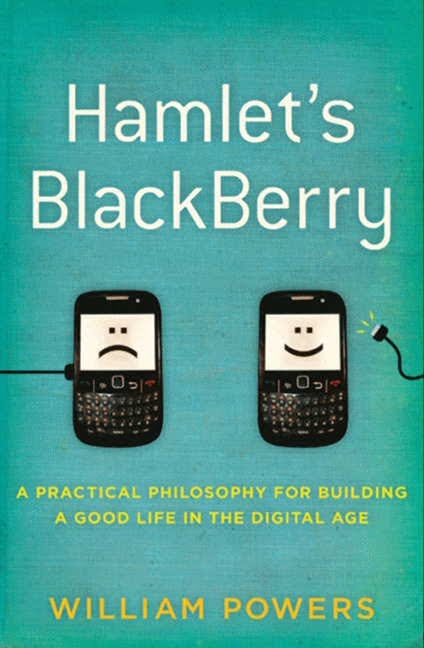
<![CDATA[<p><a href="http://techliberation.com/wp-content/uploads/2010/09/hamlets-BB-cover.jpg"><img class="alignright size-medium wp-image-31632" style="border: 5px solid white;" title="hamlets BB cover" src="http://techliberation.com/wp-content/uploads/2010/09/hamlets-BB-cover-130x200.jpg" align="right" alt="" width="126" height="187" /></a>Information overload is a hot topic these days. I've really enjoyed recent essays by Aaron Saenz ("<a href="http://singularityhub.com/2010/08/26/are-we-too-plugged-in-distracted-vs-enhanced-minds/">Are We Too Plugged In? Distracted vs. Enhanced Minds"</a>), Michael Sacasas ("<a title="Permanent Link: Technology Sabbaths and Other Strategies for the Digitized World" rel="bookmark" href="http://thefrailestthing.com/2010/08/05/technology-sabbaths-and-other-strategies-for-keeping-our-humanity-intact/">Technology Sabbaths and Other Strategies for the Digitized World</a>"), and Peggy Noonan ("<a href="http://online.wsj.com/article/SB10001424052748704476104575439913190836560.html">Information Overload is Nothing New</a>") discussing this concern in a thoughtful way.   Thoughtful discussion about this issue is sometimes hard to find because, as I've noted here before, information overload is a subject that bitterly divides <a href="../2010/01/31/are-you-an-internet-optimist-or-pessimist-the-great-debate-over-technology%E2%80%99s-impact-on-society/">Internet optimists and pessimists</a>. The pessimists tend to overplay the issue and discuss it in apocalyptic terms. The optimists, by contrast, often dismiss the concern out of hand. Certainly there must be some reasonable middle ground on this issue, no?</p>

<p>There is, and some of it can be found in a fine new book, <strong><a href="http://books.google.com/books?id=zVYGQgAACAAJ&amp;dq"><em>Hamlet's BlackBerry: A Practical Philosophy for Building a Good Life in the Digital Age</em></a></strong>, by William Powers.  Powers, a former staff writer for the <em>Washington Post<em>, </em></em>is a gifted storyteller and his walk though the history of philosophy and technology makes this slender volume an enjoyable, quick read.  He begins by reminding us that:<br />
<blockquote>whenever new devices have emerged, they've presented the kinds of challenges we face today -- busyness, information overload, that sense of life being out of control.  These challenges were as real two millennia ago as they are today, and throughout history, people have been grappling with them and looking for creative ways to manage life in the crowd. (p. 5)</blockquote><br />
His key insight is that is that humans <em>can </em>adapt to new technology, but it takes time, patience, humility, and a little effort. "The key is to strike a balance," he says, between "the call of the crowd" and the "need for time and space apart" from it. (p. 4) The problem we face today is that all the pressure is on us to be what he calls "Digital Maximalists."  That is, many of us are increasingly out to maximize the time spent in front of various digital "screens" <em>whether we have made the determination that is really in our best interest or not.</em> It has just gradually happened, Powers argues, because "The goal is no longer to be 'in touch' but to erase the possibility of ever being out of touch." (p. 15)</p>]]>
<![CDATA[<p>Echoing the concern displayed in Nick Carr's new book <em><a href="http://books.google.com/books?id=9-8jnjgYrgYC&amp;printsec=frontcover&amp;dq=Nicholas+Carr+Shallows&amp;hl=en&amp;ei=AS42TMCbJYL_8AaBnbnxAw&amp;sa=X&amp;oi=book_result&amp;ct=result&amp;resnum=1&amp;ved=0CCgQ6AEwAA">The  Shallows: What the Internet Is Doing to Our Brains</a></em> [review <a href="http://techliberation.com/2010/06/01/book-review-nicholas-carr%E2%80%99s-the-shallows/">here</a>], as well as John Freeman,<em> <a href="http://books.google.com/books?id=pryzPQAACAAJ&amp;">The Tyranny of   E-Mail: The Four-Thousand-Year Journey to Your Inbox</a></em> [review <a href="http://techliberation.com/2009/08/23/can-humans-cope-with-information-overload-tyler-cowen-john-freeman-join-the-debate/">here</a>], Powers fears that time for focus and introspection "is lost when your days are spread so thin, busyness itself is your true occupation. If every moment is a traffic jam, it's impossible to engage any experience with one's whole self. More and more, that's how we live." (p. 13)</p>

<p>Even though Powers clearly leans more toward the techno-pessimist camp in this regard, what I like best about his book is that he generally avoids a preachy tone and excessive hand-wringing.  He isn't one of those techno-pessimists who adopts a holy-than-thou, the-rest-of-you-just-don't-get-it attitude. In fact, there's a great deal of self-deprecating humor in the book as Powers explains how he is struggling with the same issues the rest of us are and trying to figure out how to strike the right balance in his own life.  Importantly, he notes that each of us will strike that balance differently. "[E]veryone has to work that out for himself. We're all different, and there's no one-size-fits-all way to balance the outward life and the inward one." (p. 203)  That is a crucial insight. There's nothing worse than a techno-skeptic who tells us they have discovered <em>the one true path </em>to enlightenment or happiness -- especially when it entails giving up new technologies that can have so many beneficial upsides.  Indeed, Powers argues that "It's never a good idea to buy into the dark fears of the techno-Cassandras, who generally turn out to be wrong. Human beings are skillful at figuring out the best uses of new tools. However, it can take awhile." (p. 3)</p>

<p>That very much reflects my own position on this issue, even if I tend to lean a bit more in the "pragmatic optimist" direction whereas Powers is more of a pragmatic pessimist.  Nonetheless, my own struggle with information overload and gadget addiction continues. As I have written here before in essays like, "<a href="../2009/08/23/can-humans-cope-with-information-overload-tyler-cowen-john-freeman-join-the-debate/">Can Humans Cope with Information Overload?</a>" I've been formulating a variety of strategies to cope and find the right balance. For me, the most successful strategy is what I refer to as "mini sabbaticals."  I  try "unplugging" for short spells each day (turning off email &amp;  phone, close web browsers, and just generally get away from my computer and other gadgets).  Usually I'm offline for an hour in morning and then also in afternoon,  and then a couple hours offline during evening. My wife and kids  certainly appreciate it!  But it also helps me spend more "quality time"  with books, writing, and other pursuits.  And I've even started telling people <em>not </em>to expect a quick response from me when they call or write.  When I tell people this face-to-face, their reaction is often one of puzzlement, and in some cases even offense. I suppose some of them imagine I'm just saying this to avoid them (which may be the case!)  But I try to stick with the rule and avoid gadgets and connections for little spurts each day and it has been terrifically beneficial for me thus far.  I am able to read even more than I used to and can focus on getting other things done that are important.</p>

<p>Earlier this summer, I went even further.  During a week-long vacation in Germany, I decided to take day-long digital sabbaticals, only checking emails, Twitter, and RSS feeds after 10:00 at night, if at all. It was terrifically refreshing.  Simply not having to carry a  smartphone  with me all day long was a huge relief.  But ignoring email  for days at a  time was wonderful too.  Of course, things had really  piled up upon my  return to the States.  But that's another thing I've learned to do to cope: Hit that delete button a little more frequently!  Do I really need to read through the hundreds of emails I get each day?  No, not really. Neither do you, I bet.</p>

<p>In <em>Hamlet's BlackBerry</em>, Powers offers some possible solutions of his own, but they are generally in the form of practical advice about how to lead a good life. "The best solutions serve as a kind of bridge to the tech future, one that ensures that we'll arrive with our sanity intact." (p. 155) To find those solutions, he draws upon the wisdom of the ages from figures as diverse as Plato, Aristotle, Seneca, Shakespeare, Ben Franklin, Thoreau, and Marshall McLuhan.  For example, from Thoreau he borrows the notion of finding or creating "a zone of inner simplicity and peace" to create "Walden time" or "Walden zones."  This could take the form of daily digital sabbaticals, or an area of the home that is free of technology at all times.  I already use variants of this rule in my own home.  Many years ago, my wife and I instituted "Media-Free Mondays" in our house so that the kids understand at least one night every week will be free of TVs, computers, video games, etc.  We use the time to play board games, do arts and crafts, or play outside more.  In other words, Mondays are the Thierer family's "Walden Zone."  Again, every family could come up with their own variant of the Walden Zone rule to fit their needs.  At the end of his book, Powers says that his family unplugs their modem each Friday night at bedtime and doesn't turn it back on until Monday morning -- a weekend "Internet Sabbath," he calls it.  That seems a bit extreme to me but, again, to each his own.</p>

<p>I should be clear that I am not quite as pessimistic as Powers about the impact of technology on humans.  I'm not persuaded by his argument that information overload is having as  deleterious of an impact on creative thinking and that "the best human  creativity... happens only when we have the time and the mental space  to take a new thought and follow it wherever it leads."  And I think he goes much too far when he makes pronouncements such as "We're <em>living </em>less and <em>giving </em>less, and the world is the worse for it." (p. 210, italics in original.)  In both cases, I think there are plenty of counter-examples and positive trends that can be cited that prove such sweeping generalities are off the mark.  Yes, it's certainly true that many people are struggling from data deluge and that it has complicated their lives in many ways. But the presence of these new tools and the rise of information abundance have alleviated many of the problems that previous generations lamented.  Indeed, for many centuries the primary problem we humans have faced was information <em>poverty</em>. We were starving for informational inputs.  That problems has been largely alleviated and instead replaced by concerns about information overload.  But my point is always a simple one: Isn't abundance a better dilemma for society to face than scarcity?  As <a href="http://techliberation.com/2010/08/23/crovitz-on-the-great-internet-optimist-vs-pessimist-debate/">I told Gordon Crovitz </a>of the <em>Wall Street Journal </em>recently, I'll take information overload over information  poverty any day!</p>

<p>Nonetheless, the struggle with information clutter will continue.  Assimilating new  communications and entertainment technologies into our lives has always  been challenging, but, thanks to excellent advice like that offer by William Powers in <em>Hamlet's BlackBerry</em>, I am optimistic that we humans can do so sensibly and be happier -- and wiser -- for it in the long-run.</p>

<p>__________</p>

<p><em><strong>Other Views / Additional Reading</strong></em>:<br />
<ul><br />
	<li>official <a href="http://www.williampowers.com/">website for the book</a></li><br />
	<li><a href="http://www.nytimes.com/2010/07/18/books/review/Winer-t.html">a review</a> of the book by Laurie Winer in <em>The New York Times</em></li><br />
	<li><a href="http://online.wsj.com/article/SB10001424052748704895204575321220596115064.html">a review</a> by David Harsanyi that appeared in <em>The Wall Street Journal </em></li><br />
	<li>Jennifer Howard's <a href="http://www.washingtonpost.com/wp-dyn/content/article/2010/07/16/AR2010071602719_pf.html">review</a> of the book + Carr's "The Shallows"</li><br />
	<li>a review by Heller McAlpin in <em>The Christian Science Monitor</em></li><br />
	<li><a href="http://goodexperience.com/2010/08/book-review-hamlets-b.php">a review</a> from the Good Experience blog</li><br />
	<li>my essays on "<a href="http://techliberation.org/2010/01/31/are-you-an-internet-optimist-or-pessimist-the-great-debate-over-technology%E2%80%99s-impact-on-society/">Internet Optimists vs. Pessimists</a>," an earlier <a href="http://techliberation.com/2009/08/23/can-humans-cope-with-information-overload-tyler-cowen-john-freeman-join-the-debate/">piece on information overload</a>, and my reviews of related books on this subject by <a href="http://techliberation.com/2010/06/01/book-review-nicholas-carr%E2%80%99s-the-shallows/">Carr</a>, <a href="http://techliberation.com/2010/02/15/book-review-jaron-laniers-you-are-not-a-gadget/">Lanier</a>, <a href="http://techliberation.com/2008/10/20/book-review-lee-siegel%E2%80%99s-against-the-machine/">Siegel</a>, <a href="http://techliberation.com/2007/10/16/thoughts-on-andrew-keen-part-1-why-an-age-of-abundance-really-is-better-than-an-age-of-scarcity/">Keen</a>, <a href="http://techliberation.com/2009/08/02/book-review-digital-barbarism-by-mark-helprin/">Helprin</a>, <a href="http://techliberation.com/2009/10/23/review-a-better-pencil-by-dennis-baron/">Baron</a>, and <a href="http://techliberation.com/2010/07/09/book-review-cognitive-surplus-by-clay-shirky/">Shirky</a>.</li><br />
	<li>NPR <a href="http://www.npr.org/templates/story/story.php?storyId=128364111">radio spot </a>on the book</li><br />
	<li>and two videos embedded below, one from a bookstore appearance by Powers and the other is an interview with the PBS "News Hour"</li><br />
</ul><br />
<script src="http://www.pbs.org/wgbh/pages/frontline/js/pap/embed.js?news01n425fqf3d" type="text/javascript"></script> <img style="visibility: hidden; width: 0px; height: 0px;" src="http://counters.gigya.com/wildfire/IMP/CXNID=2000002.11NXC/bT*xJmx*PTEyODM3OTE*MjQ5NDAmcHQ9MTI4Mzc5MTQzMTAyNyZwPSZkPSZnPTImbz*1ZTQzNTY3NGZlZWI*MmE*YWUzNmY*ZWVh/MDJlZWEwNiZvZj*w.gif" border="0" alt="" width="0" height="0" /><object id="kaltura_player_1283791414" classid="clsid:d27cdb6e-ae6d-11cf-96b8-444553540000" width="660" height="371" codebase="http://download.macromedia.com/pub/shockwave/cabs/flash/swflash.cab#version=6,0,40,0"><param name="name" value="kaltura_player_1283791414" /><param name="allowfullscreen" value="true" /><param name="data" value="http://akmi.kaltura.com/index.php/kwidget/wid/1_ju7ikxh9/uiconf_id/1628312" /><param name="allowScriptAccess" value="always" /><param name="allowNetworking" value="all" /><param name="allowFullScreen" value="true" /><param name="bgcolor" value="#000000" /><param name="src" value="http://akmi.kaltura.com/index.php/kwidget/wid/1_ju7ikxh9/uiconf_id/1628312" /><embed id="kaltura_player_1283791414" type="application/x-shockwave-flash" width="660" height="371" src="http://akmi.kaltura.com/index.php/kwidget/wid/1_ju7ikxh9/uiconf_id/1628312" bgcolor="#000000" allownetworking="all" allowscriptaccess="always" data="http://akmi.kaltura.com/index.php/kwidget/wid/1_ju7ikxh9/uiconf_id/1628312" allowfullscreen="true" name="kaltura_player_1283791414"></embed></object> <script src="http://www.pbs.org/wgbh/pages/frontline/js/pap/embed.js?news01n425fqf3d" type="text/javascript"></script></p>]]>
</content>
</entry>

<entry>
<title>How Many Times Has Michael &quot;Dr. Doom&quot; Copps Forecast an Internet Apocalypse?</title>
<link rel="alternate" type="text/html" href="http://blog.pff.org/archives/2010/08/how_many_times_has_michael_dr_doom_copps_forecast.html" />
<modified>2010-08-31T17:51:09Z</modified>
<issued>2010-08-31T17:33:51Z</issued>
<id>tag:blog.pff.org,2010://2.6147</id>
<created>2010-08-31T17:33:51Z</created>
<summary type="text/plain">How many times can FCC Commissioner Michael Copps declare the Internet dead? Like a fire-and-brimstone preacher bombastically bellowing sermons warning of the impending End Times, Commissioner Copps has made a hobby out of declaring the Internet dead and buried unless...</summary>
<author>
<name>Adam Thierer</name>

<email>athierer@pff.org</email>
</author>
<dc:subject>Net Neutrality</dc:subject>
<content type="text/html" mode="escaped" xml:lang="en" xml:base="http://blog.pff.org/">
<![CDATA[<p><a href="http://techliberation.com/wp-content/uploads/2010/08/Dr-Doom-cover.jpg"><img class="alignright size-medium wp-image-31542" title="Dr Doom cover" src="http://techliberation.com/wp-content/uploads/2010/08/Dr-Doom-cover-200x166.jpg" alt="" align="right" width="200" height="166" /></a>How many times can FCC Commissioner Michael Copps declare the Internet dead?  Like a fire-and-brimstone preacher bombastically bellowing sermons warning of the impending End Times, Commissioner Copps has made a hobby out of declaring the Internet dead and buried unless drastic steps are taken <em>right now </em>to save cyberspace! The problem is, he's being saying this for the past decade and yet, despite generally <em>laissez-faire</em> policy in this arena, the Internet is still very much alive and well.</p>

<p>His biggest beef, of course, is Net Neutrality regulation--or the current lack thereof.  He fears that without such a "<a href="http://techliberation.com/2010/05/19/the-constructive-alternative-to-net-neutrality-regulation-title-ii-reclassification/">Mother, May I</a>" <a href="http://techliberation.com/2010/02/25/the-5-part-case-against-net-neutrality-regulation-debate-vs-ben-scott-of-free-press/">regulatory regime</a> in place, the whole cyber-world is heading for eternal damnation.  Echoing the fears of other <a href="http://techliberation.com/2010/08/30/two-schools-of-internet-pessimism/">Internet hyper-pessimists</a>, Copps concocts grand conspiracy stories of nefarious corporate schemers hell-bent on quashing our digital liberties and foreclosing all Internet freedom.</p>

<p>Way back in 2003, for example, Comm. Copps delivered a doozy of a sermon at the New America Foundation entitled, "<a href="http://hraunfoss.fcc.gov/edocs_public/attachmatch/DOC-239800A1.pdf" target="_blank">The Beginning of the End of the Internet.</a>" In the speech, Copps lamented that the "Internet may be dying" and only immediate action by regulators can save the day. Copps laid on the sky-is-falling rhetoric fairly thick: "I think we are teetering on a precipice . . . we could be on the cusp of inflicting terrible damage on the Internet. If we embrace closed networks, if we turn a blind eye to discrimination, if we abandon the end-to-end principle and decide to empower only a few, we will have inflicted upon one of history's most dynamic and potentially liberating technologies shackles that make a mockery of all the good things that might have been."</p>

<p>But that's hardly the only such fire-and-brimstone sermon that <span style="text-decoration: line-through;">Rev.</span> Comm. Copps has delivered about the death of the Internet.</p>]]>
<![CDATA[<p>In one speech after another over the past decade, he has cast our future in lugubrious, foreboding terms.  At risk of making my PFF colleague Adam Marcus suicidal, I asked him to download, compile, and search through every speech and official statement that Michael Copps has delivered since 2001 [they're all <a href="http://www.fcc.gov/commissioners/copps/">here</a>], and then tabulate how many times he uttered various terms of gloom and doom.  Here are the results:</p>
<table border="0" cellspacing="0" cellpadding="0" width="308">
<tbody>
<tr>
<td width="99"><strong>Term</strong></td>
<td width="67"><strong>Speeches</strong></td>
<td width="79"><strong>Statements</strong></td>
<td width="64"><strong>Total</strong></td>
</tr>
<tr>
<td>Discriminate(s)/ Discrimination</td>
<td>40</td>
<td>174</td>
<td>214</td>
</tr>
<tr>
<td>End of</td>
<td>13</td>
<td>77</td>
<td>90</td>
</tr>
<tr>
<td>Threat</td>
<td>11</td>
<td>79</td>
<td>90</td>
</tr>
<tr>
<td>Monopoly</td>
<td>16</td>
<td>64</td>
<td>80</td>
</tr>
<tr>
<td>Closed</td>
<td>30</td>
<td>45</td>
<td>75</td>
</tr>
<tr>
<td>Dangerous</td>
<td>12</td>
<td>37</td>
<td>49</td>
</tr>
<tr>
<td>Damage</td>
<td>7</td>
<td>24</td>
<td>31</td>
</tr>
<tr>
<td>Dark</td>
<td>12</td>
<td>15</td>
<td>27</td>
</tr>
<tr>
<td>Gatekeeper</td>
<td>6</td>
<td>16</td>
<td>22</td>
</tr>
<tr>
<td>Dead</td>
<td>10</td>
<td>11</td>
<td>21</td>
</tr>
<tr>
<td>Death</td>
<td>8</td>
<td>12</td>
<td>20</td>
</tr>
<tr>
<td>Impede</td>
<td>2</td>
<td>17</td>
<td>19</td>
</tr>
<tr>
<td>Bottleneck</td>
<td>5</td>
<td>13</td>
<td>18</td>
</tr>
<tr>
<td>Dying</td>
<td>5</td>
<td>9</td>
<td>14</td>
</tr>
<tr>
<td>Catastrophe</td>
<td>1</td>
<td>7</td>
<td>8</td>
</tr>
<tr>
<td>Retard</td>
<td>2</td>
<td>4</td>
<td>6</td>
</tr>
<tr>
<td>Kill</td>
<td>1</td>
<td>2</td>
<td>3</td>
</tr>
<tr>
<td>Thwart</td>
<td>1</td>
<td>2</td>
<td>3</td>
</tr>
<tr>
<td>Precipice</td>
<td>1</td>
<td>0</td>
<td>1</td>
</tr>
</tbody>
</table>
<p><a href="http://techliberation.com/wp-content/uploads/2010/08/fire-and-brimstone-preacher.jpg"><img class="alignright size-medium wp-image-31550" title="fire-and-brimstone-preacher" src="http://techliberation.com/wp-content/uploads/2010/08/fire-and-brimstone-preacher-200x166.jpg" align="right" alt="" width="200" height="166" /></a>Who knew the end was so near?!  Of course, it isn't really. Again, the problem for Commissioner Copps and the other cyber-worry warts is that the cyber-sky is most definitely <em>not </em>falling. There's more innovation across <em>all layers </em>of the Net than ever before.  In fact, despite the recent economic downturn, the digital sector has been a rare bright spot.  Pick just about any metric (devices, applications, broadband speeds, etc.) and you'll see great improvements over the past decade. Could some metrics be even better?  Sure.  But can we at least agree that, <em>contra</em> Copps, the sky isn't even close to falling?</p>

<p>On the other hand, if Commissioner Copps feels the need to persist with the "Net is Dying" meme, I'd at least encourage him to broaden his vocabulary a bit.  I mean, there are plenty of other good terms from which to choose, <a href="http://www.youtube.com/watch?v=4vuW6tQ0218">as John Cleese once taught us</a>.</p>

<p style="text-align: center;"><object classid="clsid:d27cdb6e-ae6d-11cf-96b8-444553540000" width="480" height="385" codebase="http://download.macromedia.com/pub/shockwave/cabs/flash/swflash.cab#version=6,0,40,0"><param name="allowFullScreen" value="true" /><param name="allowscriptaccess" value="always" /><param name="src" value="http://www.youtube.com/v/4vuW6tQ0218?fs=1&amp;hl=en_US" /><param name="allowfullscreen" value="true" /><embed type="application/x-shockwave-flash" width="480" height="385" src="http://www.youtube.com/v/4vuW6tQ0218?fs=1&amp;hl=en_US" allowscriptaccess="always" allowfullscreen="true"></embed></object></p>]]>
</content>
</entry>

<entry>
<title>Two Schools of Internet Pessimism </title>
<link rel="alternate" type="text/html" href="http://blog.pff.org/archives/2010/08/two_schools_of_internet_pessimism.html" />
<modified>2010-08-31T02:44:32Z</modified>
<issued>2010-08-31T02:43:14Z</issued>
<id>tag:blog.pff.org,2010://2.6145</id>
<created>2010-08-31T02:43:14Z</created>
<summary type="text/plain">[I am currently helping Berin Szoka edit a collection of essays from various Internet policy scholars for a new PFF book called &quot;The Next Digital Decade: Essays about the Internet&apos;s Future.&quot; I plan on including two chapters of my own...</summary>
<author>
<name>Adam Thierer</name>

<email>athierer@pff.org</email>
</author>
<dc:subject>What We&apos;re Reading</dc:subject>
<content type="text/html" mode="escaped" xml:lang="en" xml:base="http://blog.pff.org/">
<![CDATA[<p>[<em>I am currently helping Berin Szoka edit a collection of essays from various Internet policy scholars for a new PFF book called "The Next Digital Decade: Essays about the Internet's Future."  I plan on including two chapters of my own in the book responding to the two distinct flavors of Internet pessimism that I increasingly find are dominating discussions about Internet policy. Below you will see how the first of these two chapters begins. I welcome input as I refine this draft. </em>]</p>

<p>Surveying the prevailing mood surrounding cyberlaw and Internet policy circa 2010, one is struck by the overwhelming sense of pessimism about our long-term prospects for a better future.   "Internet pessimism," however, comes in two very distinct flavors:<br />
<ol><br />
	<li><strong>Net Skeptics, Pessimistic about the Internet Improving the Lot of Mankind</strong>: The first variant of Internet pessimism is rooted in general skepticism regarding the supposed benefits of cyberspace, digital technologies, and information abundance. The proponents of this pessimistic view often wax nostalgic about some supposed "good 'ol days" when life was much better (although they can't seem to agree when those were). At a minimum, they want us to slow down and think twice about life in the Information Age and how it is personally affecting each of us.  Other times, however, their pessimism borders on neo-Ludditism, with proponents recommending steps be taken to curtail what they feel is the destructive impact of the Net or digital technologies on culture or the economy. Leading proponents of this variant of Internet pessimism include:  Neil Postman (<a href="http://techliberation.org/2010/01/31/are-you-an-internet-optimist-or-pessimist-the-great-debate-over-technology%E2%80%99s-impact-on-society/"><em>Technopoly: The Surrender of Culture to Technology</em></a>), Andrew Keen, (<a href="http://techliberation.com/2007/10/16/thoughts-on-andrew-keen-part-1-why-an-age-of-abundance-really-is-better-than-an-age-of-scarcity/"><em>The Cult of the Amateur: How Today's Internet is Killing our Culture</em></a>), Lee Siegel, (<a href="http://techliberation.com/2008/10/20/book-review-lee-siegel%E2%80%99s-against-the-machine/"><em>Against the Machine: Being Human in the Age of the Electronic Mob</em></a>), Mark Helprin, (<a href="http://techliberation.com/2009/08/02/book-review-digital-barbarism-by-mark-helprin/"><em>Digital Barbarism</em></a>) and, to a lesser degree, Jaron Lanier (<a href="http://techliberation.com/2010/02/15/book-review-jaron-laniers-you-are-not-a-gadget/"><em>You Are Not a Gadget</em></a>) and Nicholas Carr (<em><a href="http://techliberation.com/2008/10/30/book-review-nick-carrs-big-switch/">The Big Switch</a> </em>and <a href="http://techliberation.com/2010/06/01/book-review-nicholas-carr%E2%80%99s-the-shallows/"><em>The Shallows</em></a>).</li><br />
	<li><strong>Net Lovers, Pessimistic about the Future of Openness</strong>: A different type of Internet pessimism is on display in the work of many leading cyberlaw scholars today.  Noted academics such as Lawrence Lessig, (<a href="http://www.cato-unbound.org/2009/05/08/adam-thierer/code-pessimism-and-the-illusion-of-perfect-control/"><em>Code and Other Laws of Cyberspace</em></a>), Jonathan Zittrain (<a href="http://techliberation.com/2008/03/23/review-of-zittrains-future-of-the-internet/"><em>The Future of the Internet &amp; How to Stop It</em></a>), and Tim Wu (<em>The Master Switch</em> <em>The Rise and Fall of Information Empires</em>), embrace the Internet and digital technologies, but argue that they are "dying" due to a lack of sufficient care or collective oversight.  In particular, they fear that the "open" Internet and "generative" digital systems are giving way to closed, proprietary systems, typically run by villainous corporations out to erect walled gardens and quash our digital liberties.  Thus, they are pessimistic about the long-term survival of the wondrous Internet that we currently know and love.</li><br />
</ol><br />
Despite their different concerns, two things unite these two schools of techno-pessimism.</p>]]>
<![CDATA[<p>First, there is an elitist air to their pronouncements; a veritable "the-rest-of-you-just-don't-get-it" attitude pervades their work.  In the case of the Net Skeptics, it's the supposed decline of culture, tradition, and economy that the rest of us are supposedly blind to, but which they see perfectly--and know how to rectify.  For the Net Loving Pessimists, by contrast, we see this attitude on display when they imply that a Digital Dark Age of Closed Systems is unfolding since nefarious schemers in high-tech corporate America are out to suffocate Internet innovation and digital freedom more generally.  The Net Loving Pessimists apparently see this plot unfolding, but paint the rest of us out to be robotic sheep being led to the cyber-slaughter since we are unwittingly using services (AOL in the old days; Facebook today) or devices (the iPhone and iPad) that play right into the hands of those corporate schemers who are out to erect high and tight walled gardens all around us.</p>

<p>Unsurprisingly, this elitist attitude leads to the second thing uniting these two variants of Net pessimism: An underlying belief that <em>someone</em> or <em>something</em>--most often, the State--must intervene to set us on a better course or protect those things that they regard as sacred.  They either fancy themselves as the philosopher kings who can set things back on a better course, or they imagine that such creatures exist in government today and can be tapped to save us from our impending digital doom--whatever it may be.</p>

<p>In both cases, I will argue that today's Internet pessimists have over-stated the severity of the respective problems they have identified.  In doing so, I will argue that they both have failed to appreciate the benefits of <em>evolutionary dynamism</em>.  I borrow the term dynamism from Virginia Postrel, who contrasted the conflicting worldviews of <em>dynamism </em>and <em>stasis </em>so eloquently in her 1999 masterpiece, <em><a href="http://www.amazon.com/exec/obidos/ASIN/0684862697/ref=nosim/dynamistcom/">The Future and Its Enemies</a></em>.  Postrel argued that:<br />
<blockquote>The future we face at the dawn of the twenty-first century is, like all futures left to themselves, "emergent, complex messiness." Its "messiness" lies not in disorder, but in an order that is unpredictable, spontaneous, and ever shifting, a pattern created by millions of uncoordinated, independent decisions.</blockquote><br />
However, because "these actions shape a future no one can see, a future that is dynamic and inherently unstable," Postrel noted.  But that inherent instability and the uncomfortable realization that the future is, by its very nature, unknowable, leads to exactly the sort of anxieties we see on display in the works of <em>both </em>varieties of Internet pessimists today.  Postrel contrasts the two visions of stasis and dynamism<em> </em>and makes the case for embracing dynamism as follows:<br />
<blockquote>How we feel about the evolving future tells us who we are as individuals and as a civilization: Do we search for <em>stasis</em>--a regulated, engineered world? Or do we embrace <em>dynamism</em>--a world of constant creation, discovery, and competition? Do we value stability and control, or evolution and learning? Do we declare with [Tim] Appelo that "we're scared of the future" and join [Judith ] Adams in decrying technology as "a killing thing"? Or do we see technology as an expression of human creativity and the future as inviting? Do we think that progress requires a central blueprint, or do we see it as a decentralized, evolutionary process? Do we consider mistakes permanent disasters, or the correctable by-products of experimentation? Do we crave predictability, or relish surprise?  These two poles, stasis and dynamism, increasingly define our political, intellectual, and cultural landscape. The central question of our time is what to do about the future.  And that question creates a deep divide.</blockquote><br />
Indeed it does, and that divide is growing deeper as the two schools of Internet pessimism--unwittingly, of course--work together to concoct a lugubrious narrative of impending techno-apocalypse.  It makes little difference whether the two schools agree on the root cause(s) of all our problems; in the end, it's their unified call for a more "regulated, engineered world" that makes them both suffer from the same stasis sickness.</p>

<p>In this chapter, I will take on the first variant of Internet pessimism (the Net Skeptics) and make the dynamist case for what I call "pragmatic optimism."  I will argue that the Internet and digital technologies are reshaping our culture, economy and society in most ways for the better, but not without some serious heartburn along the way.  My bottom line comes down to a simple cost-benefit analysis: Were we really better off in the scarcity era when we were collectively suffering from information poverty? Generally speaking, I'll take information overload over information poverty any day.  But we should not underestimate or belittle the disruptive impacts associated with the Information Revolution.  We need to find ways to better cope with those changes in a dynamist fashion instead of embracing the stasis notion that we can roll back the clock on progress and recapture "the good 'ol days"--which actually weren't all that good.</p>

<p>In another chapter in the book, I will address the second variant of Internet pessimism (the Net Loving Pessimists) and show how reports of the Internet's death have been greatly exaggerated.  Although the Net Loving Pessimists will likely recoil at the suggestion that they are not dynamists, the reality is that their attitudes and recommendations are decided stasisist in nature. They fret about a cyber-future in which the Internet might not as closely resemble the its opening epoch.  Worse yet, many of them agree with what Lawrence Lessig said in his seminal--by highly pessimistic--1999 book, <em>Code and Other Laws of Cyberspace</em>, that "Left to itself, cyberspace will become a perfect tool of control."  Lessig and his intellectual disciples--especially Zittrain and Wu--have continued to forecast a gloomy digital future unless <em>something is done</em> to address the Great Digital Closing we are supposedly experiencing.  I will argue that while many of us share their appreciation of the Internet's current nature and its early history, their embrace of the stasis mentality is unfortunate since it forecloses the spontaneous evolution of cyberspace and invites government intervention to create a more "regulated, engineered world" that will, ironically, undermine much of what they hope to preserve about the current Internet.</p>

<p>_______</p>

<p>[<em>I'll then go on to finish this chapter, basically by finally completing my essay, "</em><a title="Click to read Are You An Internet Optimist or Pessimist? The Great Debate over Technology's Impact on Society" rel="bookmark" href="../2010/01/31/are-you-an-internet-optimist-or-pessimist-the-great-debate-over-technology%e2%80%99s-impact-on-society/">Are You An Internet Optimist or Pessimist? The Great Debate over Technology's Impact on Society</a>." <em>In the second chapter addressing the pessimism of the "Net Lovers," I will build on <a href="http://techliberation.com/2008/03/23/review-of-zittrains-future-of-the-internet/">my review</a> of Zittrain's "Future of the Internet," my <a href="http://www.cato-unbound.org/2009/05/08/adam-thierer/code-pessimism-and-the-illusion-of-perfect-control/">two</a>-<a href="http://www.cato-unbound.org/2009/05/14/adam-thierer/our-conflict-of-cyber-visions/">part</a> debate with Lawrence Lessig on the occasion of the 10th anniversary of <em>"</em></em><em>Code and Other Laws of Cyberspace," and my forthcoming review of Tim Wu's soon-to-be-released book, </em><em>"The Master Switch</em> <em>The Rise and Fall of Information Empires<em>."  I will then eagerly await the hate mail from all the affected parties.]</em></em></p>]]>
</content>
</entry>

<entry>
<title>GAO: Wireless Prices Plummeting; Public Knowledge: We Must Regulate! </title>
<link rel="alternate" type="text/html" href="http://blog.pff.org/archives/2010/08/gao_wireless_prices_plummeting_public_knowledge_we.html" />
<modified>2010-08-27T13:53:22Z</modified>
<issued>2010-08-27T00:05:35Z</issued>
<id>tag:blog.pff.org,2010://2.6144</id>
<created>2010-08-27T00:05:35Z</created>
<summary type="text/plain">So, the GAO recently released a report on the wireless industry and found that: The biggest changes in the wireless industry since 2000 have been consolidation among wireless carriers and increased use of wireless services by consumers. Industry consolidation has...</summary>
<author>
<name>Adam Thierer</name>

<email>athierer@pff.org</email>
</author>
<dc:subject>Spectrum</dc:subject>
<content type="text/html" mode="escaped" xml:lang="en" xml:base="http://blog.pff.org/">
<![CDATA[<p>So, the GAO recently released <a href="http://energycommerce.house.gov/documents/20100826/GAO-10-779.Report.July.2010.pdf">a report on the wireless industry</a> and found that:<br />
<blockquote>The biggest changes in the wireless industry since 2000 have been consolidation among wireless carriers and increased use of wireless services by consumers. Industry consolidation has made it more difficult for small and regional carriers to be competitive. Difficulties for these carriers include securing subscribers, making network investments, and offering the latest wireless phones necessary to compete in this dynamic industry. Nevertheless, consumers have also seen benefits, such as generally lower prices, which are approximately 50 percent less than 1999 prices, and better coverage.</blockquote><br />
Now, if you are a self-described "consumer advocate," I would hope the bottom line here is pretty straightforward and refreshing: <strong><span style="text-decoration: underline;">Prices fell by 50% in 10 years</span></strong>. That alone is an amazing success story. But that's <em>not </em>the end of the story. The more important fact is that prices fell by that much while innovation in this sector was also flourishing.  Do you remember the phone you carried in your pocket -- if you could fit it in your pocket at all -- ten years ago?  It was a pretty rudimentary device.  It made calls and... well... it made calls.  Now, think about the mini-computer that sits in your pocket right now.  Stunning little piece of kit. It can text. It can do email. It can get Internet access. You can Twitter on it. Oh, and you can still make calls on it (but who wants to do that anymore!)</p>

<p>The point is, this is a great American capitalist success story that everyone -- <em>especially </em>"consumer advocates"<em> </em>-- should be celebrating.  So, what does Public Knowledge president Gigi Sohn have to say?</p>

<p>"These trends do not bode well for consumers, despite any benefits of  the moment," she told <a href="http://arstechnica.com/tech-policy/news/2010/08/cell-phone-bills-dropped-by-50-in-last-ten-years.ars"><em>Ars Technica</em></a>.</p>

<p>Wait, what?  </p>]]>
<![CDATA[<p>Apparently no good deed goes unpunished. In the eyes of Public Knowledge, 50% price drops + stunning innovation = we need more regulation!  According to <em>Ars</em>, Gigi called for  wireless net neutrality, text messaging regulation, an end to handset  exclusivity, and more reasonable early termination fees.</p>

<p>What Gigi appears to be hung up on is the fact that, as the GAO reports, there has been undeniable consolidation in this sector since 2000. (Of course, that scale was essential to spreading faster networks nationwide).  But in Public Knowledge's world, big is always bad.  All that counts is how atomistic competition is.  If we don't have lemonade stands* on every corner, then, by God, to hell with the entire system, they say.  <span style="text-decoration: underline;"><strong><em>It makes no difference to them how well consumers did under that system</em></strong></span><strong><em>.</em></strong> That's the key take-away here.</p>

<p>But how asinine is this?  Again, isn't consumer welfare what really counts?  Do we really care if we have 4 or 40 competitors? So long as prices are generally reasonable (or in this case constantly plummeting) and innovation is occurring at a healthy clip (which is certainly is here), then who cares how many players are out there?  Who's to say to say that <em>"X" </em>is exactly the right number of competitors?  Markets determine these things. Public Knowledge apparently doesn't like the fact that <em>X </em>currently is 4 instead of 40, or whatever it is they think meets their Goldilocks standard.  And, so, to get things <em>just right</em>, they would bring in the regulatory wrecking ball and have FCC bureaucrats start re-engineering this sector according to their own preferred design.</p>

<p>Oh, the rank hubris of it all!</p>

<p>Anyway, you'll have to excuse me now.  Once I finish up this post to on my Droid (yes, I can blog on my fricking phone!!!!  How amazing is that, Gigi !!) I then need to get back to reading through my day's Twitter stream (also on my phone) my RSS feeds (also via my phone) and then sort through the tens of thousands of games and apps in the Android marketplace to find my kids some new things to keep them entertained on a long car drive during vacation next week, where I will be using the Droid's navigation system to find the hotel, while also searching for restaurants to eat at, while also...</p>

<p>Oh, you get the point.  Some people are just never happy.</p>

<p>____</p>

<p>P.S. To understand why "lemonade stand economics" are never going to work out well in high fixed-cost sectors like wireless, please see my post, "<a href="http://techliberation.com/2010/05/23/wireless-networks-lemonade-stand-economics/">Wireless Networks &amp; Lemonade Stand Economics</a>."   For more facts about how vibrantly competitive and innovative this sector is, please see:<br />
<ul><br />
	<li><a href="http://techliberation.com/2009/10/11/wireless-innovation-is-alive-well/">Wireless Innovation is Alive &amp; Well: Two New Reports Set the Record Straight</a></li><br />
	<li><a href="http://techliberation.com/2010/02/22/ctias-refutation-of-tim-wus-2007-wireless-net-neutrality-paper/">CTIA's Refutation of Tim Wu's 2007 Wireless Net Neutrality Paper</a></li><br />
	<li><a href="../2010/01/05/the-fiercely-competitive-mobile-os-device-markets/">The Fiercely Competitive Mobile OS &amp; Device  Markets</a></li><br />
</ul></p>]]>
</content>
</entry>

<entry>
<title>Governments Privatizing Public Utilities Even As Some Want to Convert Internet Into One</title>
<link rel="alternate" type="text/html" href="http://blog.pff.org/archives/2010/08/governments_privatizing_public_utilities_even_as_s.html" />
<modified>2010-08-23T20:50:16Z</modified>
<issued>2010-08-23T20:49:29Z</issued>
<id>tag:blog.pff.org,2010://2.6142</id>
<created>2010-08-23T20:49:29Z</created>
<summary type="text/plain">Two articles of interest in today&apos;s Wall Street Journal with indirect impact on the debate over the future of Internet policy. First, there&apos;s a front-page story (&quot;Facing Budget Gaps, Cities Sell Parking, Airports, Zoo&quot;) documenting how many cities are privatizing...</summary>
<author>
<name>Adam Thierer</name>

<email>athierer@pff.org</email>
</author>
<dc:subject>Broadband</dc:subject>
<content type="text/html" mode="escaped" xml:lang="en" xml:base="http://blog.pff.org/">
<![CDATA[<p>Two articles of interest in today's<em> Wall Street Journal </em>with indirect impact on the debate over the future of Internet policy. First, there's a front-page story ("<a href="http://online.wsj.com/article/SB10001424052748703960004575427150960867176.html?mod=googlenews_wsj">Facing Budget Gaps, Cities Sell Parking, Airports, Zoo</a>") documenting how many cities are privatizing various services -- including some considered "public utilities" -- in order to help balance budgets.  The article worries about "fire-sale" prices and the loss of long-term revenue because of the privatizations.  But the author correctly notes that the more important rationale for privatization is that, "In many cases, the private takeover of government-controlled industry  or  services can result in more efficient and profitable operations."  Moreover, any concern about "fire-sale" prices and long-term revenue losses have to be stacked again the massive inefficiencies / costs associated with ongoing government management of resources /networks.</p>

<p>Of course, what's so ironic about this latest privatization wave is that it comes at a time when some regulatory activists are clamoring for more regulation of the Internet and calling for broadband to be converted into a plain-vanilla public utility. For example, Free Press founder Robert McChesney <a href="http://techliberation.com/2009/08/10/free-press-robert-mcchesney-the-struggle-for-media-marxism/">has argued</a> that "What we want to have in the U.S. and in every society is an Internet that is not private property, but a public utility."  That certainly doesn't seem wise in light of the track record of past experiments with government-owned or regulated utilities.  And the fact that we are talking about something as complex and fast-moving as the Internet and digital networks makes the task even more daunting.</p>

<p>Government mismanagement of complex technology projects was on display in a second article in today's <em>Journal</em> ("<a href="http://online.wsj.com/article/SB10001424052748704488404575442021240390314.html">U.S. Reviews Tech Spending</a>.")  Amy Schatz notes that "Obama administration officials are considering overhauling 26  troubled federal technology projects valued at as much as $30 billion as  part of a broader effort by White House budget officials to cut  spending. Projects on the list are either over budget, haven't worked as expected or both, say Office of Management and Budget officials."  I'm pleased to hear that the Administration is taking steps to rectify such waste and mismanagement, but let's not lose sight of the fact that this is the same government that the Free Press folks want to run the Internet.  Not smart.<br />
<div><a href="http://online.wsj.com/article/SB10001424052748704488404575442021240390314.html#ixzz0xSmZL7LX"></a></div></p>]]>

</content>
</entry>

<entry>
<title>Crovitz on the Great Internet Optimist vs. Pessimist Debate</title>
<link rel="alternate" type="text/html" href="http://blog.pff.org/archives/2010/08/crovitz_on_the_great_internet_optimist_vs_pessimis.html" />
<modified>2010-08-23T14:36:20Z</modified>
<issued>2010-08-23T14:35:02Z</issued>
<id>tag:blog.pff.org,2010://2.6141</id>
<created>2010-08-23T14:35:02Z</created>
<summary type="text/plain">I&apos;ve noted here before that Gordon Crovitz is my favorite technology policy columnist and that everything he pens for his &quot;Information Age&quot; column for The Wall Street Journal is well worth reading. His latest might be his best ever. It...</summary>
<author>
<name>Adam Thierer</name>

<email>athierer@pff.org</email>
</author>
<dc:subject>Books &amp; Book Reviews</dc:subject>
<content type="text/html" mode="escaped" xml:lang="en" xml:base="http://blog.pff.org/">
<![CDATA[<p><a href="http://techliberation.com/wp-content/uploads/2010/08/Crovitz-pic.gif"><img class="alignright size-full wp-image-31288" style="border: 7px solid white;" title="Crovitz pic" src="http://techliberation.com/wp-content/uploads/2010/08/Crovitz-pic.gif" alt="" align="right" width="76" height="76" /></a>I've noted here before that Gordon Crovitz is <a href="http://techliberation.com/2010/07/26/crovitz-on-the-first-amendment-parenting-the-technology-of-decency/">my favorite</a> technology policy columnist and that everything he pens for his "Information Age" column for <em>The Wall Street Journal </em>is well worth reading.   His latest might be his best ever.  It touches upon the great debate between Internet optimists and pessimists regarding the impact of digital technology on our culture and economy.  His title is just perfect: "<strong><a href="http://online.wsj.com/article/SB10001424052748703579804575441461191438330.html">Is Technology Good or Bad? Yes</a>.</strong>"  His point is that you can find evidence that technological change has both beneficial and detrimental impacts, and plenty of people on both sides of the debate to cite it for you.</p>

<p>He specifically references the leading pessimist, Nicholas Carr, and optimist, Clay Shirky, of our time. In <a href="../2010/06/01/book-review-nicholas-carr%E2%80%99s-the-shallows/"><em>The Shallows: What the Internet is Doing to Our Brains</em></a> and <a href="../2008/10/30/book-review-nick-carrs-big-switch/"><em>The Big Switch: Rewiring the World, From Edison to Google</em></a>, Carr paints a dismal portrait of what the Internet is doing us and the world around us. Clay Shirky responds in books like <em>Here Comes Everybody </em>and <em><a href="../2010/07/09/book-review-cognitive-surplus-by-clay-shirky/">Cognitive Surplus: Creativity and Generosity in the a Connected Age</a></em>, arguing that we are much better off because of the rise of the Net and digital technology.</p>

<p>This is a subject I've spent a lot of time noodling over here through the years and, most recently, I compiled all my random thoughts into a mega-post asking, "<strong><a href="../2010/01/31/are-you-an-internet-optimist-or-pessimist-the-great-debate-over-technology%E2%80%99s-impact-on-society/">Are You an Internet Optimist or Pessimist</a></strong>?"  That post tracks all the leading texts on both sides of this debate.  I was tickled, therefore, when Gordon contacted me and asked for comment for his story after seeing my piece. [See, people really do still read blogs!]  </p>]]>
<![CDATA[<p>I told Gordon that I label my own position "pragmatic optimism," which I summarized as follows: "The Internet and digital technologies are reshaping our culture,  economy and society in most ways for the better, but not without some  serious heartburn along the way."  My bottom line comes down to a simple cost-benefit analysis: "Were we really  better off in the scarcity era when we were collectively suffering from  information poverty? I'll take information overload over information  poverty any day."</p>

<p>Moreover, practically speaking, I don't see any realistic way to roll back the clock to some supposed "good 'ol days"--whenever those were.  As Gordon argues, "Whatever the mix of good and bad, technology only advances and cannot be put back in the bottle."  Exactly right.  Thus, we need to learn to assimilate new technologies into our lives, culture, and economy.  Luckily, adaptation is something that we humans are very good at. Past experience tells us that we got through previous gut-wrenching technological / social revolutions; we can get through this one, too.  But, again, there will be rough patches and legitimate issues that need to be addressed as we make this journey.</p>

<p>So, make sure to check out <a href="http://online.wsj.com/article/SB10001424052748703579804575441461191438330.html">Gordon's article</a>. It's a terrifically interesting topic, and one that I still hope to turn into a book <a href="http://techliberation.com/2010/01/31/are-you-an-internet-optimist-or-pessimist-the-great-debate-over-technology%E2%80%99s-impact-on-society/">as I noted here before</a>.</p>

<p>P.S. Here are a couple of other interesting essays on this topic that that have been released recently:<br />
<ul><br />
	<li>Andrew McAfee's terrific essay "<strong><a href="http://andrewmcafee.org/2010/07/mcafee-carr-turkle-keen-lanier-zittrain/">I Know I'm Not the Only Internet Optimist...</a></strong>" from his blog</li><br />
	<li>Michiko Kakutani essay in the<em> New York Times</em>,  "<strong><a href="http://www.nytimes.com/2010/03/21/books/21mash.html">Texts  Without Contexts</a></strong>"</li><br />
	<li>Peggy Noonan of <em>The Wall Street Journal </em>argues that "<strong><a href="http://online.wsj.com/article/SB10001424052748704476104575439913190836560.html?mod=googlenews_wsj">Information Overload is Nothing New</a></strong>"</li><br />
	<li>a great PBS documentary about these issues: "<a href="http://www.pbs.org/wgbh/pages/frontline/digitalnation/"><strong>Digital  Nation: Life on the Virtual  Frontie</strong>r</a>" (+ <a href="../2010/02/03/som-thoughts-on-pbs-digital-nation-documentary/">my thoughts</a> on the film)</li><br />
	<li><a href="http://www.youtube.com/fosi#p/a/u/0/Fn3MCq5lgXY">a video</a> from a Family Online Safety Institute event about the PBS documentary  that features a discussion about Internet optimism vs. pessimism</li><br />
</ul></p>]]>
</content>
</entry>

<entry>
<title>Net Neutrality, Banned Business Models &amp; Price Controls</title>
<link rel="alternate" type="text/html" href="http://blog.pff.org/archives/2010/08/net_neutrality_banned_business_models_price_contro.html" />
<modified>2010-08-14T18:30:53Z</modified>
<issued>2010-08-14T18:30:13Z</issued>
<id>tag:blog.pff.org,2010://2.6140</id>
<created>2010-08-14T18:30:13Z</created>
<summary type="text/plain">I continue to be mystified by the contention of some Net neutrality advocates that it is not a form of economic regulation. The reality, of course, is that Net neutrality would ban business models and necessitate price controls. If that...</summary>
<author>
<name>Adam Thierer</name>

<email>athierer@pff.org</email>
</author>
<dc:subject>Net Neutrality</dc:subject>
<content type="text/html" mode="escaped" xml:lang="en" xml:base="http://blog.pff.org/">
<![CDATA[<p>I continue to be mystified by the contention of some Net neutrality advocates that it is not a form of economic regulation.  The reality, of course, is that Net neutrality would ban business models and necessitate price controls. If that ain't regulation, I don't know what is.  As Robert Litan and Hal Singer note in their new <em>Harvard Business Review </em>essay, "<a href="http://blogs.hbr.org/cs/2010/08/why_business_should_oppose_net_neutrality.html">Why Business Should Oppose Net Neutrality</a>," "Non-discrimination under the FCC's net neutrality proposal means that ISPs cannot offer enhanced services beyond the plain-vanilla access  service to content providers at any price."  Thus, any type of service prioritization or price discrimination would be prohibited under the FCC's Net neutrality regulatory regime.</p>

<p>As I explained in <a href="http://techliberation.com/2010/08/05/cnbc-debate-on-net-neutrality-regulation-pricing-freedom/">this earlier essay</a> and in the video below, this would be a disaster for investment, innovation, and consumer welfare. Differentiated and prioritized services and pricing are part of almost every industrial sector in a capitalistic economy, and there's no reason things should it be any different for broadband. As Litan and Singer note, "The concept of premium services and upgrades should be second-nature to businesses. From next-day delivery of packages to airport lounges, businesses value the option of upgrading when necessary. That one customer chooses to purchase the upgrade while the next opts out would never be considered 'discriminatory.'"</p>

<p>And let's not forget, something has to pay for Internet access and investment in new facilities. Differentiated services can help by allowing carriers to price more intensive or specialized users and uses to ensure that carriers don't have to hit everyone - including average household users - with the same bill for service.  Why would we want to make that illegal through Net neutrality regulation and <a href="http://news.cnet.com/8301-13578_3-20013262-38.html">the misguided price control schemes of a bygone regulatory era</a>?  </p>

<p><object width="620" height="365"><param name="movie" value="http://www.youtube.com/v/AgxzFwqqFGw?fs=1&amp;hl=en_US"></param><param name="allowFullScreen" value="true"></param><param name="allowscriptaccess" value="always"></param><embed src="http://www.youtube.com/v/AgxzFwqqFGw?fs=1&amp;hl=en_US" type="application/x-shockwave-flash" allowscriptaccess="always" allowfullscreen="true" width="620" height="365"></embed></object></p>]]>

</content>
</entry>

<entry>
<title>Google&apos;s Schmidt on Targeted Ads, Monetization &amp; the Future of News</title>
<link rel="alternate" type="text/html" href="http://blog.pff.org/archives/2010/08/googles_schmidt_on_targeted_ads_monetization_the_f.html" />
<modified>2010-08-14T17:34:51Z</modified>
<issued>2010-08-14T17:30:44Z</issued>
<id>tag:blog.pff.org,2010://2.6139</id>
<created>2010-08-14T17:30:44Z</created>
<summary type="text/plain">Wall Street Journal columnist Holman Jenkins has a terrific, wide-ranging interview with Google CEO Eric Schmidt in today&apos;s paper that is well worth reading. One thing worth highlighting is Schmidt&apos;s comments on the &quot;economic disaster that is the American newspaper.&quot;...</summary>
<author>
<name>Adam Thierer</name>

<email>athierer@pff.org</email>
</author>
<dc:subject>Advertising &amp; Marketing</dc:subject>
<content type="text/html" mode="escaped" xml:lang="en" xml:base="http://blog.pff.org/">
<![CDATA[<p><em>Wall Street Journal </em>columnist Holman Jenkins has <a href="http://online.wsj.com/article/SB10001424052748704901104575423294099527212.html?mod=WSJ_Opinion_LEADTop">a terrific, wide-ranging interview</a> with Google CEO Eric Schmidt in today's paper that is well worth reading. One thing worth highlighting is Schmidt's comments on the "economic disaster that is the American newspaper."  He argues that, "The only way the problem [of insufficient revenue for news gathering] is going to be solved is by increasing monetization, and the only way I know of to increase monetization is through targeted ads."</p>

<p>Absolutely correct. It's a point that Berin Szoka, Ken Ferree and I tried to make in <a href="../2010/05/05/pffs-mega-filing-in-the-fccs-future-of-media-proceeding/">PFF's mega-filing in the FCC's "Future of Media" proceeding</a> in early May, and Berin and I stressed it in even more detail in our piece on"<a href="http://techliberation.com/2010/01/13/chairman-leibowitz%E2%80%99s-disconnect-on-privacy-regulation-the-future-of-news/">Chairman Leibowitz's Disconnect on Privacy Regulation &amp; the Future of News.</a>" The key takeaway: If Washington goes to war against advertising -- and targeted advertising in particular -- then there will be no future for private news. As we stated there:<br />
<blockquote>The reason for the indispensability of advertising is simple:  Information (including news and other forms of "content") has "public  good" characteristics that make it is very difficult (and occasionally  impossible) for information-publishers to recoup their investments.   Simply put, they quite literally lack pricing power: Whatever they  charge, someone else will charge less for a close substitute, inevitably  leading to "free" distribution of the content, even though the content  is anything but free to produce.  Advertising is the one business model  that has traditionally saved the day by rewarding publishers for  attracting the attention of an audience.</blockquote><br />
Thus an attack on advertising is an attack on media / news itself. And yet Washington is currently engaged in <a href="http://techliberation.com/2010/02/22/the-hidden-benefactor-how-advertising-informs-educates-benefits-consumers/">an all-out assault</a> on advertising, marketing, and data collection efforts / business models.</p>

<p>Incidentally, Google <a href="http://googlepublicpolicy.blogspot.com/2010/07/business-problems-need-business.html">recently</a> <a href="http://docs.google.com/viewer?url=http%3A%2F%2Fwww.google.com%2Fgoogleblogs%2Fpdfs%2Fgoogle_ftc_news_media_comments.pdf">submitted comments</a> with the Federal Trade Commission in reaction to its <a href="http://ftc.gov/opp/workshops/news/jun15/docs/new-staff-discussion.pdf">Staff Discussion Draft</a> about the future of journalism and laid out their views on many of these issues. More importantly, as summarized on pg. 30 (of the pdf) of <a href="http://www.ftc.gov/os/comments/newsmediaworkshop/544505-00015.pdf">this Newspaper Association of America filing</a> to the FTC, Google has proposed an interesting monetization model that utilizes Google Search, Google Checkout and DoubleClick ad server, "to build a premium content system for newspapers."  Worth checking out.  Kudos to Google for taking these steps and to Schmidt for again stressing the importance of targeted advertising for the future of media.</p>]]>

</content>
</entry>

<entry>
<title>Who Cares about Broadband?</title>
<link rel="alternate" type="text/html" href="http://blog.pff.org/archives/2010/08/who_cares_about_broadband.html" />
<modified>2010-08-12T18:15:52Z</modified>
<issued>2010-08-12T18:14:40Z</issued>
<id>tag:blog.pff.org,2010://2.6136</id>
<created>2010-08-12T18:14:40Z</created>
<summary type="text/plain"><![CDATA[The folks at the Pew Research Center's Internet &amp; American Life Project came out with another installment of their "Home Broadband" survey yesterday. This one, Home Broadband 2010, finds that "adoption of broadband Internet access slowed dramatically over the last...]]></summary>
<author>
<name>Adam Thierer</name>

<email>athierer@pff.org</email>
</author>
<dc:subject>Broadband</dc:subject>
<content type="text/html" mode="escaped" xml:lang="en" xml:base="http://blog.pff.org/">
<![CDATA[<p>The folks at the Pew Research Center's Internet &amp; American Life Project came out with another installment of their "Home Broadband" survey yesterday. This one, <a href="http://www.pewinternet.org/~/media//Files/Reports/2010/Home%20broadband%202010.pdf"><em>Home Broadband 2010</em></a>, finds that "adoption of broadband Internet access slowed dramatically over the last year." "Most demographic groups experienced flat-to-modest broadband adoption growth over the last year," it reports, although there was 22% growth in broadband adoption by African-Americans.  But the takeaway from the survey that is getting the most attention is the finding that:<br />
<blockquote>By a 53%-41% margin, Americans say they do not believe that the spread  of affordable broadband should be a major government priority. Contrary  to what some might suspect, non-internet users are less likely than  current users to say the government should place a high priority on the  spread of high-speed connections.</blockquote><br />
This has a number of Washington tech policy pundits scratching their heads since it seems to cut against the conventional wisdom.  Cecilia Kang of <em>The Washington Post </em>penned a story about this today ("<a href="http://www.washingtonpost.com/wp-dyn/content/article/2010/08/11/AR2010081106216.html"><strong>Support for Broadband Loses Speed as Nationwide Growth Slows</strong></a>") and was kind enough to call me for comment about what might be going on here.</p>

<p>I suggested that there might be a number of reasons that respondents downplayed the importance of government actions to spur broadband diffusion, including that: (1) many folks are quite content with the Internet service they get today; (2) others might get their online fix at work or other places and not feel the need for it at home; and (3) some may not care two bits (excuse the pun) about broadband at all.  More generally, I noted that, with all the other issues out there to consider, broadband policy just isn't that important to most folks in the larger scheme of things. As I told Kang, "Let's face it, when the average family of four is sitting around the  dinner table, to the extent they talk about U.S. politics, broadband is  not on the list of topics."</p>]]>
<![CDATA[<p>I also noted that many Americans are getting increasingly fed up with the scope of government power and the sort of wasteful spending that is increasingly bankrupting our nation and future generations.  More specifically, to the extent people know about them, existing universal service schemes for telephone service are massively inefficient and a prime example of why many Americans don't trust their government to deliver on such grandiose tech-entitlement promises. One <a href="http://www.gao.gov/highrisk/agency/fcc/managing-and-overseeing-universal-service.php">government report</a> after <a href="http://www.gao.gov/new.items/d08633.pdf">another</a> lambastes the waste, fraud, and abuse that runs rampant today our universal service system, and yet, those programs just keep growing and growing, year after year.</p>

<p>That's why I told Kang that extending the same kind of federal aid to broadband providers is not  likely to be any more efficient. "My skepticism comes from a poor government track record on tech funding," I told her.  And I suspect that many people are equally skeptical for such reasons, and that might be influencing their answers when responding to Pew or other surveys.</p>

<p>Finally, I bet there are some folks out there who believe that, to the extent government should have a role in the "spread of affordable broadband" at all, that role should be focused on (1) clearing the deck of unnecessary regulatory burdens that prevent quicker rollout of privately-funded networks, and (2) limiting any subsidies that may be needed after that to targeted state and local programs for the truly neediest, not grandiose federal tech-pork barrel schemes.  Indeed, that's my own position.</p>

<p>Of course, as I've noted here many times before, liberty is a loser these days and the natural progression of history is for Big Government to just grow and grow and grow.  So, I am prepared to get in line for my own tech handouts, as I noted in my essay last October, "<a href="http://techliberation.com/2009/10/14/broadband-as-a-human-right-and-a-short-list-of-other-things-i-am-entitled-to-on-your-dime/">Broadband as a Human Right (and a short list of other things I am entitled to on your dime)</a>."</p>]]>
</content>
</entry>

<entry>
<title>Net Neutrality &amp; the First Amendment</title>
<link rel="alternate" type="text/html" href="http://blog.pff.org/archives/2010/08/net_neutrality_the_first_amendment.html" />
<modified>2010-08-09T00:47:44Z</modified>
<issued>2010-08-09T00:46:28Z</issued>
<id>tag:blog.pff.org,2010://2.6133</id>
<created>2010-08-09T00:46:28Z</created>
<summary type="text/plain">There are few things I find more annoying in the Net neutrality wars than the silly assertion by groups like Free Press and other regulatory radicals that &quot;Net neutrality is the Internet&apos;s First Amendment.&quot; It&apos;s utter rubbish as I have...</summary>
<author>
<name>Adam Thierer</name>

<email>athierer@pff.org</email>
</author>
<dc:subject>Net Neutrality</dc:subject>
<content type="text/html" mode="escaped" xml:lang="en" xml:base="http://blog.pff.org/">
<![CDATA[<p>There are few things I find more annoying in the Net neutrality wars than the silly assertion by groups like Free Press and other regulatory radicals that "Net neutrality is the Internet's First Amendment."  It's utter rubbish as I have documented here <a href="http://techliberation.com/2009/12/15/fcc-enters-parallel-universe-on-first-amendment-net-neutrality-issues/">many</a> <a href="http://techliberation.com/2008/11/20/net-neutrality-free-speech-and-tim-lees-new-paper/">times</a> <a href="http://techliberation.com/2009/12/17/the-first-amendment-net-neutrality-be-careful-what-you-wish-for/">before</a>.  But now Sen. Al Franken is running around sputtering such nonsense, as he did in <a href="http://www.cnn.com/2010/OPINION/08/05/franken.net.neutrality/index.html">this recent CNN.com editorial</a>, claiming that "Net neutrality is foremost free speech issue of our time."   The folks at CNN invited me to response and below you will find the piece PFF press director Mike Wendy and I submitted.</p>

<p>____________</p>

<p>"<a href="http://www.cnn.com/2010/OPINION/08/06/thierer.net.neutrality/index.html"><strong>Big Government the Real Threat to Internet</strong></a>"</p>

<p>by Adam Thierer &amp; Mike Wendy</p>

<p>In his recent CNN.com opinion piece, "Net neutrality is foremost free speech issue of our time," Sen. Al Franken <a href="http://www.cnn.com/2010/OPINION/08/05/franken.net.neutrality/index.html">claims</a> that "our free speech rights are under assault -- not from the  government but from corporations seeking to control the flow of  information in America."</p>

<p>He alludes to potential corporate  blocking of online products and speech and says, "If that scares you as  much as it scares me, then you need to care about net neutrality."</p>

<p>Chicken Little, call your office!</p>

<p>Such  sky-is-falling scare tactics are all too common in the heated debate  over net neutrality regulation, but actual evidence of such nefarious  corporate scheming is nowhere to be found. Perhaps that's why Franken  resorts to such tall tales.</p>

<p>Moreover, his reading of the First  Amendment is at odds with the one most of us learned about in civics  class ("Congress shall make no law..."). His would empower regulators by  converting the First Amendment from a shield against government action  into a sword that bureaucrats could wield against private industry.</p>]]>
<![CDATA[<p>We  should be skeptical of any claims that net neutrality regulation is  consistent with the First Amendment, let alone required by it. As First  Amendment attorney Robert Corn-Revere has noted ("<a href="http://www.pff.org/issues-pubs/pops/2009/pop16.28-FCC-workshop-free-speech-net-neutrality.pdf">The First Amendment,  the Internet &amp; Net Neutrality: Be Careful What You Wish For</a>"), "It  should not be forgotten that the federal government's initial impulse  [in the mid-1990s] was to censor the internet and to subject it to a far  lower level of First Amendment protection."</p>

<p>The real "Big  Brother" threat here is a government with the power to completely  foreclose all speech under threat of fine or imprisonment -- a power the  private sector lacks even if you buy into the silly notion that it is  out to bottle up speech or speakers.</p>

<p>And really, why would any  company want "to control the flow of information in America," as Franken  suggests? First, it's bad for business. There's just no good business  case for censorship. Internet service providers make more money by  delivering more bits, not fewer. Second, censorship is hard.  Internet service providers simply don't have the technology or manpower  necessary to effectively filter online content by viewpoint. Third,  trying to control information would quickly create public relations  nightmares for carriers. There'd be hell for them to pay with  the press, industry watchdogs and especially their subscribers. The  white-hot spotlight of public attention is the best disinfectant.  Finally, any attempt to censor would backfire and actually draw  attention to the speech or speaker in question.</p>

<p>Simply stated,  the Internet's First Amendment is the First Amendment -- not some new,  top-down, heavy-handed regulatory regime that puts the Federal  Communications Commission in control of the digital economy.</p>

<p>Net  neutrality regulation is also tantamount to a declaration of surrender  on broadband competition and a call to return to the era of public  utility-style regulation. We shouldn't give up so easily on the idea of  facilities-based competition that only got started 14 years ago with the  Telecommunications Act of 1996.</p>

<p>If broadband providers ever  possessed "gatekeeper" or "bottleneck" power that required regulation,  that rationale for regulation no longer exists. The internet has clearly  changed the communications landscape, mooting old regulatory ideas once  used to justify heavy-handed government regulation of mass media speech  and its underlying infrastructure.</p>

<p>Today, 95 percent of America  has access to robust broadband, and the vast majority can choose from  multiple broadband providers (e.g., wire, wireless and satellite  technologies). The investment and innovation that's made this possible  would never have happened in  Franken's world of heavily regulated  infrastructure.</p>

<p>Just as certain is the slippery slope of  regulation: Neutrality mandates will eventually spread to other layers  of the internet to cover content and applications. (The FCC is already  hinting at its interest in regulating in the cloud and other internet  services and content). Google and Apple's necks may be next on the  neutrality chopping block.</p>

<p>Corporations go out of business if  they no longer serve consumers. The government and its agencies do not.  For the former, the combination of technological innovation, consumer  education, industry best practices and competitive markets all work to  blunt the abuses -- real or imagined -- of broadband providers. But only  the Constitution and the Bill of Rights restrain the government.</p>

<p>If  Al Franken has his way, these roles would be reversed and our  government would be empowered to control the most important medium of  human expression the world has ever known. We should think twice before  going down that path.</p>]]>
</content>
</entry>

<entry>
<title>CNBC Debate on Net Neutrality Regulation &amp; Pricing Freedom</title>
<link rel="alternate" type="text/html" href="http://blog.pff.org/archives/2010/08/cnbc_debate_on_net_neutrality_regulation_pricing_f.html" />
<modified>2010-08-05T18:58:23Z</modified>
<issued>2010-08-05T18:38:12Z</issued>
<id>tag:blog.pff.org,2010://2.6131</id>
<created>2010-08-05T18:38:12Z</created>
<summary type="text/plain">Today I appeared on CNBC&apos;s &quot;Power Lunch&quot; to debate Net neutrality issues and the specific role of pricing in this debate. [video down below] Specifically, the producers wanted to know whether websites should be allowed to pay a higher fee...</summary>
<author>
<name>Adam Thierer</name>

<email>athierer@pff.org</email>
</author>
<dc:subject>Net Neutrality</dc:subject>
<content type="text/html" mode="escaped" xml:lang="en" xml:base="http://blog.pff.org/">
<![CDATA[<p>Today I appeared on <a href="http://www.cnbc.com/id/15840232?video=1559985749&amp;play=1">CNBC's "Power Lunch"</a> to debate Net neutrality issues and the specific role of pricing in this debate. [video down below] Specifically, the producers wanted to know whether websites should be allowed to pay a higher fee to allow consumers faster access to their sites or should it be equal for every website.  The show was partially a response to <a href="http://www.nytimes.com/2010/08/05/technology/05secret.html?_r=1&amp;hp">the rumors</a> that the may be some sort of deal pending between Verizon and Google about prioritized services. On the program, I was up against Craig Aaron of Free Press.  During the discussion I made several points, many of which first appeared in my 2005 essay on "<a href="http://">The Real Net Neutrality Debate: Pricing Flexibility Versus Pricing Regulation</a>." Here are the key points I tried to get across:<br />
<ul><br />
	<li>In a free-market economy, companies should be able to freely set prices for goods and services without fear of government price controls.</li><br />
	<li>This isn't about consumers paying more for basic Internet access or having their connections "slowed down"?  This is about whether the government will allow some broadband services to be differentiated or specialized for unique needs, such as online gaming, live event telecasts, secure <a href="http://en.wikipedia.org/wiki/Telepresence">telepresence conferences</a>, telemedicine, etc.</li><br />
	<li>Differentiated and prioritized services and pricing are part of almost every industrial sector in a capitalistic economy. (ex: airlines, package shipping, hotels, amusement parks, grades of gasoline, etc.)  Why should it be any different for broadband?</li><br />
	<li>It's always important to remember that there is no such thing as a free lunch. Something has to pay for Internet access. It doesn't just fall like manna from heaven.  Differentiated services may help in this regard by allowing carriers to price more intensive or specialized users and uses to ensure that carriers don't have to hit everyone - including average household users - with the same bill for service.  Why should the government make that illegal through Net neutrality regulation?</li><br />
	<li>Heavy-handing tech mandates - especially Internet price controls - could have a profoundly deleterious impact on investment, innovation, and competition. After all, there can be no innovation or investment without a company first turning a profit.   We don't want to return to the era of rotary-dial regulated monopoly, in which our choices were few and our services were standardized and rudimentary.  We should let our current experiment with facilities-based, head-to-head competition continue.</li><br />
</ul><br />
Video follows below the fold.</p>]]>
<![CDATA[<p style="text-align: center;"><object id="cnbcplayer" height="380" width="400" classid="clsid:D27CDB6E-AE6D-11cf-96B8-444553540000" codebase="http://download.macromedia.com/pub/shockwave/cabs/flash/swflash.cab#version=9,0,0,0" >
<param name="type" value="application/x-shockwave-flash"/>
<param name="allowfullscreen" value="true"/>
<param name="allowscriptaccess" value="always"/>
<param name="quality" value="best"/>
<param name="scale" value="noscale" />
<param name="wmode" value="transparent"/>
<param name="bgcolor" value="#000000"/>
<param name="salign" value="lt"/>
<param name="movie" value="http://plus.cnbc.com/rssvideosearch/action/player/id/1559985749/code/cnbcplayershare"/>
<embed name="cnbcplayer" PLUGINSPAGE="http://www.macromedia.com/go/getflashplayer" allowfullscreen="true" allowscriptaccess="always" bgcolor="#000000" height="380" width="400" quality="best" wmode="transparent" scale="noscale" salign="lt" src="http://plus.cnbc.com/rssvideosearch/action/player/id/1559985749/code/cnbcplayershare" type="application/x-shockwave-flash" />
</object>]]>
</content>
</entry>

<entry>
<title>Harmony Institute &amp; Free Press Seek to Create Net Neutrality Propaganda</title>
<link rel="alternate" type="text/html" href="http://blog.pff.org/archives/2010/07/harmony_institute_free_press_seek_to_create_net_ne.html" />
<modified>2010-07-26T15:30:08Z</modified>
<issued>2010-07-26T15:23:06Z</issued>
<id>tag:blog.pff.org,2010://2.6122</id>
<created>2010-07-26T15:23:06Z</created>
<summary type="text/plain">Interesting article in the New York Times today about how the radical media activist group Free Press is now working with an organization called The Harmony Institute toward the goal of &quot;Adding Punch to Influence Public Opinion.&quot; The way they...</summary>
<author>
<name>Adam Thierer</name>

<email>athierer@pff.org</email>
</author>
<dc:subject>Broadband</dc:subject>
<content type="text/html" mode="escaped" xml:lang="en" xml:base="http://blog.pff.org/">
<![CDATA[<p>Interesting article in the <em>New York Times </em>today about how the radical media activist group Free Press is now working with an organization called <a href="http://www.harmony-institute.org/">The Harmony Institute</a> toward the goal of "<a href="http://www.nytimes.com/2010/07/26/business/26adco.html?src=busln">Adding Punch to Influence Public Opinion</a>."  The way they want to "add punch" is through entertainment propaganda.  The <em>Times </em>article notes that Harmony's mission is "aimed at getting filmmakers and others to use the insights and  techniques of behavioral psychology in delivering social and political  messages through their work." And now they want to use such "behavioral psychology" and "political messaging" (read: propaganda) techniques in pursuit of Net neutrality regulation.</p>

<p>More on that agenda in a second.  First, I just have to note the irony of Harmony's founder John S. Johnson citing "The Day After Tomorrow" as a model for the sort of thing he wants to accomplish. According to the <em>Times </em>interview with him, he says the movie's "global warming message [and] rip-roaring story, appeared to alter   attitudes among young and undereducated audiences who would never see a   preachy documentary."  I love this because "The Day After Tomorrow" was such a shameless piece of globe warming doomsday propaganda that it must have even made the people at Greenpeace blush  in embarrassment.  After all, here is a movie that claims global warming will result in an instantaneous global freeze (how's  that work  again?) and leave kids scurrying for the safety of New York  City  libraries until a quick thaw comes a couple of weeks later. (Seriously, have you seen that movie? That's the plot!) So apparently we can expect some pretty sensational, fear-mongering info-tainment from Harmony and Free Press.</p>

<p>But here's what's better: Do you know who produced "The Day After Tomorrow"?  Oh, that's right... Rupert Murdoch's News Corporation  financed and distributed that movie!!  The man that Free Press casts as the nefarious media overlord set to take over all media and program our brains gave us the greatest piece of radical environmental propaganda of modern times.  Now, which does that prove: (A)  Rupert Murdoch is hell-bent on programming our minds to embrace a sweeping global warming regulatory agenda, or (B)  Rupert Murdoch is out to entertain people and make money? If you  answered B, congratulations for being a sensible person.  If you  answered A, then <a href="http://www.freepress.net/donate">click here now</a> to start giving money to the Free Press!</p>

<p>OK, so let's get back to Free Press and what they are up to with the Harmony Institute (which I originally thought was an online dating site).  Free Press apparently hired Harmony to research public attitudes about Net neutrality and how to influence them.  Harmony's Johnson tells the <em>Times </em>they got interested in the Net neutrality because Free Press and the Pacific Foundation paid them handsomely to do so.  And it appears Free Press got their money's worth.</p>]]>
<![CDATA[<p>The Harmony Institute's report for Free Press is entitled, "<strong><a href="http://savemyinternet.com/guide/Net%20Neutrality%20For%20The%20Win-High%20Res.pdf">Net Neutrality for the Win: How Entertainment and the Science of Influence Can Save Your Internet</a></strong>." It is the kind of document that would make Machiavelli and Saul Alinsky proud.  According to the <em>Times, </em>"the report... promises a sophisticated attempt to change attitudes  on a range of issues... by using applied behavioral science."  That ain't the half of it.  The report is a shameless effort to completely distort the reality on the ground, which is is that, <span style="text-decoration: underline;"><em>as the Harmony Institute itself admits</em></span>, "The public tends to have a favorable view of their current telephone company, cable or satellite provider, mobile provider, and ISP." (pg. 10) "Currently the public likes the way the Internet works," the Harmony report goes on to note. "Internet users and businesses generally have a positive relationship with their ISP and believe they can access what they want, when they want it." (p. 16) More generally, the report finds that the public just isn't all that interested in Net neutrality regulation but that "Those who responded to the November 2009 poll generally had a favorable view of their ISP, but were split in their view of the government's role with regard to the Internet." (p. 11)</p>

<p>Yikes! This sure doesn't sound like the Free Press doomsday narrative, which says that the public is absolutely clamoring for comprehensive regulation of the Internet via Net neutrality.  And that's where the Harmony Institute's propaganda machines kicks into high gear. <a href="http://www.harmony-institute.org/programs/current_programs.html">On its website</a>, Harmony explains how it will accomplish such behavior conditioning by claiming that:<br />
<blockquote>Although the open Internet is vital to enabling ideas like Facebook and  Ebay to flourish,<strong> without federal regulation</strong>, the Internet is  vulnerable to discriminatory practices and corporate gate keeping that  will dramatically alter its role in public life. As the web continues to  permeate society, the issue of' net' neutrality has become integral to  the preservation of the country's most basic liberties.</blockquote><br />
I want to congratulate the folks at Harmony for at least admitting what Free Press never does, namely, that Net neutrality <em>is </em><a href="http://www.pff.org/issues-pubs/ps/2009/ps5.11-net-neutrality-MAD-policy.html">a form of regulation</a>.  An essential part of the Free Press Net neutrality narrative has always been how Net neutrality is not a form of regulation since they realize that most average Americans will not take kindly to the idea of increasing government control of the Internet.  I guess the Harmony Institute people didn't get the Free Press memo on that one.  [BTW, let's see how long the word "regulation" remains on the Harmony site! I bet it disappears shortly.]</p>

<p>Anyway, the rest of the "Net Neutrality for the Win" document is essentially a blueprint for re-engineering public opinion and to get the public panicky about various Chicken Little scenarios of corporate control.  The report talks about getting to the "persuadables" on the issue and changing their minds.  Of the checklist of ways to accomplish this, Harmony stresses how important it is to "Challenge How People View the Internet."  Well of course you want to challenge how people view the Net when most of them are perfectly happy with it!  We can't have that, after all. They must be reprogrammed to understand they are really not all that happy with their broadband service, regardless of what they currently think.</p>

<p>The document also goes on to note that "Most people think of the Internet in terms of private ownership," but "The ultimate goal of a narrative campaign should be to update the image of the Internet from a privilege like property ownership, to a public resource like telephone networks."  Of course, this fits in all too perfectly with the vision set forth by Free Press co-founder Robert McChesney, the prolific Marxist media theorist.  McChesney <a href="http://techliberation.com/2009/08/10/free-press-robert-mcchesney-the-struggle-for-media-marxism/">has made it clear</a> that <em>"the ultimate goal is to get rid of the media capitalists</em> in the phone and cable companies and to divest them from control."  "What we want to have in the U.S. and in every society is an Internet that is not private property, but a public utility."  So, at least the Harmony folks got the Free Press memo about media and infrastructure control.  And killing property rights will be at the heart of this mission. No shock there.</p>

<p>But, <a href="http://www.harmony-institute.org/programs/current_programs.html">according to the Harmony website</a>, the "Net Neutrality for the Win" document is just the beginning of the Harmony-Free Press propaganda campaign:<br />
<blockquote>The second phase of this project will employ the messaging recommendations outlined in the <em>Entertainment and Messaging Guide to Net Neutrality</em> in a six-part animated web show that informs and persuades online audiences of the need to support net neutrality. By consulting with the show's writing and production team, HI has helped embed issue statements  and calls to action within the show's narrative to further inform the  beliefs, attitudes and behaviors of the audience. The end goal is to  persuade individuals to take quantifiable steps to positively impact the  cause. Each episode is between three-to-ten minutes long, and will be released once a week, over the course of six weeks beginning early 2010.</blockquote><br />
This is all part of what Harmony calls its "Harmony Institute Method for Entertainment Education", which seeks "behavior change through narrative entertainment." (p. 25)   Oh, I can't wait to see how terrifically entertaining this propaganda will be!  With a mission of "harnessing entertainment to create transformative action in mainstream audiences," I can only imagine how Harmony will stop at nothing to help Free Press spread lies, rumors and innuendos in their by-any-means-necessary crusade to impose a comprehensive regulatory regime on the Internet.</p>

<p>The only interesting question is whether Hollywood and other entertainment providers will take the bait or if the Harmony-Free Press propaganda machine will consist mostly of homemade videos of Free Press lackeys shouting at web cams in Mom's basement.  Only time will tell.  But I, for one, am hoping for a big screen blockbuster -- "The Net After Tomorrow" -- in which nefarious corporate schemers block all online speech until trusty Federal Internet Commission regulators -- played by Leo DeCaprio and Megan Fox (since all regulators are that hot) -- swoop in to foil the wicked scheme and put the State back in control of our media and communications infrastructure.  You know, because we can trust Big Government to do the right thing once we hand them the keys.</p>]]>
</content>
</entry>

<entry>
<title>Crovitz on the First Amendment, Parenting &amp; &quot;The Technology of Decency&quot; </title>
<link rel="alternate" type="text/html" href="http://blog.pff.org/archives/2010/07/crovitz_on_the_first_amendment_parenting_the_techn.html" />
<modified>2010-07-26T12:58:11Z</modified>
<issued>2010-07-26T12:57:02Z</issued>
<id>tag:blog.pff.org,2010://2.6121</id>
<created>2010-07-26T12:57:02Z</created>
<summary type="text/plain">The always-excellent Wall Street Journal &quot;Information Age&quot; columnist L. Gordon Crovitz has another editorial worth reading today, which builds on the Second Circuit&apos;s recent decision to reverse FCC content regulation for broadcasting. In &quot;The Technology of Decency,&quot; Crovitz explains &quot;parents...</summary>
<author>
<name>Adam Thierer</name>

<email>athierer@pff.org</email>
</author>
<dc:subject>Free Speech</dc:subject>
<content type="text/html" mode="escaped" xml:lang="en" xml:base="http://blog.pff.org/">
<![CDATA[<p>The always-excellent <em>Wall Street Journal </em>"Information Age" columnist L. Gordon Crovitz has another editorial worth reading today, which builds on the <a href="http://www.ca2.uscourts.gov/decisions/isysquery/3c69eb90-e36b-4ff8-9658-53d6cd36c060/1/doc/06-1760-ag_opn2.pdf#xml=http://www.ca2.uscourts.gov/decisions/isysquery/3c69eb90-e36b-4ff8-9658-53d6cd36c060/1/hilite/">Second Circuit's recent decision</a> to <a href="http://techliberation.com/2010/07/13/second-circuit-pacifica-is-outdated-all-media-deserve-full-first-amendment-protection/">reverse FCC content regulation</a> for broadcasting.  In "<a href="http://online.wsj.com/article/SB10001424052748703958904575387310961401790.html?mod=rss_opinion_main">The Technology of Decency</a>," Crovitz explains "parents don't need the FCC to protect their children." "Technology makes it easier to block seven or any number of dirty words," he notes. "Taking the FCC out of  regulating indecency might just lead to more decency by refocusing responsibility where it belongs: on broadcasters and parents."</p>

<p>That's a point I've hammered on her in the past and in all my work on parental empowerment solutions, including my book, "<a href="http://www.pff.org/parentalcontrols/">Parental Controls and Online Child Protection: A Survey of Tools and Methods</a>." Indeed, there has never been a time in our nation's history when parents have  had more tools and methods at their disposal to help them decide what is  acceptable in their homes and in the lives of their children.  And, luckily, <a href="http://techliberation.com/2010/06/11/news-flash-parenting-is-happening/">poll</a> after <a href="http://techliberation.com/2007/06/25/new-polls-suggest-radical-theory-parents-are-parenting/">poll</a> shows that parents are stepping up to the plate and taking on that responsibility (contrary to what <a href="http://techliberation.com/2007/06/26/sen-rockefeller-gives-up-on-parenting-at-senate-violence-hearing/">some policymakers</a> in Washington <a href="http://blog.pff.org/archives/2007/04/fcc_violence_re.html">imply</a>).</p>

<p>Moreover, legally speaking, Crovitz shows why the old rationales for regulating broadcasting differently no longer work. "No medium is likely ever to be as pervasive as broadcasting once was," he notes. He goes on to note that: <br />
</p>]]>
<![CDATA[<blockquote>Broadcasting is no longer the pervasive, dominant medium. And unlike the  Web, televisions now have tools for parents to block programs based on  their suitability for kids. And the appeal court's history of technology  undermines the legal foundation for allowing broadcast censorship, including the justification that broadcast outlets are scarce. There are  now more television stations than newspapers.</blockquote>
<p id="watch-headline-title">Indeed, that's a point I have stressed in my work, especially my Catholic University <em>CommLaw Conspectus</em> law review article, "<a href="http://commlaw.cua.edu/articles/v15/15_2/Thierer.pdf">Why Regulate Broadcasting: Toward a Consistent First Amendment Standard for the Information Age</a>."  I also produced this video on "America's First Amendment Twilight Zone" to better explain why the old notions of "scarcity" and "<a href="http://techliberation.com/2008/07/03/pacifica-anniversary-week-part-6-further-reading/">pervasiveness</a>" no longer work as rationales for asymmetrical regulation of speech.  Anyway, make sure to read Crovitz's excellent essay.</p>
<object classid="clsid:d27cdb6e-ae6d-11cf-96b8-444553540000" width="480" height="385" codebase="http://download.macromedia.com/pub/shockwave/cabs/flash/swflash.cab#version=6,0,40,0"><param name="allowFullScreen" value="true" /><param name="allowscriptaccess" value="always" /><param name="src" value="http://www.youtube.com/v/xJo3tVMScyI&amp;hl=en_US&amp;fs=1" /><param name="allowfullscreen" value="true" /><embed type="application/x-shockwave-flash" width="480" height="385" src="http://www.youtube.com/v/xJo3tVMScyI&amp;hl=en_US&amp;fs=1" allowscriptaccess="always" allowfullscreen="true"></embed></object>]]>
</content>
</entry>

<entry>
<title>The Battle for Media Freedom: A Conflict of Cyber-Visions</title>
<link rel="alternate" type="text/html" href="http://blog.pff.org/archives/2010/07/the_battle_for_media_freedom_a_conflict_of_cyber-v.html" />
<modified>2010-07-25T17:36:39Z</modified>
<issued>2010-07-23T13:58:06Z</issued>
<id>tag:blog.pff.org,2010://2.6118</id>
<created>2010-07-23T13:58:06Z</created>
<summary type="text/plain">Over at MediaFreedom.org, a new site devoted to fighting the fanaticism of radical anti-media freedom groups like Free Press and other &quot;media reformistas,&quot; I&apos;ve started rolling out a 5-part series of essays about &quot;The Battle for Media Freedom.&quot; In Part...</summary>
<author>
<name>Adam Thierer</name>

<email>athierer@pff.org</email>
</author>
<dc:subject>Books &amp; Book Reviews</dc:subject>
<content type="text/html" mode="escaped" xml:lang="en" xml:base="http://blog.pff.org/">
<![CDATA[<p>Over at <a href="http://mediafreedom.org/">MediaFreedom.org</a>, a new site devoted to fighting the fanaticism of radical anti-media freedom groups like <a href="http://www.freepress.net/">Free Press</a> and other "<a href="http://techliberation.com/2009/08/10/free-press-robert-mcchesney-the-struggle-for-media-marxism/">media <em>reformistas</em></a>," I've started rolling out a 5-part series of essays about "The Battle for Media Freedom." In <a href="http://mediafreedom.org/2010/07/what-is-media-freedom/">Part 1</a> of the series, I defined what <em>real </em>media freedom is all about, and in <a href="http://mediafreedom.org/2010/07/the-battle-for-media-freedom-part-2-understanding-the-cyber-collectivist-threat/">Part 2</a> I discussed the rising "cyber-collectivist" threat to media freedom.  In my latest installment, I offer an analytical framework that better explains the major differences between the antagonists in the battle over media freedom.</p>

<h2><strong><em>Understanding the Origins of Political Struggles</em></strong></h2>

<p><a href="http://mediafreedom.org/wp-content/uploads/2010/07/ThomasSowell.jpg"><img class="alignright size-full wp-image-20" style="border: 5px solid white;" title="Thomas Sowell" src="http://mediafreedom.org/wp-content/uploads/2010/07/ThomasSowell.jpg" alt="" align="right" width="144" height="202" /></a>In his many enlightening books, <a href="http://www.tsowell.com/">Thomas Sowell</a>, a great economist and an even better political scientist, often warns of the triumph of good intentions over good economics. It's a theme that F.A. Hayek and Milton Friedman both developed extensively before him. But Sowell has taken this analysis to an entirely differently level in books like <a href="http://www.amazon.com/gp/product/0465081428/qid=1146842454/sr=1-7/ref=sr_1_7/002-9498452-6988863?s=books&amp;v=glance&amp;n=283155"><em>A Conflict of Visions: Ideological Origins of Political Struggles</em></a>, and<em> </em><a href="http://www.amazon.com/gp/product/046508995X/qid=1146842454/sr=1-6/ref=sr_1_6/002-9498452-6988863?s=books&amp;v=glance&amp;n=283155"><em>The Vision of the Anointed: Self-Congratulation as a Basis for Social Policy</em></a><em>.</em> Sowell teaches us that no matter how noble one's intentions might be, it does not mean that those ideas will translate into sound public policy.  Nonetheless, since "the anointed" believe their own intentions are pure and their methods are sound, they see nothing wrong with substituting their will for the will of millions of individuals interacting spontaneously and voluntarily in the marketplace. The result is an expansion of the scope of public decision-making and a contraction of the scope of private, voluntary action.  As a result, mandates replace markets, and freedom gives way central planning.</p>

<p>Sowell developed two useful paradigms to help us better understand "the origins of political struggles." He refers to the "constrained" versus "unconstrained" vision and separates these two camps according to how they view the nature of man, society, economy, and politics:</p>

<table border="1" cellspacing="0" cellpadding="0">
<tbody>
<tr style="text-align: center;">
<td valign="top"><strong>"Constrained Vision"</strong></td>
<td valign="top"><strong>"Unconstrained Vision"</strong></td>
</tr>
<tr>
<td valign="top">Man is inherently constrained; highly fallible and imperfect</td>
<td valign="top">Man is inherently unconstrained; just a matter of trying hard enough;   man &amp; society are perfectible</td>
</tr>
<tr>
<td valign="top">Social and economic order develops in bottom-up, spontaneous fashion.    Top down planning is hard because planners aren't omnipotent.</td>
<td valign="top">Order derives from smart planning, often from top-down. Elites can be   trusted to make smart social &amp; economic interventions.</td>
</tr>
<tr>
<td valign="top">Trade-offs &amp; incentives matter most; wary of unintended   consequences</td>
<td valign="top">Solutions &amp; intentions matter most; less concern about costs or   consequences of action</td>
</tr>
<tr>
<td valign="top">Opportunities count more than end results; procedural fairness is key; Liberty trumps</td>
<td valign="top">Outcomes matter most; distributive or "patterned" justice is key; Equality trumps liberty</td>
</tr>
<tr>
<td valign="top">Prudence and patience are virtues. There are limits to human reason.</td>
<td valign="top">Passion for, and pursuit of, high ideals trumps all. Human reason has   boundless potential.</td>
</tr>
<tr>
<td valign="top">Law evolves and is based on the experience of ages.</td>
<td valign="top">Law is made by trusted elites.</td>
</tr>
<tr>
<td valign="top">Markets offer benefit of experience &amp; experimentation and help   develop knowledge over time.</td>
<td valign="top">Markets cannot ensure desired results; must be superseded by planning   &amp; patterned justice</td>
</tr>
<tr>
<td valign="top"><em>Exponents</em>: Aristotle, Adam Smith,   Edmund Burke, James Madison,   Lord Acton, F.A. Hayek, Ludwig von Mises, Milton   Friedman, James   Buchanan, Robert Nozick</td>
<td valign="top"><em>Exponents</em>: Plato, Rousseau, William   Godwin, Voltaire, Robert   Owen, John Kenneth Galbraith, John Dewey, Earl   Warren, Bertrand   Russell, John Rawls</td>
</tr>
</tbody>
</table>
]]>
<![CDATA[<h2><strong><em>The Unconstrained Nature of the Cyber-Collectivist Vision</em></strong></h2>

<p>Sowell's taxonomy provides a useful frame of reference for today's debate over communications and media policy. The unconstrained vision crowd here might best be labeled "cyber-collectivists." This collectivism is not necessarily the hard-edged Marxist brand of collectivism of modern times. It is more the collectivism of Plato's rule by "philosopher kings" as much as it is modern European "social democrat" collectivism. It generally rejects outright State ownership of the means of production, although there are some exceptions. (Free Press founder <a href="http://techliberation.com/2009/08/10/free-press-robert-mcchesney-the-struggle-for-media-marxism/">Robert McChesney</a>, for example, would go <em>much </em>further than most other collectivists in having the State intervene and directly control or even own media and communications outlets and infrastructure).</p>

<p>Like their many "unconstrained" intellectual predecessors, what unifies the cyber-collectivists is the belief that the State should have a hand in guiding market outcomes toward a "fairer" end. The cyber-collectivists, for example, get indigestion over unequal patterns whether we are talking audience shares or technological diffusion. They are quick to allege "market failure" when some of their preferred media voices only capture miniscule audience shares (even when it's just the result of consumer demand in action).  And when some people or communities gain access to a network or new technology quicker than others, they are often quick to conclude some nefarious plot by greedy capitalists must be to blame.</p>

<p>Of course, in reality, this is just the way things in a free society have always worked. "Liberty upsets patterns" the <a href="http://www.nationalreview.com/comment/comment-epstein012402.shtml">late Harvard University philosopher</a> <a href="http://en.wikipedia.org/wiki/Nozick">Robert Nozick</a> taught us in his 1974 masterpiece "<a href="http://www.amazon.com/Anarchy-State-Utopia-Robert-Nozick/dp/0465097200">Anarchy, State, and Utopia</a>." What Nozick meant was that there is a fundamental tension between liberty and egalitarianism such that when people are left to their own devices, some forms of inequality would be inevitable and persistent throughout society. Correspondingly, any attempt to force patterns, or outcomes, upon society requires a surrender of liberty.</p>

<p>All of this is equally true for media and communications policy. Just as there will never be perfect equality of outcomes in the provision of homes, cars, or incomes, there will never be perfect equality of tech gadgets or audience shares for media speakers / outlets.</p>

<h2><strong><em>Speech Redistributionism </em></strong></h2>

<p>The cyber-collectivists are not content with that, however.  Just as they call for a redistribution of wealth to rectify the supposed injustice of unequal incomes, so too they call for "something to be done" to "balance" outcomes and ensure "fairer" outcomes. We might call this "media redistributionism" or even "speech  redistributionism."</p>

<p>Consider, for example, a proposal set forth by Cass Sunstein, the prolific University of Chicago law professor (<a href="http://techliberation.com/2009/01/08/what-impact-will-cass-sunstein-have-on-obamas-internet-policy/">and now Obama Administration official</a>). In his 2001 book <a href="http://www.amazon.com/exec/obidos/ASIN/0691095892/qid=1115754311/sr=2-1/ref=pd_bbs_b_2_1/104-3024987-4558369"><em>Republic.com</em></a>, in which he suggests that government should consider requiring "electronic sidewalks" in cyberspace to encourage more balance on Internet websites. The state would impose the equivalent of "must carry" mandates on popular or partisan websites, forcing them to carry links to opposing viewpoints.  In the name of "media access" or "fairness," Sunstein and others are apparently willing to let the state impose tyrannical mandates on private website operators, forcing them to open their private property to use by others. Essentially it's a Fairness Doctrine for the Internet Age.</p>

<p>Elsewhere Sunstein has argued in favor of greater "public interest" regulation to actually change public attitudes and tastes, claiming that there "is a large difference between the public interest and what interests the public." [See: <em>Television and the Public Interest</em>, 88 California Law Review 499, 501 (2000).]  He and many other cyber-collectivist scholars claim that <em>they</em> have a better idea of what interests the public.  Essentially, the public doesn't know what's best for them, so someone else must tell them--and potentially even <em>force </em>supposedly better choices upon them. For example, Ellen P. Goodman of the Rutgers-Camden School of Law, and currently an adviser to the Federal Communications Commission, <a href="http://papers.ssrn.com/sol3/papers.cfm?abstract_id=590425">believes that</a>, "a proactive media policy must not only correct a poorly functioning market, but also provide diversions around existing media markets and tastes.  Proactive media policy can do this by changing consumer wants."</p>

<p>The thought of having government "change consumer wants" is positively Orwellian and raises the obvious question: <em>according to who's tastes and values</em>?  The viewing and listening public has a broad array of interests and desires that cannot be easily gauged by congressional lawmakers, and certainly not by five unelected bureaucrats at the FCC.  As media scholar Benjamin Compaine <a href="http://www.opendemocracy.net/content/articles/PDF/87.pdf">has correctly noted</a>, "[i]n democracies, there is no universal 'public interest.' Rather there are numerous and changing 'interested publics.'"</p>

<p>And, more practically,<em> how</em> should such goals be accomplished in an age of information abundance?  The sheer scale and volume of media activity taking place across an unprecedented variety of communications platforms makes it difficult to imagine how a scarcity-era regulatory regime will be applied going forward.  Are we going to have speech patrols standing on every cyber-corner policing the Net for "fairness" violations or determining what is and isn't "in the public interest"?</p>

<h2><strong><em>Opportunity, Not Outcome, Is What Matters Most</em></strong></h2>

<p>Those of us who subscribe to a more "constrained vision" understand that what is really important is equality of media <em>opportunity</em>, not equality of media <em>outcomes</em>.  A focus on the latter is both foolish and destructive. It is foolish because media equality is an impossibility absent extreme measures, which in turn explains why it is destructive. We would need totalitarian government controls on media outputs and consumption in order to achieve anything remotely close to "balance" or "equality" in terms of media results. What counts most is that people have a chance to be heard, not whether millions are listening or whether there is a perfect distribution of digital technology.</p>

<p>Again, that is not enough for the unconstrained visionaries who guide the cyber-collectivist movement. They want action and they want results and they want them <em>now!</em> And, they will always remind us, they have the best of intentions, so we should just trust them.  The problem is, intentions + action = control. When they say "something to be done" that is usually code (excuse the pun) for heavy-handed government action to control the messy, un-patterned outcomes of a free marketplace.</p>

<p>And so we arrive at the critical difference between the cyber-freedom and the cyber-collectivist movements: Those of us who adhere to a more constrained view of nature, society and economy (i.e., the cyber-freedom movement) believe that liberty is the default position and that it generally trumps other values. Supposed "market failures" (or "code failures," as the case may be) are ultimately better addressed by voluntary, spontaneous, bottom-up, marketplace responses than by the coerced, top-down, governmental solutions that the cyber-collectivists call for.  Moreover, the decisive advantage of the market-driven approach to correcting code failure comes down to the rapidity and nimbleness of those response(s). Finally, and quite importantly, we in the cyber-freedom movement are not so quick to cry "market failure!" and call in the code cops. We understand that those messy, un-patterned market outcomes are the result of an evolutionary process or trial-and-error <em>and that society and economy benefit from the resulting learning process</em>.</p>

<p>Sure, there may be times when governments may need to intervene at the margins, but we would counsel against abrupt and incessant interventions to correct every supposed "market failure" or "unfair" outcome. After all, those interventions will simply beget more and more interventions to correct the inevitable failures of, or dissatisfaction with, previous interventions. There is simply no sugar-coating the reality that, no matter how well-intentioned, more and more media control is the inevitable prescription.</p>

<hr>

<p>In my next installment in this series, I will detail the cyber-collectivist blueprint for radical media redistributionism by outlining this movement's goals and its proposed methods of control.</p>]]>
</content>
</entry>

</feed>